Korean history in steps
Step 6 of 11

Invasions and renewal

1592 – 1863
Imjin and Byeongja, the years of the Japanese and Manchu invasions

Japan invaded in 1592 and 1597, and the Manchus in 1627 and 1636. Joseon survived, rebuilt and in the 18th century enjoyed a revival under Kings Yeongjo (longest-reigning Joseon king) and Jeongjo (reforming king of Hwaseong), while scholars of practical learning looked for ways to reform the country. The 19th century brought powerful in-law families, rebellion and the persecution of Catholics.

About 6 minutes

Who you’ll meet

2 key names in this era. Everyone else plays a smaller part: tap their name in the text whenever you need a reminder.

Also appearing (11)

Family in this step: The Andong Kim clan

Practise this era’s names

Where it happened

Tap a marker, a shaded region or a name below the map to see what happened there. Places in the text with a red pin open their own map card.

Place, 1592

Busan

Where the Japanese armies landed in 1592.

Coastlines from Natural Earth. Kingdoms and regions are shown by name only, without borders.

Open the atlas to compare this map with other eras, or browse all places.

What happened

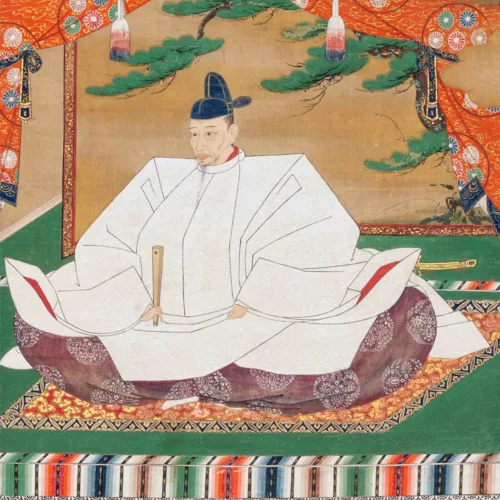
Toyotomi Hideyoshi
Hideyoshi Public domain, Wikimedia Commons

In 1592 Toyotomi Hideyoshi’s armies landed at Busan and took Hanyang within three weeks. Admiral Yi Sun-sin’s navy, with its armoured turtle ships, won a string of victories that cut Japanese supply lines, while volunteer “righteous armies” fought on land and Ming China sent troops. Japan invaded again in 1597. The war ended after Hideyoshi’s death in 1598, and Yi Sun-sin was killed in its last battle, at Noryang.
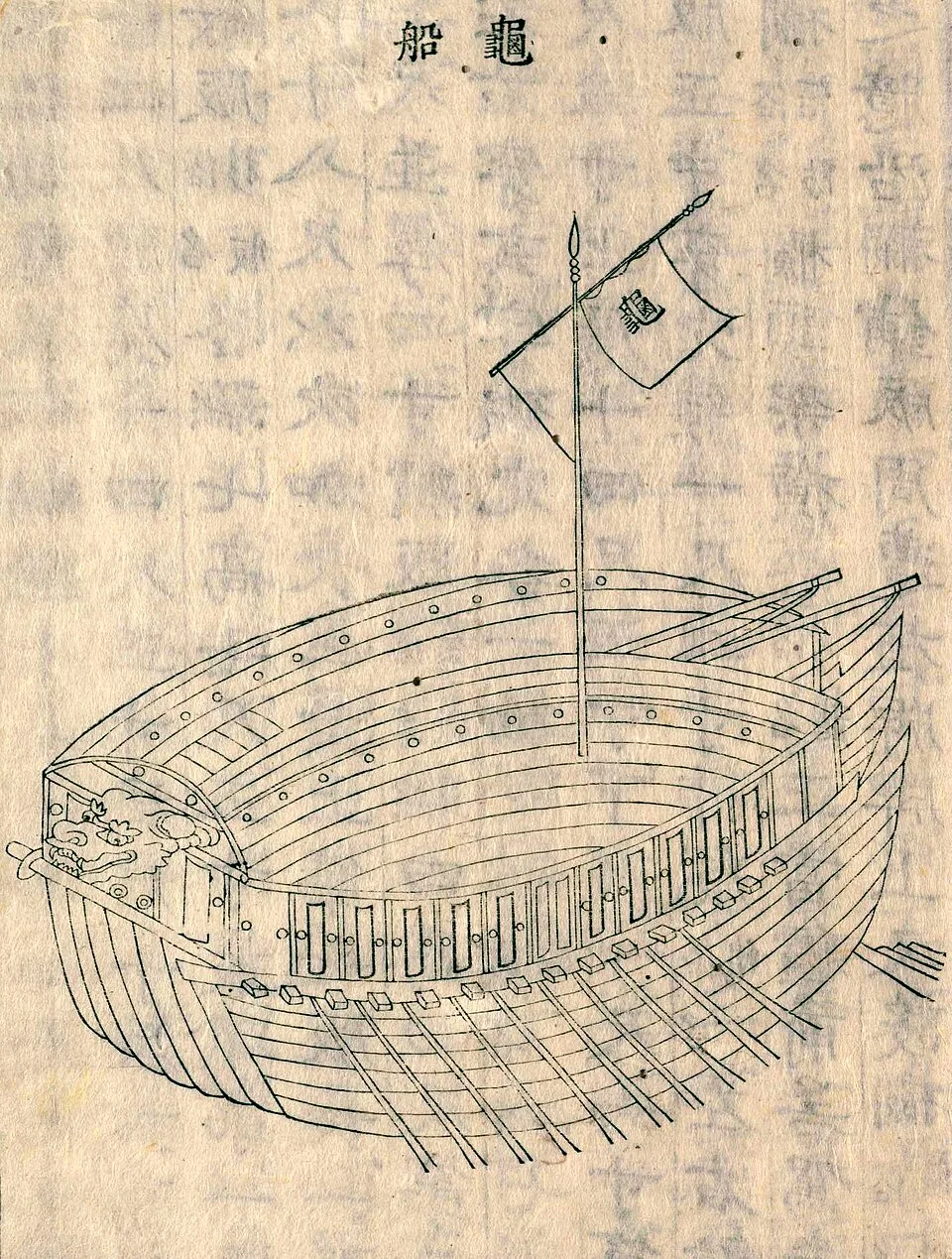
A turtle ship, from the collected works of Yi Sun-sin published in 1795. National Diet Library, Tokyo.
A turtle ship, from the collected works of Yi Sun-sin published in 1795. National Diet Library, Tokyo. Public domain, via Wikimedia Commons
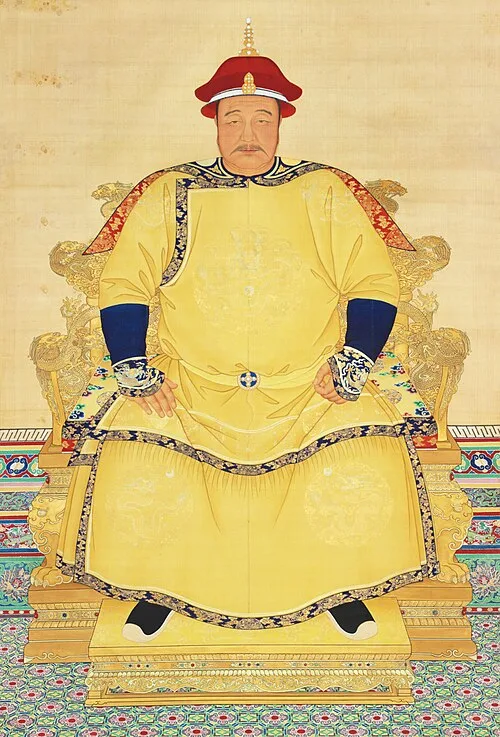
Hong Taiji
Hong Taiji Public domain, Wikimedia Commons

The war devastated the country: Gyeongbokgung and other palaces burned, and tens of thousands of Koreans, among them skilled potters, were taken to Japan. Then the Manchus invaded, in 1627 and again in 1636. In 1637 King Injo (king who surrendered to the Qing) surrendered at Samjeondo, bowing before the Qing emperor Hong Taiji, and Joseon became a tributary of the Qing; many officials privately went on regarding Joseon as the true heir of fallen Ming civilisation.
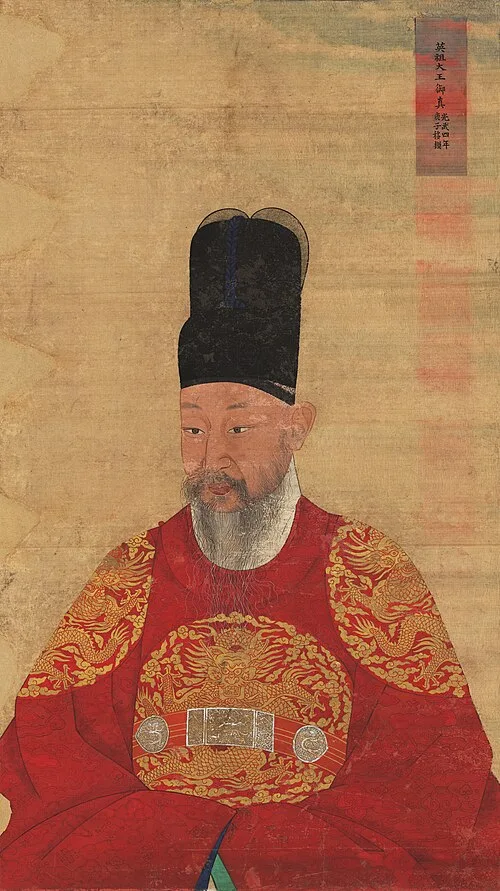
King Yeongjo
Yeongjo Public domain, Wikimedia Commons

In the 18th century King Yeongjo (longest-reigning Joseon king), who reigned for 52 years, and his grandson King Jeongjo (reforming king of Hwaseong) tried to rise above the feuding factions. Jeongjo built the fortress city of Hwaseong at Suwon and founded the Gyujanggak royal library, and scholars of silhak, “practical learning”, such as Jeong Yak-yong (scholar of practical learning), wrote about land reform, technology and good government. Yeongjo’s reign also saw a family tragedy: in 1762 he had his son, Crown Prince Sado (prince who died in a rice chest), shut in a rice chest, where he died after eight days.
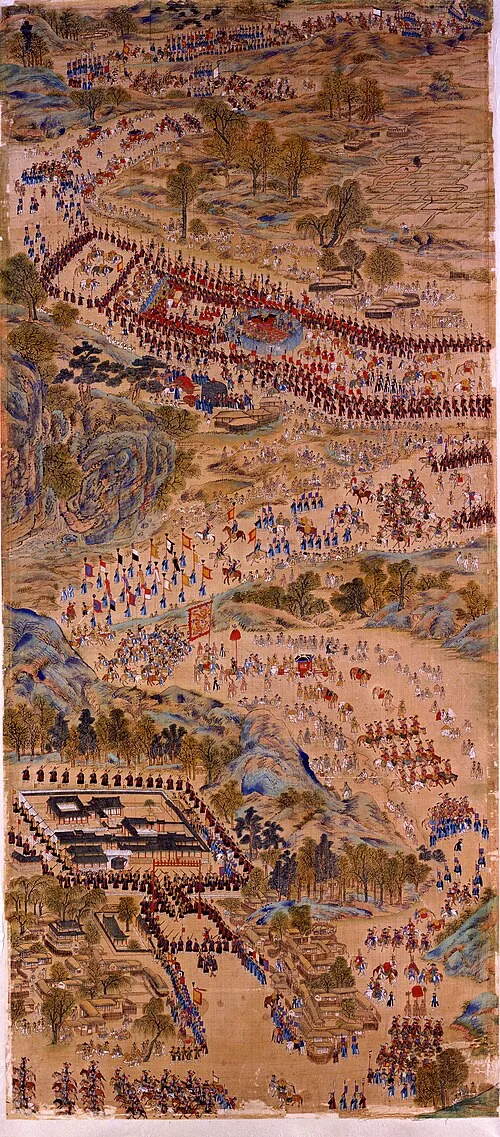
The royal procession returning to the detached palace, one panel of a screen painting of King Jeongjo’s eight-day visit to Hwaseong in 1795.
The royal procession returning to the detached palace, one panel of a screen painting of King Jeongjo’s eight-day visit to Hwaseong in 1795. Public domain, via Wikimedia Commons

After Jeongjo’s death in 1800, a series of child or weak kings let in-law families, above all the Andong Kim clan, dominate the government, and corruption spread. Catholicism, which had reached Korea through books from China, was persecuted, most severely in 1801 and 1839. In 1811 Hong Gyeong-nae (leader of the 1811 rebellion) led a rebellion in the north-west, and in 1860 Choe Je-u (founder of Donghak) founded Donghak, “Eastern learning”, a new religion that spread among poor farmers.

Words worth knowing

Turtle ship

Geobukseon: a Joseon warship with a covered deck, used to great effect by Yi Sun-sin.

Righteous army

Uibyeong: volunteer militias of yangban, commoners and monks who fought invaders.

Silhak

“Practical learning”: a movement of 17th–19th-century scholars who urged reforms in land, trade and technology.

Donghak

“Eastern learning”: a religion founded by Choe Je-u in 1860, teaching the equality of all people. It later became Cheondogyo.

Did you know?

What do we know about the turtle ships?

They were Joseon warships with a covered deck, a dragon’s head at the bow and, according to some accounts, spikes on the roof to stop boarders. No original survives, so their exact design is reconstructed from records and drawings.

Did Yi Sun-sin keep a diary?

Yes. His war diary, the Nanjung ilgi, covers most of the years from 1592 to 1598 and is on UNESCO’s Memory of the World Register.

Why could Hwaseong be rebuilt so accurately?

A detailed official report, the Hwaseong seongyeok uigwe, recorded the materials, tools, workers and drawings for every part of the fortress. It guided the restoration after damage in the Korean War.

Myth or fact?

“The turtle ships were the world’s first ironclad warships.”

Match the names

Tap a name, then the role that goes with it.

Check yourself

Question 1 of 3

Who led Joseon’s navy against the Japanese invasions?

Question 2 of 3

Which king built the fortress city of Hwaseong?

Question 3 of 3

What was silhak?

Collect the seal

Answer all three questions above to stamp the Invasions seal. 0 of 3 answered.

Back to the seal book