Korean history in steps
Step 5 of 11

Early Joseon

1392 – 1592
Joseon, the name of the dynasty and the country

Yi Seong-gye’s new dynasty moved the capital to Hanyang, today’s Seoul, and built a state on Neo-Confucian ideas. Its fourth king, Sejong (king who created Hangul) the Great, oversaw the creation of the Korean alphabet, Hangul, and a burst of science. Scholar-officials called the yangban ran the country, though they were often bitterly divided.

About 6 minutes

Who you’ll meet

One key name in this era. Everyone else plays a smaller part: tap their name in the text whenever you need a reminder.

Also appearing (7)
Practise this era’s names

Where it happened

Tap a marker, a shaded region or a name below the map to see what happened there. Places in the text with a red pin open their own map card.

Seat of power, from 1394

Hanyang

Joseon’s capital, today’s Seoul.

Coastlines from Natural Earth. Kingdoms and regions are shown by name only, without borders.

Open the atlas to compare this map with other eras, or browse all places.

What happened

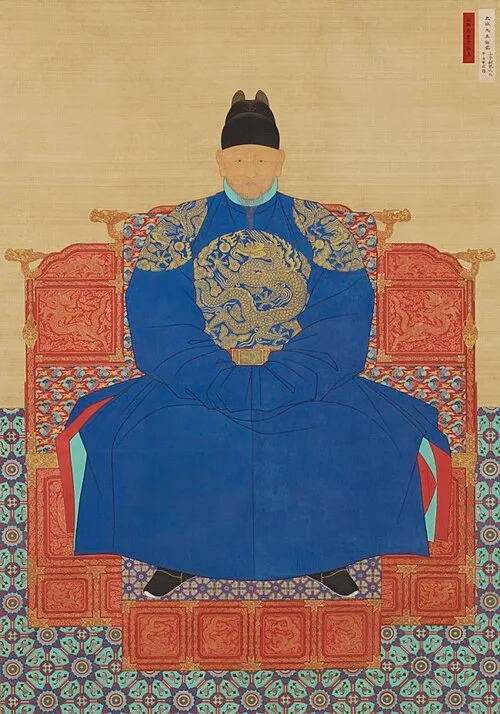
Yi Seong-gye
Yi Seong-gye Public domain, Wikimedia Commons

Yi Seong-gye (general who founded Joseon) ruled as King Taejo and in 1394 moved the capital to Hanyang, today’s Seoul, where the palace of Gyeongbokgung was completed in 1395. Joseon made Neo-Confucianism its state ideology and cut back the wealth and power of the Buddhist temples. The early years were violent: in 1398 Taejo’s fifth son, Yi Bang-won (third king of Joseon), killed rivals including two of his half-brothers, and in 1400 he took the throne as King Taejong.

Taejong’s son, King Sejong (king who created Hangul), who reigned from 1418 to 1450, is the most admired ruler in Korean history. In 1443 he completed a new alphabet of 28 letters, published in 1446 as the Hunminjeongeum, “the correct sounds for instructing the people”, so that ordinary people could read and write their own language. His reign also produced rain gauges, water clocks and sundials, many of them linked to the inventor Jang Yeong-sil (inventor at Sejong’s court).
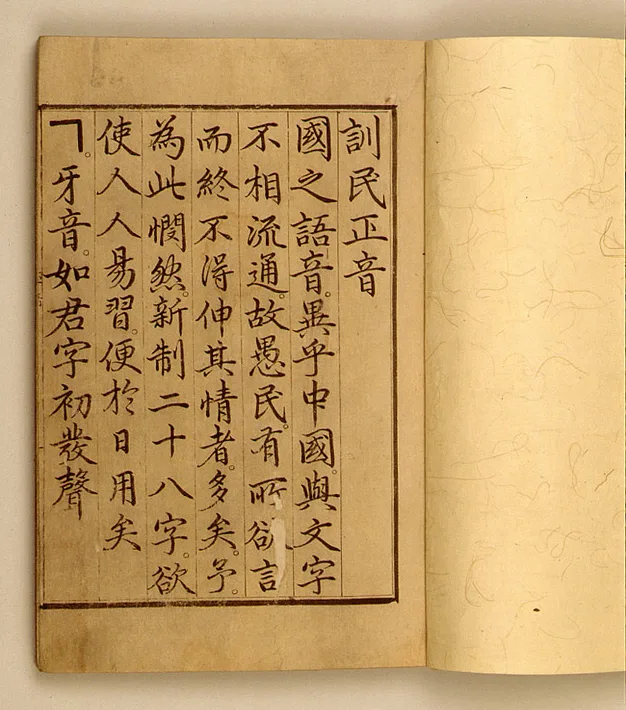
The Hunminjeongeum Haerye, the 1446 book that published and explained the Korean alphabet.
The Hunminjeongeum Haerye, the 1446 book that published and explained the Korean alphabet. Public domain, via Wikimedia Commons

Joseon was run by the yangban, a hereditary class of scholar-officials who competed in civil service examinations on the Confucian classics. Below them were commoners, mostly farmers, and below them a large slave population; historians agree that slaves were a large share of the people in the 15th and 16th centuries, though estimates vary widely. Court historians recorded every reign in the Annals of the Joseon Dynasty.

From the late 15th century the court was torn by literati purges, in which officials of rival groups were exiled or executed; there were four major purges between 1498 and 1545. The tyrant Yeonsangun (tyrant king), behind two of them, was deposed in 1506. In the 16th century the scholars Yi Hwang (Neo-Confucian philosopher) and Yi I (philosopher and reformer) led the two great schools of Korean Neo-Confucian thought, and from the 1570s officials split into lasting factions.

Words worth knowing

Hangul

The Korean alphabet, completed in 1443 and published in 1446. Its letters are grouped into syllable blocks.

Yangban

“Two orders”, civil and military: the hereditary class of scholar-officials who ran Joseon.

Seongnihak

Neo-Confucianism, the philosophy of Zhu Xi, which shaped Joseon’s government, family life and education.

Sillok

The Annals of the Joseon Dynasty, a day-by-day record of each reign compiled after the king’s death.

Did you know?

When is Hangul Day?

South Korea celebrates Hangul Day on 9 October, the anniversary of the alphabet’s publication. North Korea marks its own alphabet day on 15 January.

What are the Annals of the Joseon Dynasty?

A record of 25 reigns over 472 years, compiled after each king’s death from the notes of court historians. Kings were not allowed to read them. They are on UNESCO’s Memory of the World Register.

Did Joseon really measure rainfall in the 1400s?

Yes. From 1441 standard bronze rain gauges were set up at government offices across the country, and the rainfall was reported to the capital, one of the earliest such systems in the world.

Myth or fact?

“King Sejong invented Hangul entirely by himself.”

Match the names

Tap a name, then the role that goes with it.

Check yourself

Question 1 of 3

Which king created Hangul?

Question 2 of 3

Where did Joseon move its capital in 1394?

Question 3 of 3

Who were the yangban?

Collect the seal

Answer all three questions above to stamp the Early Joseon seal. 0 of 3 answered.

Back to the seal book