Korean history in steps
Step 2 of 11

The Three Kingdoms

c. 1st century BCE – 668
Samguk, “three kingdoms”

Three kingdoms, Goguryeo in the north, Baekje in the south-west and Silla in the south-east, competed for the peninsula for some seven centuries, alongside the Gaya league in the south. They took Buddhism and Chinese writing from China and passed much of their learning on to Japan. In the end Silla, allied with Tang China, defeated the other two.

About 6 minutes

Who you’ll meet

4 key names in this era. Everyone else plays a smaller part: tap their name in the text whenever you need a reminder.

Also appearing (6)
Practise this era’s names

Where it happened

Tap a marker, a shaded region or a name below the map to see what happened there. Places in the text with a red pin open their own map card.

Region

Goguryeo

The northern kingdom, which at its height reached deep into Manchuria.

Coastlines from Natural Earth. Kingdoms and regions are shown by name only, without borders.

Open the atlas to compare this map with other eras, or browse all places.

What happened

According to the Samguk sagi, Korea’s oldest surviving history, written in 1145, Silla was founded in 57 BCE, Goguryeo in 37 BCE and Baekje in 18 BCE. Historians accept an early date for Goguryeo more readily than for the others: Baekje and Silla seem to have grown into strong kingdoms only around the 3rd and 4th centuries. Between them lay Gaya, a league of small states famous for its iron, which Silla absorbed by 562.

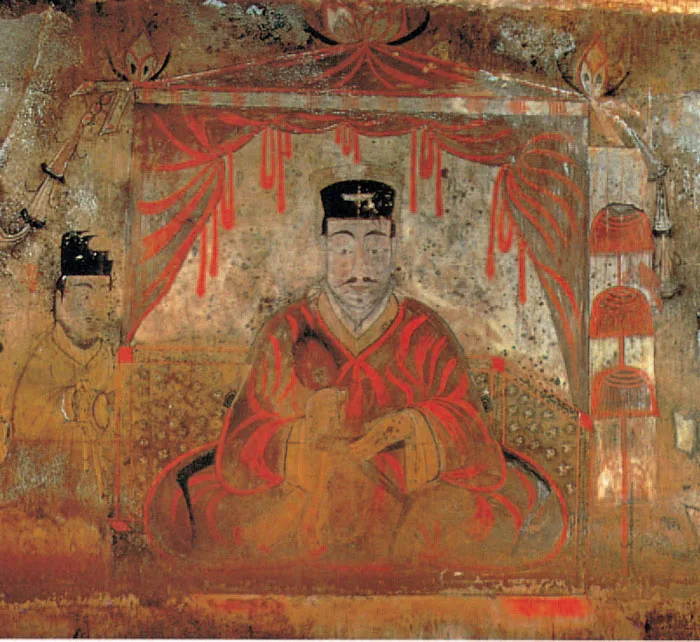
Goguryeo was the largest. King Gwanggaeto (great conqueror of Goguryeo), who reigned from 391 to 413, expanded it deep into Manchuria, and a stone stele raised by his son in 414 records his conquests. That son, King Jangsu (Gwanggaeto’s son), moved the capital to Pyongyang in 427. Goguryeo’s tomb murals, with hunters, dancers and the guardian animals of the four directions, are a World Heritage Site.
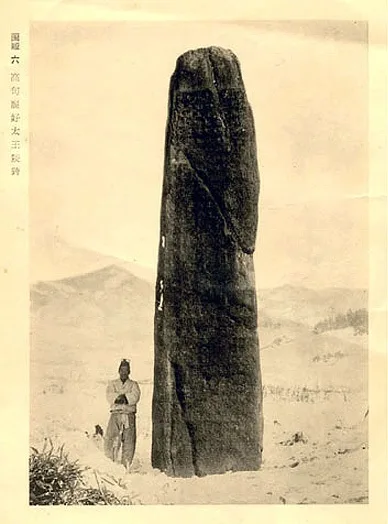
A man standing beside King Gwanggaeto’s stele, in a photograph published in 1903.
A man standing beside King Gwanggaeto’s stele, in a photograph published in 1903. Public domain, via Wikimedia Commons
Mural in Anak Tomb No. 3, a 4th-century tomb of the Goguryeo period.
Mural in Anak Tomb No. 3, a 4th-century tomb of the Goguryeo period. Public domain, via Wikimedia Commons

Buddhism reached Goguryeo in 372 and Baekje in 384, and Silla officially accepted it in 527 after the death of the official Ichadon (Buddhist martyr of Silla), who had championed it. Baekje had close ties with Japan’s Yamato court and in the 6th century sent it Buddhist images, scriptures, scholars and craftsmen. Silla ranked its people by the bone-rank system, which fixed by birth what office, and even what size of house, a person could have.
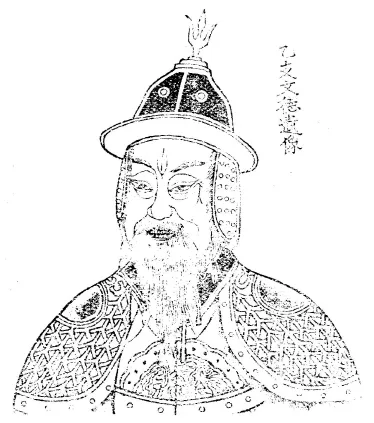
Eulji Mundeok
Eulji Mundeok Public domain, Wikimedia Commons

In the 7th century Goguryeo beat off huge invasions from Sui and Tang China; at the Salsu River in 612 General Eulji Mundeok (Goguryeo general against the Sui) destroyed a Sui army. Silla then allied with Tang. Together they conquered Baekje in 660, despite a last stand by General Gyebaek (last general of Baekje) at Hwangsanbeol, and Goguryeo in 668. When Tang tried to rule the whole peninsula, Silla fought it, and by 676 Tang forces had withdrawn north of the Taedong River.

Words worth knowing

Samguk sagi

“Historical records of the Three Kingdoms”, compiled by Kim Bu-sik and completed in 1145. Korea’s oldest surviving history.

Bone rank

Golpum: Silla’s system of hereditary ranks, which decided by birth what office a person could hold and how they could live.

Hwarang

“Flower youths”: bands of young Silla aristocrats trained in arms, poetry and virtue.

Gaya

A league of small states in the south between Baekje and Silla, known for iron and trade with Japan. Silla absorbed it by 562.

Did you know?

How big is King Gwanggaeto’s stele?

It is about 6.4 metres tall and carved on all four sides with about 1,800 characters. It stands at Ji’an, in China, near the old Goguryeo capital.

Who was Korea’s first reigning queen?

Queen Seondeok (first reigning queen of Silla) of Silla, who ruled from 632 to 647. The stone tower of Cheomseongdae in Gyeongju is traditionally dated to her reign and is often described as one of the oldest surviving observatories in East Asia, though its exact purpose is debated.

Did the Three Kingdoms influence Japan?

A great deal. Baekje sent Buddhist images and scriptures to the Yamato court in the 6th century, and scholars, monks and craftsmen from the peninsula brought writing, temple building and metalworking to Japan.

Myth or fact?

“Silla, Goguryeo and Baekje were founded in 57, 37 and 18 BCE.”

Match the names

Tap a name, then the role that goes with it.

Check yourself

Question 1 of 3

Which kingdom did King Gwanggaeto rule?

Question 2 of 3

Which kingdom allied with Tang China to defeat the other two?

Question 3 of 3

What was Silla’s bone-rank system?

Collect the seal

Answer all three questions above to stamp the Three Kingdoms seal. 0 of 3 answered.

Back to the seal book