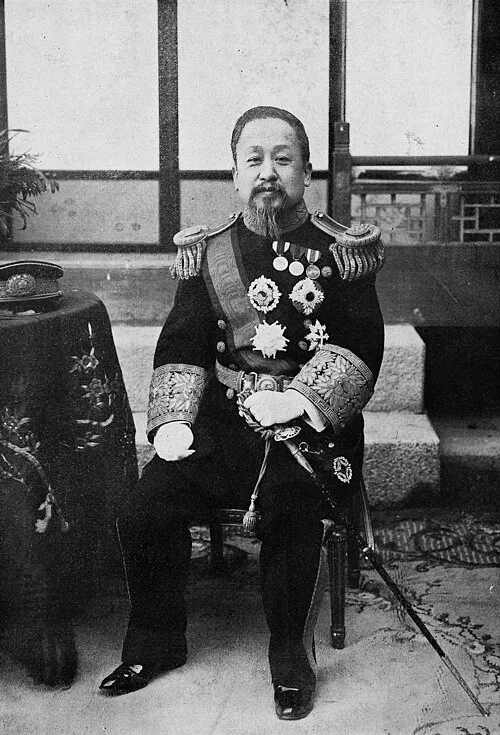

In 1863 a boy became King Gojong (king and first emperor of Korea), and his father, the Heungseon Daewongun (regent who closed the country), ruled as regent. He strengthened the throne, rebuilt Gyeongbokgung and kept Korea closed to the West. He persecuted Catholics from 1866, killing thousands, among them French missionaries, and drove off a French expedition in 1866 and an American one in 1871. Stone markers set up across the country warned against making peace with Western barbarians.
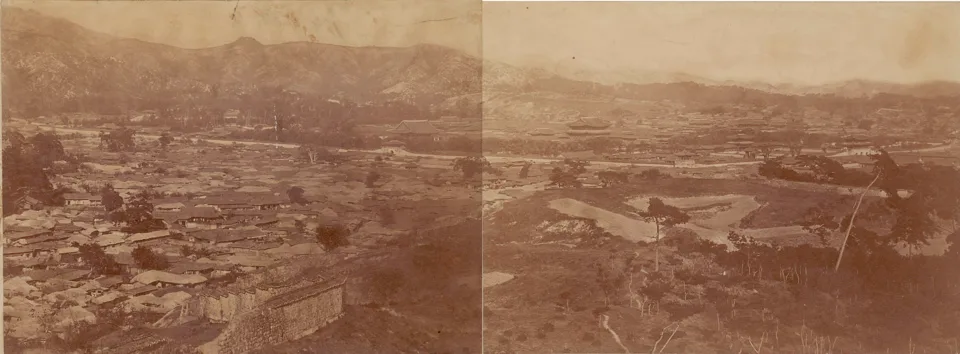

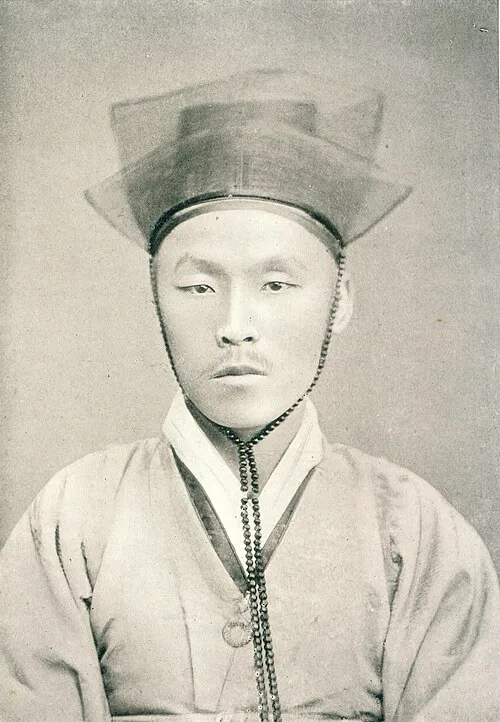

In 1876, after a clash with a Japanese warship, Korea signed the Treaty of Ganghwa with Japan, opening its ports on unequal terms; treaties with the United States and European powers followed from 1882. In 1884 young reformers led by Kim Ok-gyun (leader of the Gapsin Coup) tried to seize power in the Gapsin Coup, which Chinese troops crushed within three days.
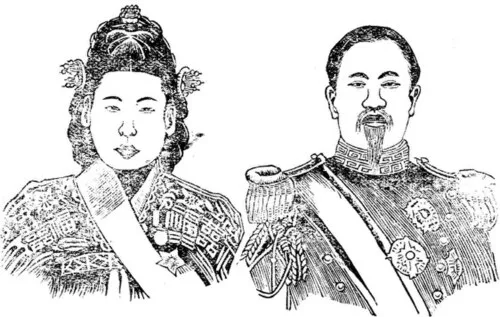

In 1894 Donghak followers rose in a great peasant rebellion against corruption and foreign influence. Both China and Japan sent troops, and Japan’s victory in the Sino-Japanese War of 1894–95 ended China’s hold over Korea. In 1895 Japanese agents murdered Queen Min (queen murdered in 1895) in the palace, and the next year Gojong (king and first emperor of Korea) fled to the Russian legation, where he stayed for a year.
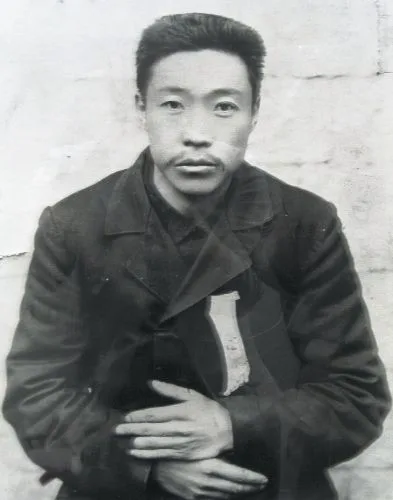

In 1897 Gojong (king and first emperor of Korea) returned and proclaimed the Korean Empire, taking the title of emperor to show that Korea was equal to China and Japan. After Japan defeated Russia in 1905, it forced Korea to accept a protectorate treaty. Gojong sent secret envoys to the peace conference at The Hague in 1907 to protest, and Japan forced him to abdicate. In 1909 An Jung-geun (independence fighter) assassinated Itō Hirobumi (Japan’s first resident-general in Korea) at Harbin, and in August 1910 Japan annexed Korea.