Spanish history in steps
Step 8 of 11

The Bourbons, Napoleon and the Constitution of 1812

1700–1814
La Pepa, the nickname of the Constitution of 1812

A French prince of the Bourbon family became Philip V (first Bourbon king of Spain) of Spain after a European war over the succession, which cost Spain its lands in Italy and the Netherlands. The Bourbons centralised the state, and Charles III (reforming Bourbon king) brought Enlightenment reforms. In 1808 Napoleon (French emperor) put his brother on the throne; the Spanish rose against him, and in Cádiz a parliament wrote the liberal Constitution of 1812.

About 6 minutes

Who you’ll meet

One key name in this era. Everyone else plays a smaller part: tap their name in the text whenever you need a reminder.

Also appearing (7)

Family in this step: The Spanish Bourbons

Practise this era’s names

Where it happened

Tap a marker, a shaded region or a name below the map to see what happened there. Places in the text with a red pin open their own map card.

Seat of power, 1808

Madrid

Rose against the French on 2 May 1808.

Coastlines from Natural Earth. Kingdoms and regions are shown by name only, without borders; shaded areas follow today’s borders as a guide.

Open the atlas to compare this map with other eras, or browse all places.

What happened

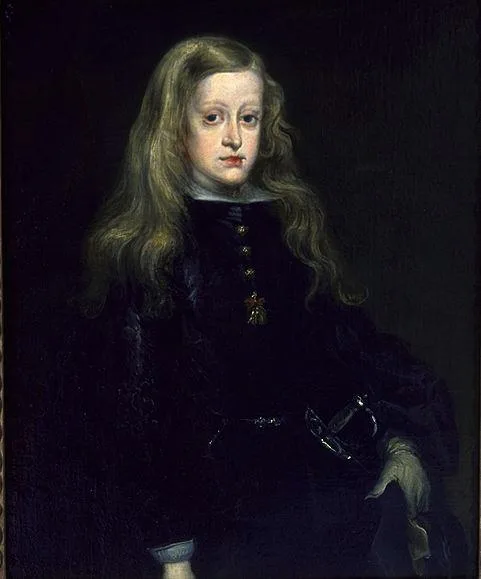
Charles II
Charles II Public domain, Wikimedia Commons

Charles II (last Habsburg king of Spain) left his crowns to Philip of Anjou (first Bourbon king of Spain), grandson of Louis XIV (king of France, grandfather of Philip V) of France. Austria, Britain and the Dutch backed a rival Habsburg claimant, and the War of the Spanish Succession followed. Philip V kept Spain and America, but under the treaties of 1713–1714 Spain lost its lands in Italy and the Netherlands, and Britain kept Gibraltar and Minorca.

Catalonia, Valencia and Aragon had largely backed the Habsburg claimant. Barcelona fell on 11 September 1714, now Catalonia’s national day, and the Nueva Planta decrees abolished the separate laws and institutions of the Crown of Aragon. Spain was ruled more and more as one centralised kingdom from Madrid.
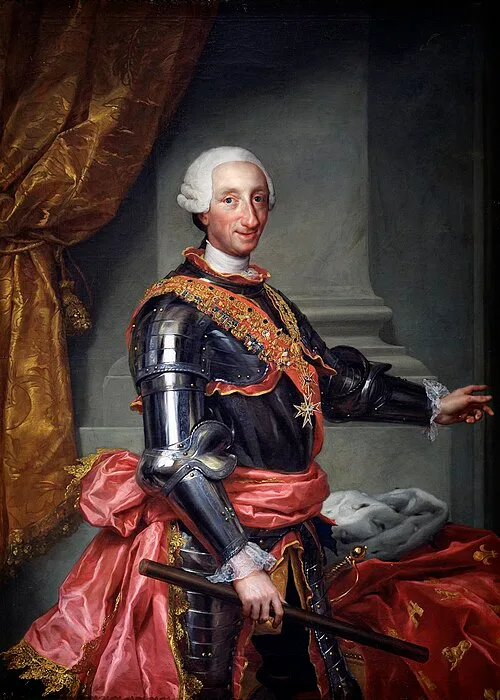
Charles III
Charles III Public domain, Wikimedia Commons

Charles III (reforming Bourbon king), king from 1759 to 1788, was the most reforming of the Bourbons. His ministers built roads and canals, opened up trade with America, expelled the Jesuits in 1767 and made Madrid a cleaner, grander capital, with the building that became the Prado Museum. Francisco de Goya (painter of the court and the war) became painter to the court of his son, Charles IV (king forced out by Napoleon).
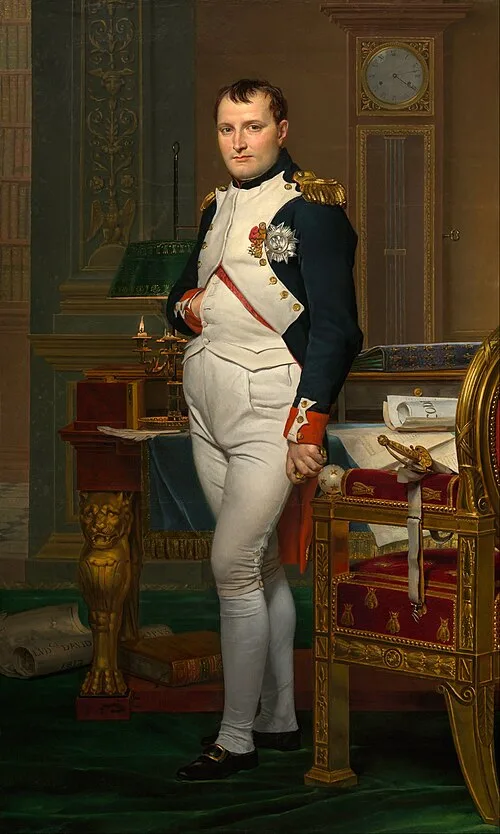
Napoleon Bonaparte
Napoleon Public domain, Wikimedia Commons

In 1808 Napoleon (French emperor) forced Charles IV (king forced out by Napoleon) and his son Ferdinand VII (king who abolished the constitution) to give up the throne and made his own brother, Joseph Bonaparte (Napoleon’s brother, king of Spain), king. On 2 May the people of Madrid rose up, and the uprising spread across Spain. Spanish armies, guerrillas and a British and Portuguese army under Wellington (British general in Spain) fought the French until 1814. In besieged Cádiz, the Cortes wrote a constitution, proclaimed on 19 March 1812, that declared the sovereignty of the nation.
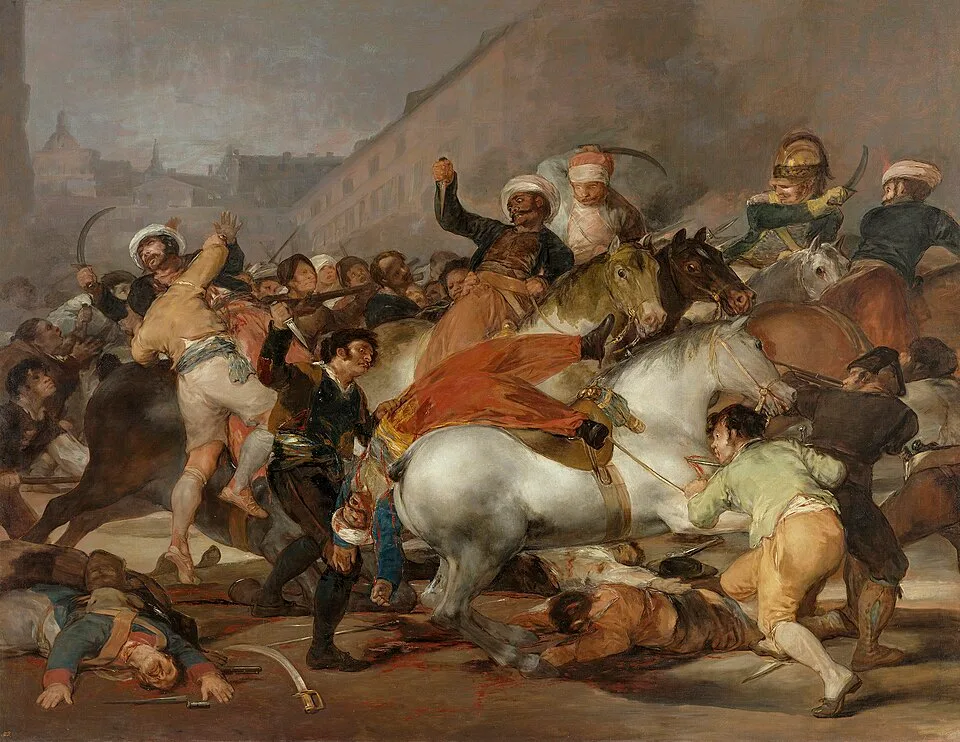
The Second of May 1808, or The Charge of the Mamelukes, by Francisco de Goya, 1814.
The Second of May 1808, or The Charge of the Mamelukes, by Francisco de Goya, 1814. Public domain, via Wikimedia Commons
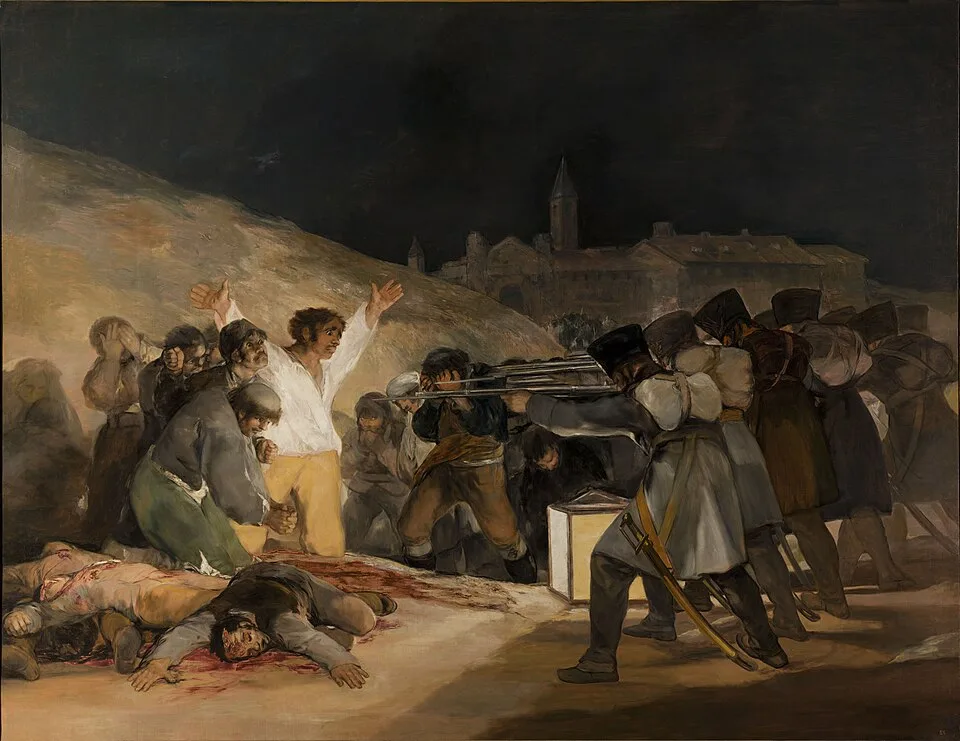
The Third of May 1808 by Francisco de Goya, 1814. Prado Museum, Madrid.
The Third of May 1808 by Francisco de Goya, 1814. Prado Museum, Madrid. Public domain, via Wikimedia Commons

Words worth knowing

Nueva Planta

“New plan”: the decrees of 1707–1716 that abolished the separate laws of Aragon, Valencia, Majorca and Catalonia.

Enlightenment

The 18th-century movement for reason, science and reform, led in Spain by ministers and writers under Charles III.

Guerrilla

“Little war”: the irregular fighting of Spanish bands against the French after 1808.

Afrancesado

“Frenchified”: a Spaniard who supported Joseph Bonaparte, often in hope of reform.

Did you know?

Why is the 1812 constitution called La Pepa?

It was proclaimed on 19 March, the feast of Saint Joseph, and Pepe is the pet form of José. It was one of the most liberal constitutions of its time and influenced others in Europe and Latin America.

Why does Britain have Gibraltar?

An Anglo-Dutch force took it in 1704, during the War of the Spanish Succession, and Spain ceded it to Britain in the Treaty of Utrecht of 1713. Spain has asked for it back ever since.

What happened on the Second of May 1808?

Crowds in Madrid tried to stop French troops from taking the last members of the royal family to France. The French put down the rising and shot many prisoners the next day. Goya (painter of the court and the war) painted both days in 1814.

Myth or fact?

“The Spanish defeated Napoleon’s armies on their own.”

Match the names

Tap a name, then the role that goes with it.

Check yourself

Question 1 of 3

Which family took the Spanish throne in 1700?

Question 2 of 3

Which place did Spain cede to Britain in 1713?

Question 3 of 3

Where was the Constitution of 1812 written?

Collect the seal

Answer all three questions above to stamp the Bourbons and Napoleon seal. 0 of 3 answered.

Back to the seal book