Rome drove Carthage out of Iberia during the Second Punic War, then took two centuries to conquer the peninsula’s peoples. Hispania became one of the most Roman parts of the empire: it gave Rome emperors and writers, its cities had theatres, aqueducts and bridges, and Latin became the root of Spanish, Catalan, Galician and Portuguese.
About 6 minutes
Who you’ll meet
One key name in this era. Everyone else plays a smaller part: tap their name in the text whenever you need a reminder.
Roman armies landed at Emporion in 218 BCE to cut off Hannibal’s supplies, and by 206 BCE they had driven Carthage out of Iberia. Rome then divided its new lands into two provinces, Hither and Further Spain.
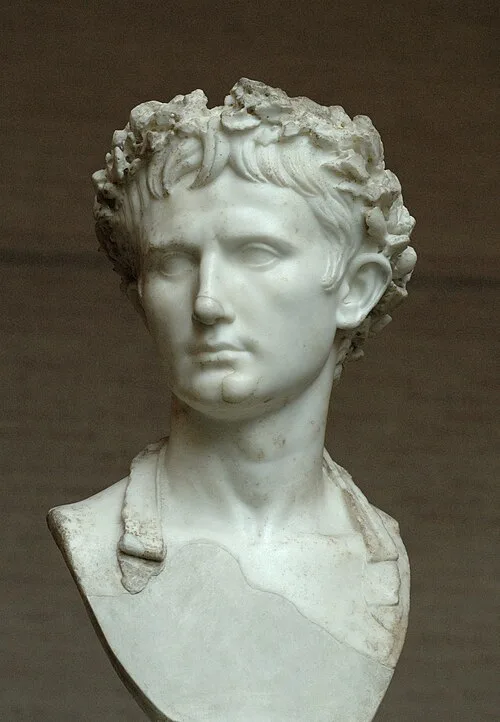
Conquering the rest took nearly two centuries. In the west, the shepherd Viriathus(Lusitanian leader against Rome) led the Lusitanians against Rome until his own men murdered him in 139 BCE. In the centre, the Celtiberian town of Numantia held out until 133 BCE, when its starving defenders, many of whom chose death over surrender, gave in to Scipio Aemilianus(Roman conqueror of Numantia). Augustus(first Roman emperor) finished the conquest with the Cantabrian Wars, which ended in 19 BCE.
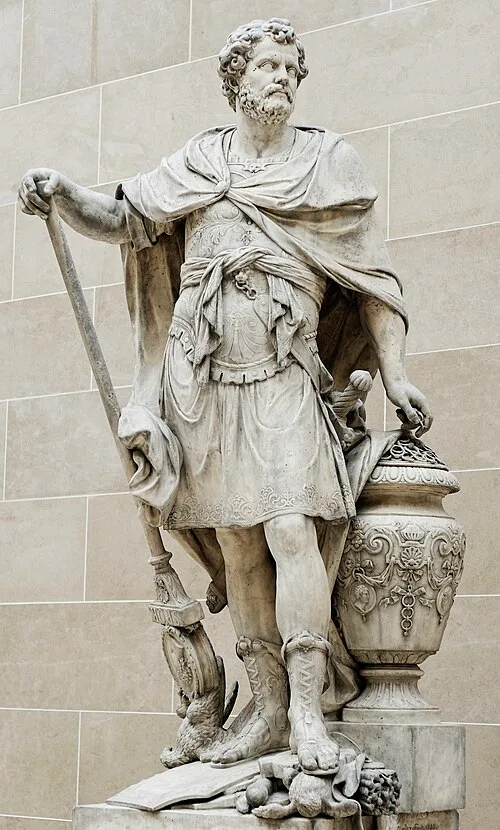
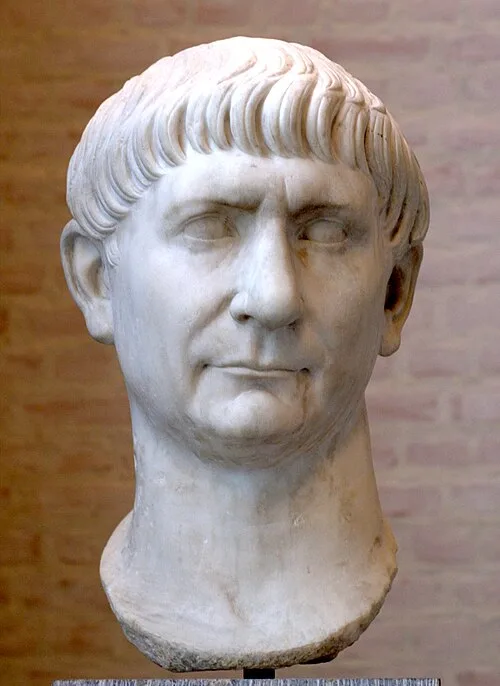
Hispania became deeply Roman. Cities such as Tarraco, Emerita Augusta and Corduba had forums, theatres and circuses, and the aqueduct of Segovia and the bridge at Alcántara still stand. Silver, gold, olive oil, wine and garum, a fish sauce, were shipped across the empire. Hispania produced the philosopher Seneca(philosopher from Corduba) and the poet Martial(poet from Hispania), and the emperor Trajan(first emperor born outside Italy), born at Italica near Seville; his successor Hadrian(Roman emperor from an Italica family) came from a family of Italica.
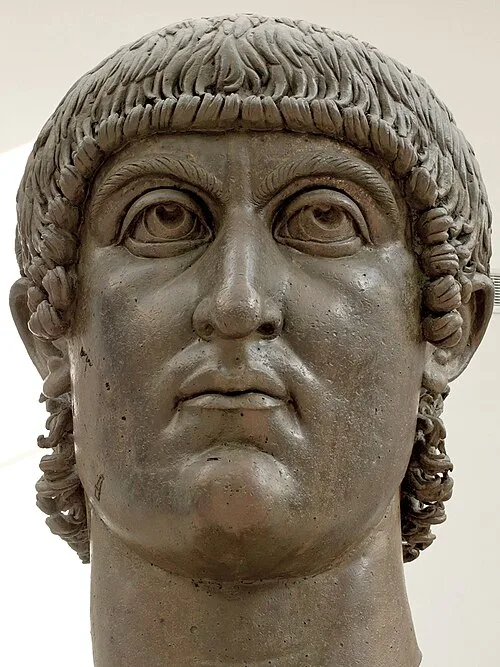
Christianity spread in the 3rd and 4th centuries, and Hosius(bishop and adviser to Constantine), bishop of Corduba, was an adviser to Emperor Constantine(first Christian Roman emperor). In 409 CE Germanic peoples, the Vandals, Sueves and Alans, crossed the Pyrenees into Hispania, and Roman rule began to fall apart.
Words worth knowing
HispaniaHispania
The Roman name for the whole peninsula, from which España comes.
Romanisationromanización
The spread of Roman language, law, towns and ways of life among the peoples Rome conquered.
Garumgarum
A sauce of fermented fish, made in factories along Hispania’s southern coast and shipped all over the empire.
Municipiummunicipio
A town whose people had Roman or Latin rights. The Spanish word for a town council, municipio, comes from it.
Did you know?
Is the bridge at Alcántara still used?
Yes. The Roman bridge over the Tagus, finished under Trajan(first emperor born outside Italy) around 104–106 CE, still carries traffic. Its name comes from the Arabic al-qantara, “the bridge”.
Which emperors came from Hispania?
Trajan, emperor from 98 to 117 CE, was the first emperor born outside Italy, at Italica. His successor Hadrian(Roman emperor from an Italica family) came from a family of Italica, and Theodosius I(emperor born in Hispania), the last emperor to rule the whole empire, was also born in Hispania.
What did Roman Hispania export?
Silver from the mines of the south, gold from Las Médulas in the north-west, olive oil from Baetica and garum. Monte Testaccio, in Rome, is a hill made of millions of broken oil jars, many of them from Baetica.
Myth or fact?
“The Romans conquered Hispania quickly.”
Match the names
Tap a name, then the role that goes with it.
Check yourself
Question 1 of 3
Which town held out against Rome until 133 BCE?
Question 2 of 3
Which Roman emperor was born at Italica, near Seville?
Question 3 of 3
Which language of Spain is older than Latin and unrelated to it?
SPQR
Collect the seal
Answer all three questions above to stamp the Roman Hispania seal. 0 of 3 answered.