Spanish history in steps
Step 6 of 11

The Catholic Monarchs

1479–1516
1492: Granada, the expulsion of the Jews and Columbus

Isabella of Castile (queen of Castile) and Ferdinand of Aragon (king of Aragon) ruled their kingdoms together, though each kept its own laws. In 1492 they conquered Granada, expelled the Jews who would not convert, and sent Christopher Columbus (navigator who sailed west) west across the Atlantic. Their reign set up the Spanish Inquisition and began a world empire.

About 6 minutes

Who you’ll meet

3 key names in this era. Everyone else plays a smaller part: tap their name in the text whenever you need a reminder.

Also appearing (6)
Practise this era’s names

Where it happened

Tap a marker, a shaded region or a name below the map to see what happened there. Places in the text with a red pin open their own map card.

Seat of power, 1492

Granada

Surrendered on 2 January 1492.

Coastlines from Natural Earth. Kingdoms and regions are shown by name only, without borders; shaded areas follow today’s borders as a guide.

Open the atlas to compare this map with other eras, or browse all places.

What happened

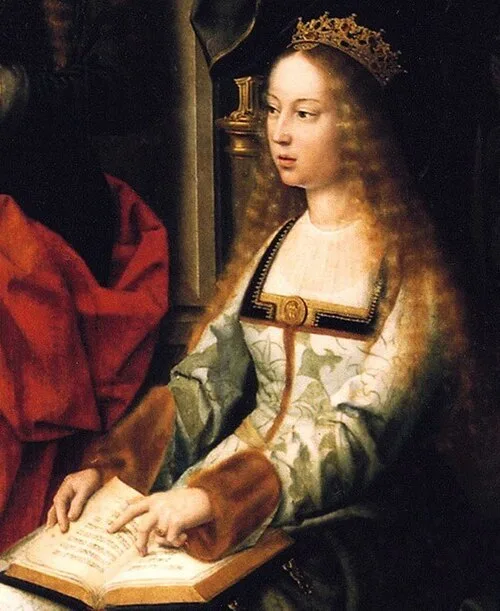
Isabella I of Castile
Isabella Public domain, Wikimedia Commons

Isabella (queen of Castile) won the throne of Castile in a civil war that ended in 1479, the year Ferdinand became king of Aragon. The two crowns were joined in their persons, but Castile and Aragon kept their own laws, coins and parliaments, the Cortes. In 1478 the pope allowed them to set up an Inquisition under royal control to hunt down converted Jews, conversos, suspected of secretly keeping their old faith.

After a ten-year war, Granada surrendered on 2 January 1492, and its last emir, Boabdil (last emir of Granada), handed over the Alhambra. The surrender treaty promised Muslims freedom of religion, but within a decade they were pressed to convert, and in 1502 those in Castile were ordered to convert or leave.
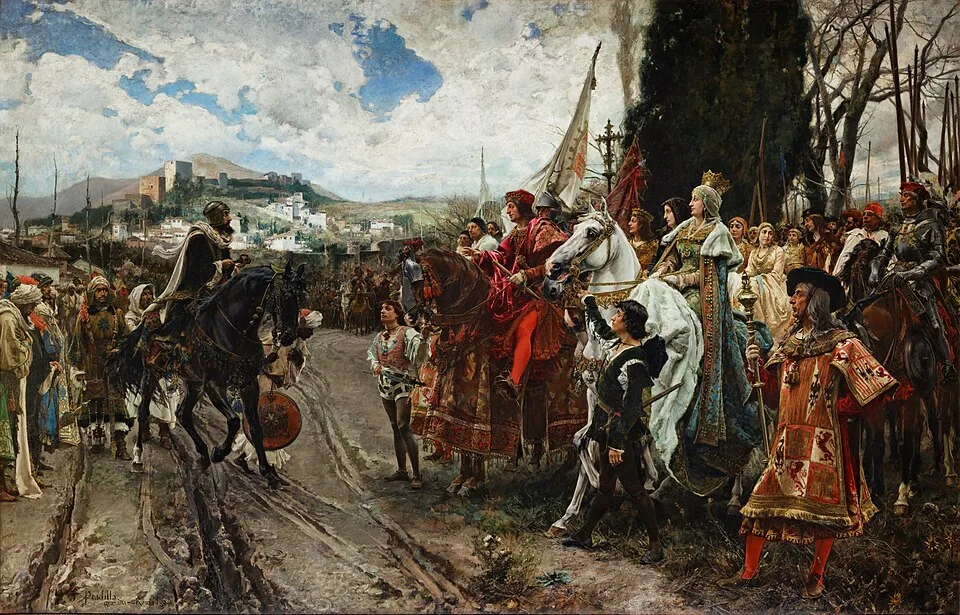
The Surrender of Granada by Francisco Pradilla, 1882: Boabdil hands over the city to Ferdinand and Isabella.
The Surrender of Granada by Francisco Pradilla, 1882: Boabdil hands over the city to Ferdinand and Isabella. Public domain, via Wikimedia Commons

On 31 March 1492 the monarchs ordered all Jews in their kingdoms to convert or leave by the end of July. Estimates of how many left range from tens of thousands to about 100,000 or more; many went to Portugal, North Africa, Italy and the Ottoman Empire, where their descendants, the Sephardim, kept their Spanish language for centuries.
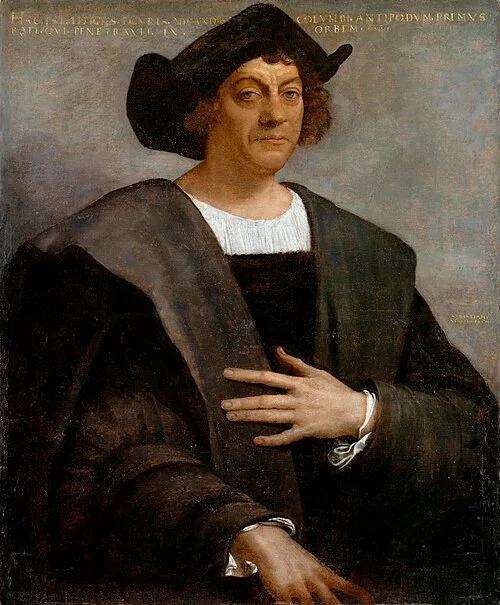
Christopher Columbus
Columbus Public domain, Wikimedia Commons

In April 1492 Isabella (queen of Castile) agreed to back Christopher Columbus (navigator who sailed west), a Genoese sailor who planned to reach Asia by sailing west. On 12 October his ships reached an island in the Bahamas. In 1494 the Treaty of Tordesillas divided the newly found lands between Castile and Portugal. When Isabella died in 1504 her daughter Joanna (queen of Castile) inherited Castile, and in 1512 Ferdinand (king of Aragon) took Navarre.
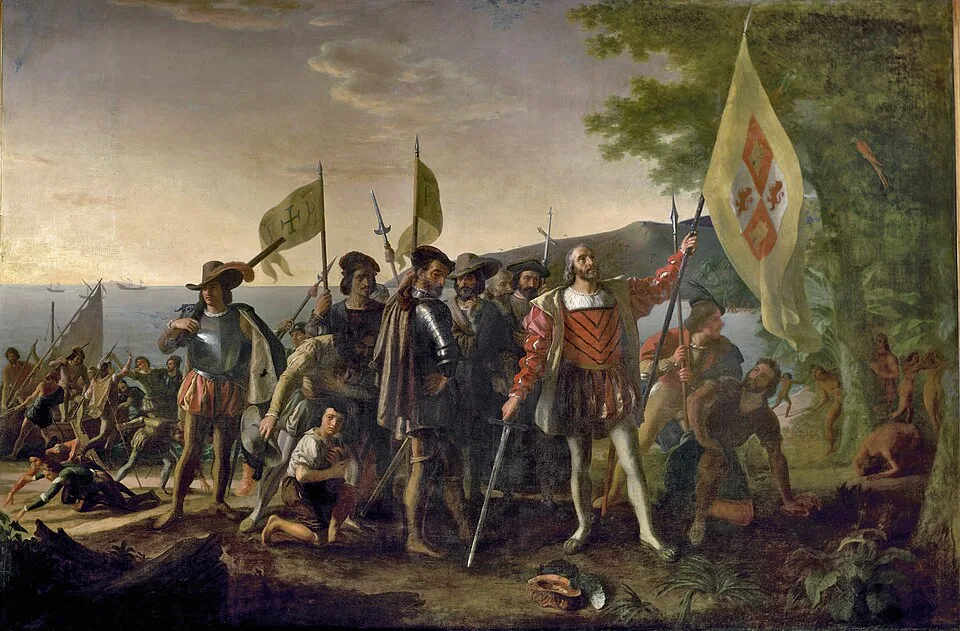
Landing of Columbus by John Vanderlyn, 1847, showing Columbus raising the royal banner on Guanahani on 12 October 1492.
Landing of Columbus by John Vanderlyn, 1847, showing Columbus raising the royal banner on Guanahani on 12 October 1492. Public domain, via Wikimedia Commons

Words worth knowing

Catholic Monarchs

The title Pope Alexander VI gave Isabella and Ferdinand in 1496.

Converso

A Jew, or the descendant of a Jew, who had converted to Christianity.

Inquisition

The Church court set up under royal control in 1478 to judge heresy, aimed at first at conversos. It was abolished for good in 1834.

Cortes

The parliaments of the Spanish kingdoms, where representatives of the nobles, clergy and towns met the king. Spain’s parliament still bears the name.

Did you know?

How many ships did Columbus take in 1492?

Three: the Santa María, the Pinta and the Niña, with about ninety men. The Santa María ran aground off Hispaniola on Christmas Day and was lost.

What language did the Sephardic Jews keep?

Many spoke Judaeo-Spanish, also called Ladino: a form of old Spanish with words from Hebrew, Turkish and other languages. A small number of people still speak it.

Where are Isabella and Ferdinand buried?

In the Royal Chapel of Granada, the city they conquered, beside their daughter Joanna (queen of Castile) and her husband, Philip the Handsome (husband of Joanna).

Myth or fact?

“Isabella pawned her jewels to pay for Columbus’s voyage.”

Match the names

Tap a name, then the role that goes with it.

Check yourself

Question 1 of 3

Which city fell to the Catholic Monarchs on 2 January 1492?

Question 2 of 3

Who was the last emir of Granada?

Question 3 of 3

What did the Treaty of Tordesillas of 1494 do?

Collect the seal

Answer all three questions above to stamp the Catholic Monarchs seal. 0 of 3 answered.

Back to the seal book