Spanish history in steps
Step 7 of 11

The Habsburg empire and the Golden Age

1516–1700
Oro, “gold”, as in the Siglo de Oro, the Golden Age

Charles V (emperor and king of Spain), grandson of the Catholic Monarchs, ruled the largest empire of his time, while conquistadors took the Aztec and Inca empires. His son Philip II (king of Spain at its height) ruled from Madrid over lands on which, it was said, the sun never set. American silver paid for constant wars. The 17th century brought decline, but also the Golden Age of Cervantes (author of Don Quixote), Lope de Vega (playwright of the Golden Age) and Velázquez (court painter of Philip IV).

About 6 minutes

Who you’ll meet

4 key names in this era. Everyone else plays a smaller part: tap their name in the text whenever you need a reminder.

Also appearing (9)

Family in this step: The Spanish Habsburgs

Practise this era’s names

Where it happened

Tap a marker, a shaded region or a name below the map to see what happened there. Places in the text with a red pin open their own map card.

Seat of power, from 1561

Madrid

Philip II’s capital.

Coastlines from Natural Earth. Kingdoms and regions are shown by name only, without borders; shaded areas follow today’s borders as a guide.

Open the atlas to compare this map with other eras, or browse all places.

What happened

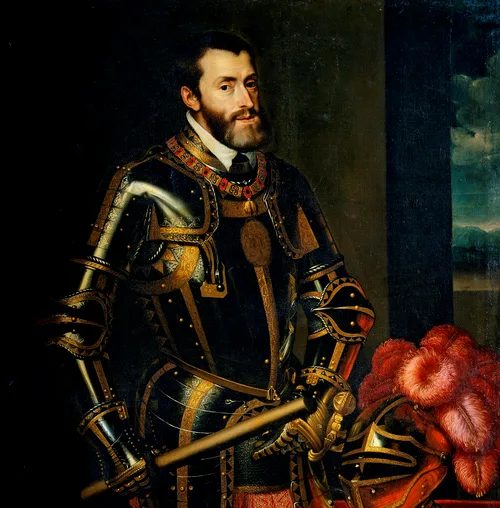
Charles V
Charles V Public domain, Wikimedia Commons

In 1516 Charles of Ghent (emperor and king of Spain), grandson of Isabella (queen of Castile) and Ferdinand (king of Aragon) and of Emperor Maximilian (grandfather of Charles V), inherited Castile and Aragon with their lands in Italy and America, and in 1519 he was elected Holy Roman Emperor as Charles V. Castilian towns rose against his foreign advisers in the Comuneros revolt, crushed in 1521. In the same years Hernán Cortés (conqueror of the Aztec Empire) conquered the Aztec Empire, and from 1532 Francisco Pizarro (conqueror of the Inca Empire) conquered the Inca Empire, helped by Indigenous allies and by epidemics that killed millions.
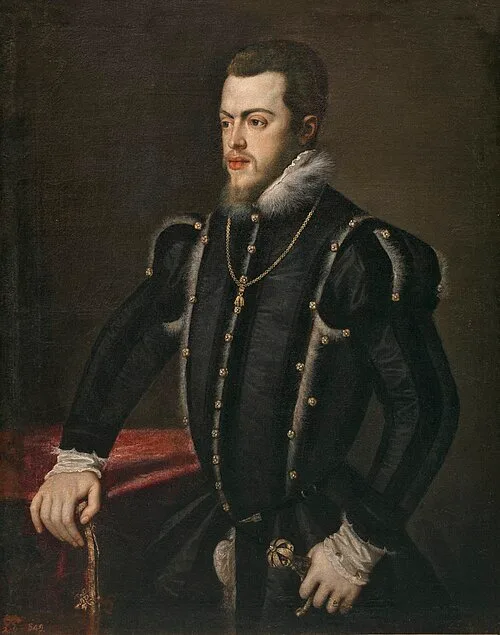
Philip II
Philip II Public domain, Wikimedia Commons

Charles V (emperor and king of Spain) fought France, the Ottomans and the Protestant princes of Germany, and in 1556 he handed Spain, Italy, the Netherlands and America to his son Philip II (king of Spain at its height). Philip made Madrid his capital in 1561 and built the monastery-palace of El Escorial. In 1571 a Christian fleet he largely paid for defeated the Ottomans at Lepanto, and in 1580 he became king of Portugal as well.

His empire was almost always at war. The Dutch provinces revolted from 1568, and the northern ones won their independence in the end. In 1588 Philip II (king of Spain at its height) sent the Armada against England; it was beaten off and wrecked by storms. American silver, landed at Seville, paid for the wars, but the crown still went bankrupt several times.
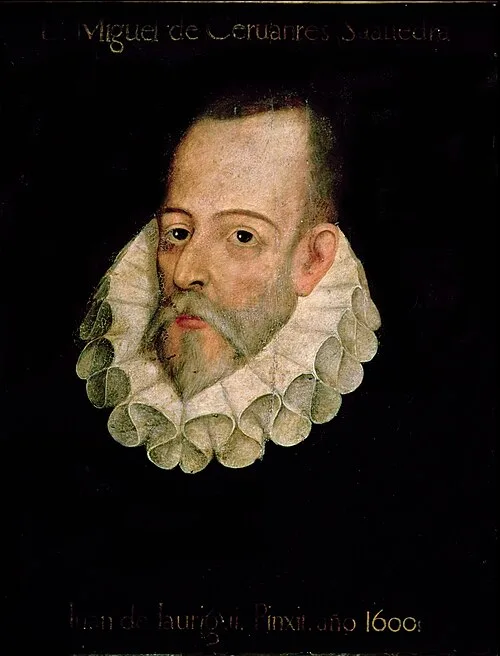
Miguel de Cervantes
Cervantes Public domain, Wikimedia Commons

The 17th century brought economic decline, plague and the expulsion of about 300,000 Moriscos, descendants of Muslims, between 1609 and 1614. Portugal broke away in 1640, and the Thirty Years’ War cost Spain its leading place in Europe. Yet this was the Golden Age: Miguel de Cervantes (author of Don Quixote) published Don Quixote in 1605 and 1615, Lope de Vega (playwright of the Golden Age) wrote hundreds of plays, and Diego Velázquez (court painter of Philip IV) painted Las Meninas in 1656. When Charles II (last Habsburg king of Spain) died childless in 1700, the line of the Spanish Habsburgs ended.
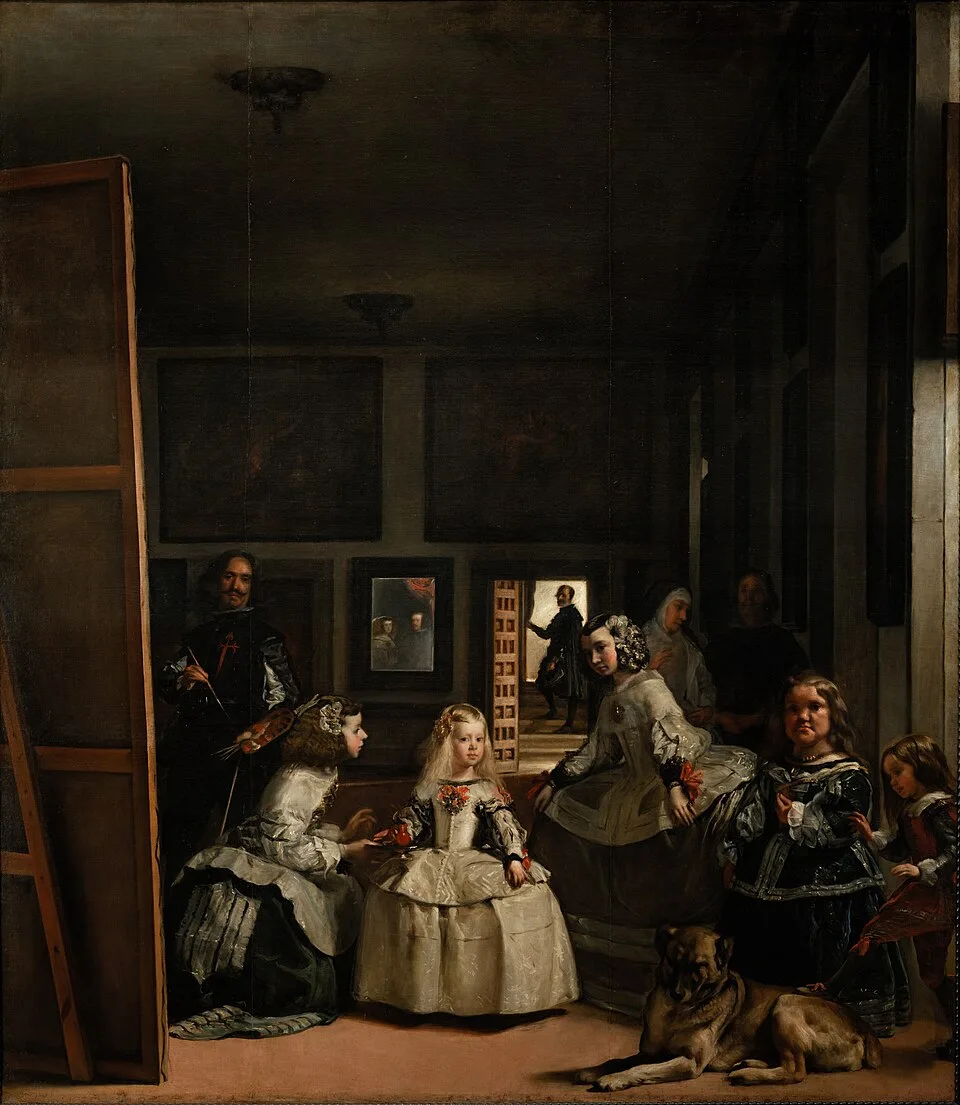
Las Meninas by Diego Velázquez, 1656. Prado Museum, Madrid.
Las Meninas by Diego Velázquez, 1656. Prado Museum, Madrid. Public domain, via Wikimedia Commons

Words worth knowing

Conquistador

“Conqueror”: one of the Spanish soldiers and adventurers who conquered much of the Americas.

Morisco

A Muslim who had been made to convert to Christianity, or a descendant of one. The Moriscos were expelled from Spain in 1609–1614.

Siglo de Oro

The “Golden Age” of Spanish literature and art, roughly from the early 16th to the late 17th century.

Tercio

A Spanish infantry unit of pikemen and musketeers, feared on Europe’s battlefields in the 16th and 17th centuries.

Did you know?

Did the sun really never set on the Spanish empire?

After 1580, when Philip II (king of Spain at its height) also ruled Portugal and its colonies, his lands stretched around the world, from the Americas to the Philippines and from Africa to Asia, so it was always daytime somewhere in them.

What is El Escorial?

A vast granite monastery, palace and royal burial place built for Philip II (king of Spain at its height) between 1563 and 1584 near Madrid. Most Spanish kings since Charles V (emperor and king of Spain) are buried there.

How much silver came from America?

Officially registered shipments in the 16th and 17th centuries add up to many thousands of tonnes, much of it from the silver mountain of Potosí, in the Andes. Much of it left Spain again to pay foreign bankers and armies.

Myth or fact?

“The Spanish Inquisition burned huge numbers of people.”

Match the names

Tap a name, then the role that goes with it.

Check yourself

Question 1 of 3

Who conquered the Aztec Empire?

Question 2 of 3

Which city did Philip II make his capital in 1561?

Question 3 of 3

Who wrote Don Quixote?

Collect the seal

Answer all three questions above to stamp the Golden Age seal. 0 of 3 answered.

Back to the seal book