Spanish history in steps

Step 1: Early Iberia, to 218 BCE

Hannibal

Carthaginian general

247–c. 183 BCEOne of the 20 key names
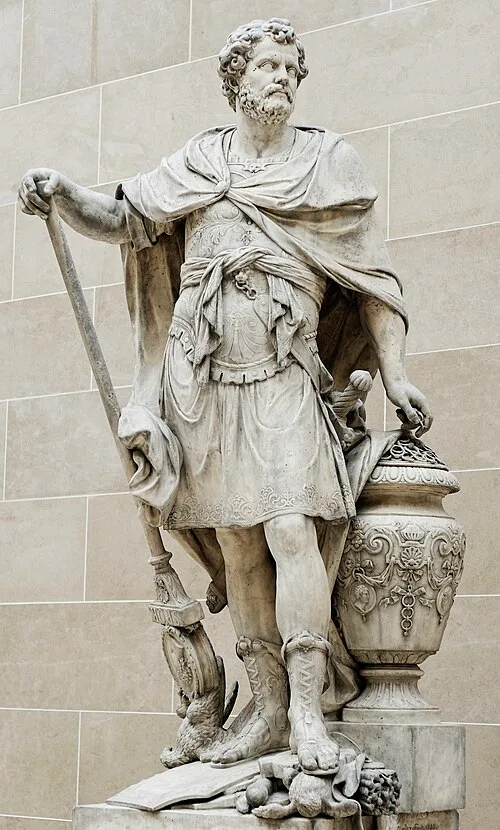
Hannibal
Marble statue by Sébastien Slodtz, 1704, showing Hannibal counting the rings of Roman knights killed at Cannae. Louvre, Paris. Made long after their lifetime. Public domain, via Wikimedia Commons
Hannibalhis name, in its Latin formthe name to use

Son of Hamilcar Barca and commander of the Carthaginian domain in Iberia from 221 BCE. He took Saguntum in 219 BCE, marched over the Pyrenees and the Alps with an army and elephants, and defeated Rome in Italy for years, but lost the war. He later took poison to avoid capture by the Romans.

Memory hook

Hannibal can be read as “grace of Baal”, the chief god of Carthage. Picture an elephant, blessed by Baal, climbing out of Iberia towards the snows of the Alps.

Already in your name cards. New

In the story

Step 1: Early Iberia

  • In 219 BCE Hannibal besieged Saguntum, an ally of Rome, and in 218 BCE he marched with an army and elephants towards Italy, starting the Second Punic War.

Step 2: Roman Hispania

  • Roman armies landed at Emporion in 218 BCE to cut off Hannibal’s supplies, and by 206 BCE they had driven Carthage out of Iberia.