Indian history in steps
Step 5 of 11

Kingdoms and the Delhi Sultanate

c. 550–1526
Qila, “fort”

After the Guptas, India was divided among regional kingdoms, among them the Chola empire of the south, which sent fleets across the Bay of Bengal. Turkish armies from Afghanistan raided and then conquered the north, founding the Delhi Sultanate in 1206. Islam took root, new styles of building and music grew, and in the south the empire of Vijayanagara rose.

About 6 minutes

Who you’ll meet

2 key names in this era. Everyone else plays a smaller part: tap their name in the text whenever you need a reminder.

Also appearing (13)

Families in this step: The Guptas The Cholas

Practise this era’s names

Where it happened

Tap a marker, a shaded region or a name below the map to see what happened there. Places in the text with a red pin open their own map card.

Place

Ghazni

Base of Mahmud’s raids on India.

Coastlines from Natural Earth. Kingdoms, regions and today’s countries are shown by name only: several modern borders in South Asia are disputed, so none are drawn.

Open the atlas to compare this map with other eras, or browse all places.

What happened

From the 7th century, dynasties such as the Chalukyas and Pallavas in the south and the Pratiharas and Palas in the north competed for power, and great stone temples were built. The Cholas, from the delta of the Kaveri, built the strongest empire of the south; Rajaraja I (Chola emperor) completed the Brihadisvara temple at Thanjavur in 1010, and his son Rajendra I (Chola emperor who sent fleets abroad) sent a fleet against the kingdom of Srivijaya in Southeast Asia.
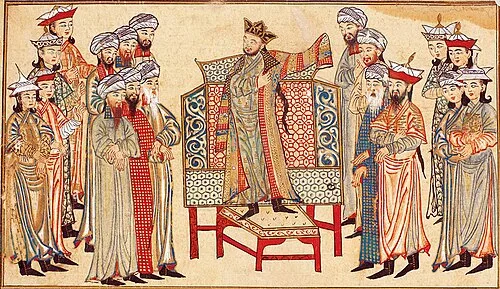
Mahmud of Ghazni
Mahmud Public domain, Wikimedia Commons

Islam reached India early, with Arab traders on the west coast and an Arab conquest of Sindh in 711. From around 1000, Mahmud of Ghazni (Afghan raider of northern India), from Afghanistan, raided northern India again and again, and in 1025 he sacked the temple of Somnath. In 1192 Muhammad of Ghor (conqueror of northern India) defeated the Rajput king Prithviraj Chauhan at Tarain, and in 1206 his general Qutb ud-Din Aibak (first sultan of Delhi) founded the Delhi Sultanate.
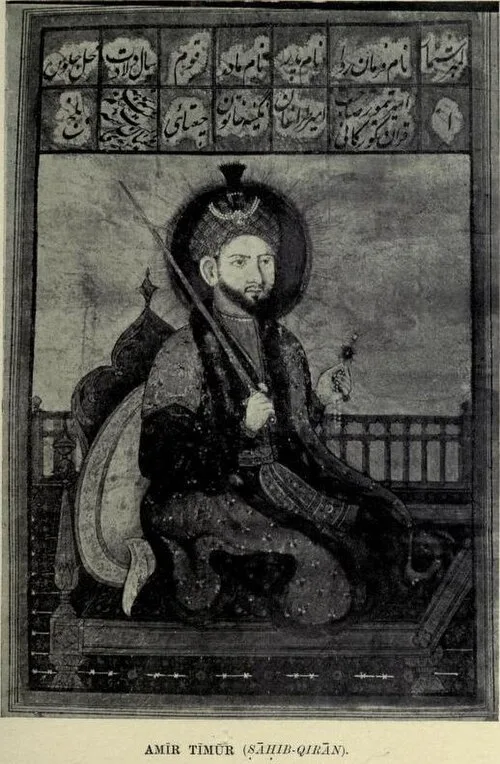
Timur
Timur Public domain, Wikimedia Commons

Five dynasties ruled the sultanate from Delhi. Alauddin Khalji (sultan who beat back the Mongols) beat back Mongol invasions around 1300, and Muhammad bin Tughluq (sultan of bold schemes) tried bold schemes, such as moving the capital to Daulatabad in the Deccan and issuing token coins, which failed. In 1398 Timur (Central Asian conqueror), a Turkic conqueror from Central Asia, sacked Delhi.
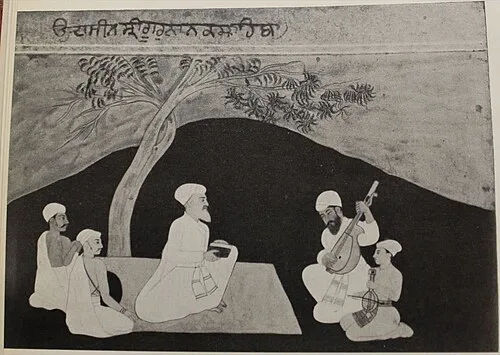
Guru Nanak
Nanak Public domain, Wikimedia Commons

In the south the Vijayanagara empire, founded in 1336, fought the Bahmani sultans of the Deccan, and its capital at Hampi astonished foreign visitors. Sufi saints and bhakti poets such as Kabir (weaver and poet-saint), who sang of a God beyond the divisions of Hindu and Muslim, reached ordinary people. Guru Nanak (founder of the Sikh faith), born in 1469, founded the Sikh faith in the Punjab.

Words worth knowing

Sultan

“Authority”: the title of a Muslim ruler.

Rajput

“Son of a king”: warrior clans of north and west India who ruled many kingdoms.

Bhakti

Loving devotion to a personal god, spread by poet-saints in many Indian languages.

Sufism

The mystical tradition of Islam. Sufi shrines in India drew followers of many faiths.

Did you know?

What is the Brihadisvara temple?

A huge granite temple to Shiva at Thanjavur, completed by Rajaraja I (Chola emperor) in 1010. Its tower rises about 66 metres, and it is a World Heritage Site.

How rich was Vijayanagara?

Portuguese and Persian visitors in the 15th and 16th centuries described its capital as one of the greatest cities they had seen, with markets full of jewels. Its ruins at Hampi cover some 40 square kilometres.

How did the Sikh faith begin?

With Guru Nanak (founder of the Sikh faith), born in 1469 in the Punjab, who taught devotion to one God and the equality of all people. Nine gurus followed him, and the last declared the scripture, the Guru Granth Sahib, to be the eternal guru.

Myth or fact?

“This age was one long war between Hindus and Muslims.”

Match the names

Tap a name, then the role that goes with it.

Check yourself

Question 1 of 3

Who founded the Delhi Sultanate in 1206?

Question 2 of 3

Which southern empire was founded in 1336?

Question 3 of 3

Who founded the Sikh faith?

Collect the seal

Answer all three questions above to stamp the Kingdoms and sultans seal. 0 of 3 answered.

Back to the seal book