Indian history in steps
Step 6 of 11

The Mughal Empire

1526–1707
Taj, “crown”, as in the Taj Mahal

In 1526 Babur (founder of the Mughal Empire), a descendant of Timur (Central Asian conqueror) and of Genghis Khan, defeated the sultan of Delhi at Panipat and founded the Mughal Empire. His grandson Akbar (Mughal emperor) built a strong and tolerant state, and his successors ruled one of the richest empires in the world, building the Taj Mahal and the Red Fort. Under Aurangzeb (last great Mughal emperor) the empire reached its greatest size, but long wars left it worn out.

About 6 minutes

Who you’ll meet

5 key names in this era. Everyone else plays a smaller part: tap their name in the text whenever you need a reminder.

Also appearing (7)

Family in this step: The Mughals

Practise this era’s names

Where it happened

Tap a marker, a shaded region or a name below the map to see what happened there. Places in the text with a red pin open their own map card.

Place

Kabul

Babur’s base before he invaded India.

Coastlines from Natural Earth. Kingdoms, regions and today’s countries are shown by name only: several modern borders in South Asia are disputed, so none are drawn.

Open the atlas to compare this map with other eras, or browse all places.

What happened

Babur
Babur Public domain, Wikimedia Commons

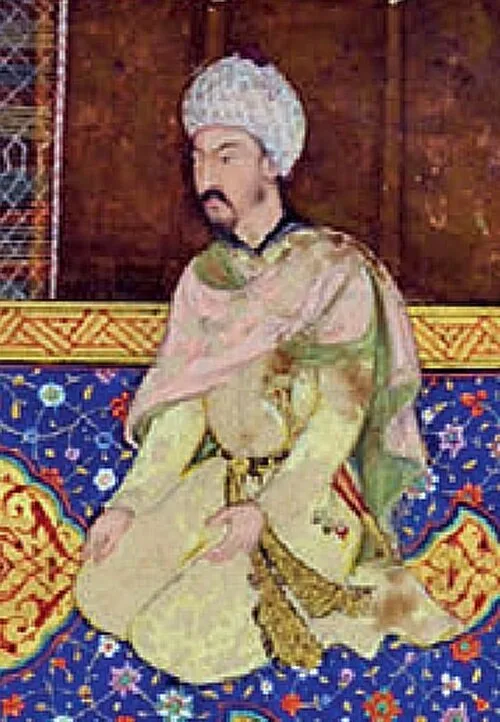
Babur (founder of the Mughal Empire), a prince from Central Asia who had lost his homeland, took Kabul and in 1526 defeated Sultan Ibrahim Lodi (last sultan of Delhi) at Panipat with the help of cannon and matchlocks. His son Humayun (second Mughal emperor) lost the throne to the Afghan Sher Shah Suri (Afghan ruler of northern India), who reorganised taxes and roads, but won it back in 1555, shortly before his death.
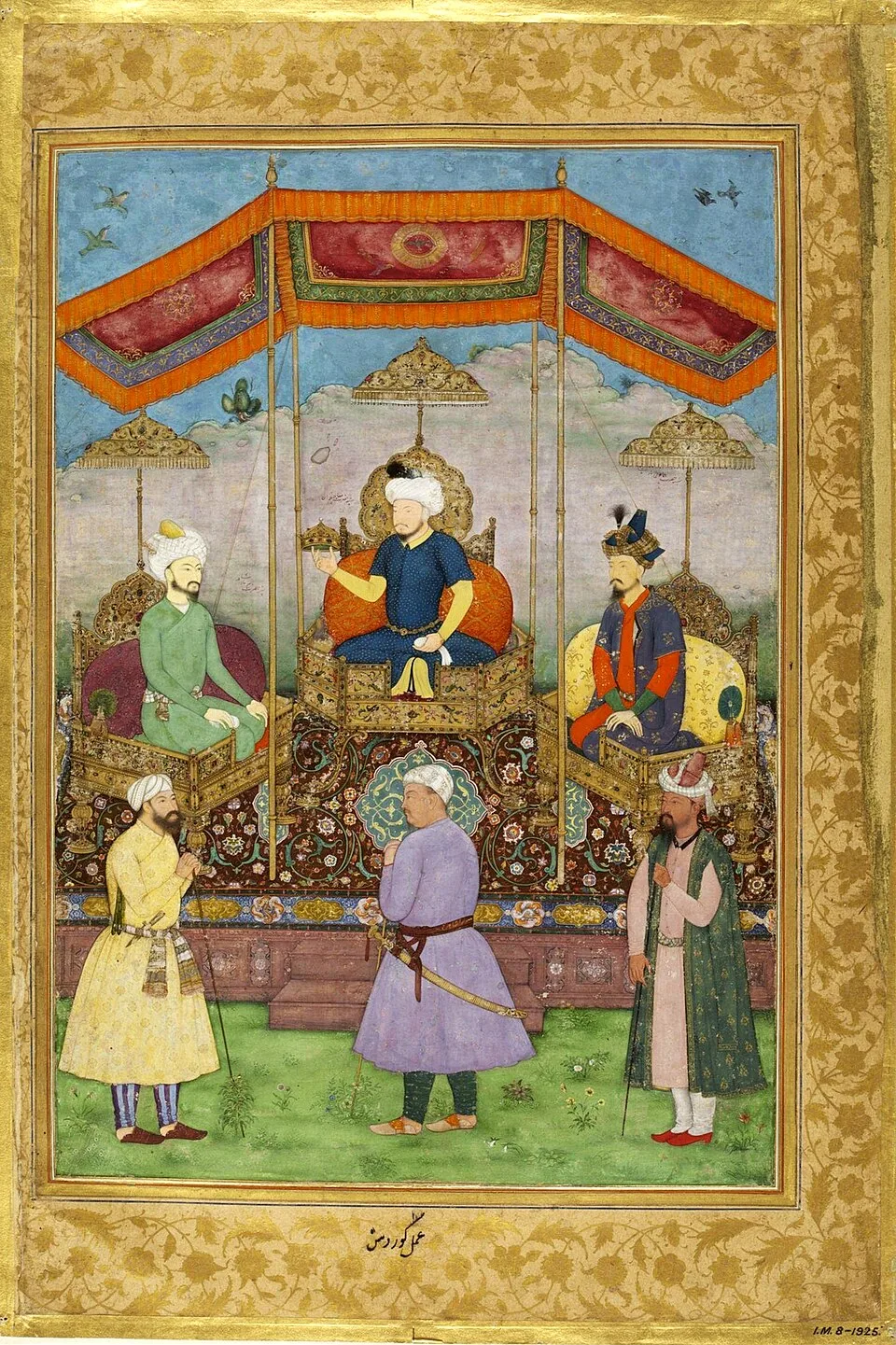
Timur hands the crown to Babur in the presence of Humayun, by Govardhan, around 1630, from the Minto Album. Victoria and Albert Museum, London.
Timur hands the crown to Babur in the presence of Humayun, by Govardhan, around 1630, from the Minto Album. Victoria and Albert Museum, London. Public domain, via Wikimedia Commons
Akbar
Akbar Public domain, Wikimedia Commons

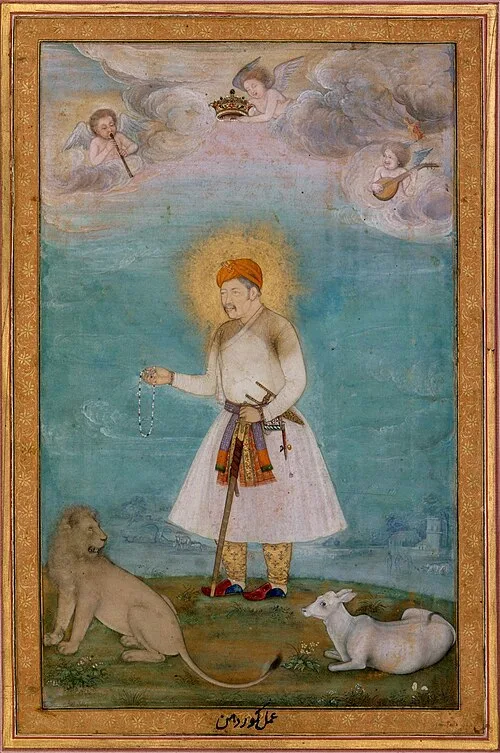
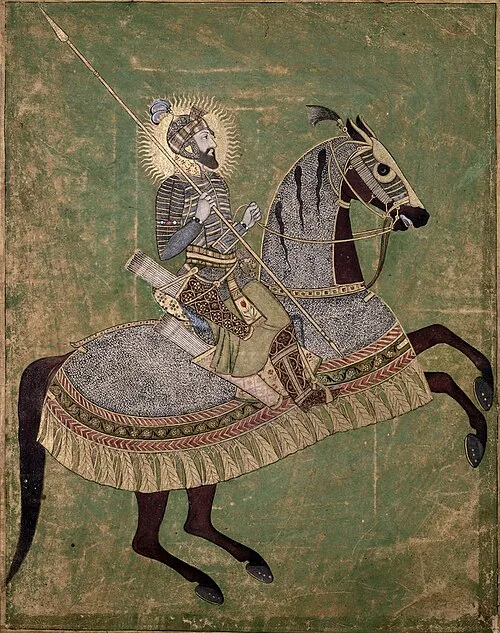
Akbar (Mughal emperor), who came to the throne in 1556 aged 13, conquered most of northern India and won over the Rajput kings through alliances and marriages. He abolished the tax on non-Muslims, ran his empire through ranked officials, the mansabdars, and held debates with scholars of many faiths at his new city of Fatehpur Sikri.
Jahangir
Jahangir Public domain, Wikimedia Commons

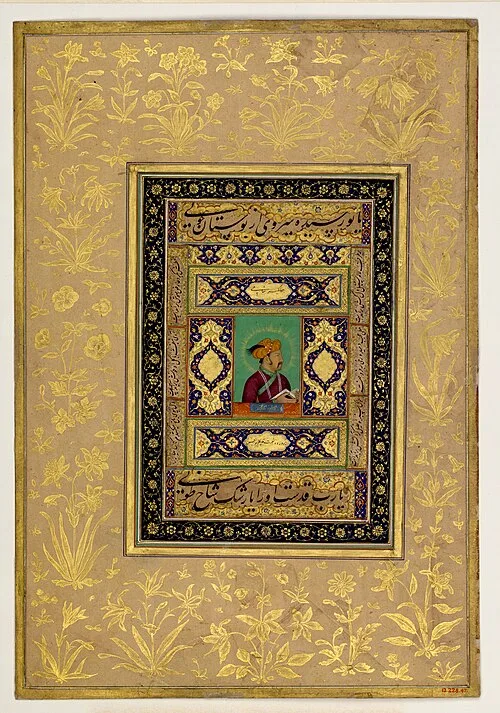
Under his son Jahangir (Mughal emperor) and grandson Shah Jahan (builder of the Taj Mahal), the court became famous for its painting, gardens and jewels. Shah Jahan built the Taj Mahal at Agra as a tomb for his wife Mumtaz Mahal (empress buried in the Taj Mahal), who died in 1631, and a new capital at Delhi with the Red Fort. European trading companies, Portuguese, Dutch, English and French, set up posts along the coasts.
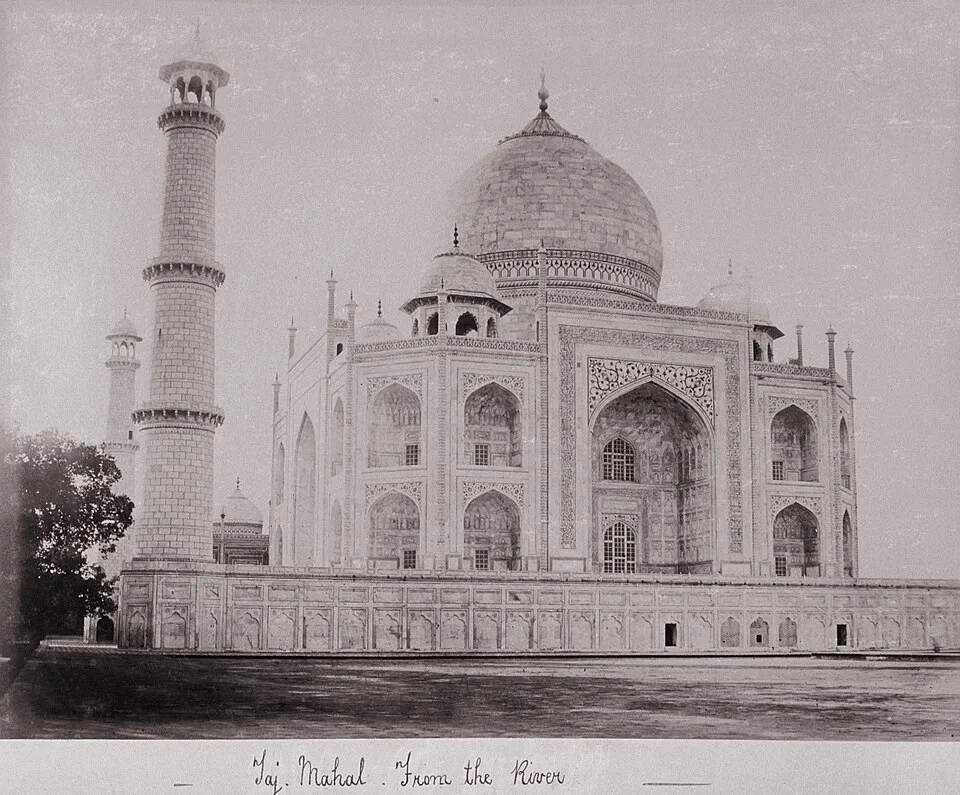
The Taj Mahal from the river, photographed by Samuel Bourne in the late 1860s. Los Angeles County Museum of Art.
The Taj Mahal from the river, photographed by Samuel Bourne in the late 1860s. Los Angeles County Museum of Art. Public domain, via Wikimedia Commons
Aurangzeb
Aurangzeb Public domain, Wikimedia Commons

Aurangzeb (last great Mughal emperor) took the throne in 1658 after defeating his brothers and imprisoning his father. A strict Sunni Muslim, he brought back the tax on non-Muslims and spent his last 26 years at war in the Deccan, where he conquered the sultanates of Bijapur and Golconda but could not crush the Marathas led by Shivaji (founder of the Maratha kingdom) and his successors. When he died in 1707 the empire was at its largest, but exhausted.

Words worth knowing

Padishah

“Emperor”: the Persian title of the Mughal rulers.

Mansabdar

An officer of the Mughal state, given a rank, the mansab, that fixed his pay and the number of horsemen he kept.

Jizya

A tax on non-Muslims under Muslim rulers, abolished by Akbar and brought back by Aurangzeb.

Persian

The language of the Mughal court and government, which left thousands of words in Hindi and Urdu.

Did you know?

How long did the Taj Mahal take to build?

Work began in 1632, the main tomb was finished around 1643, and the whole complex about ten years later. Some 20,000 workers are said to have built it.

Why are the Mughals called Mughals?

Mughal is a Persian and Indian form of “Mongol”, from Babur’s descent from Genghis Khan through his mother. The dynasty called itself Gurkani, after Timur (Central Asian conqueror).

What was the Koh-i-Noor?

A great diamond that passed from the Mughals to Nadir Shah (Persian ruler who sacked Delhi), then to Afghan and Sikh rulers, and was taken by the British in 1849. It is now among the British Crown Jewels, and India, Pakistan and others have asked for it.

Myth or fact?

“Shah Jahan cut off the hands of the Taj Mahal’s builders.”

Match the names

Tap a name, then the role that goes with it.

Check yourself

Question 1 of 3

Where did Babur defeat Ibrahim Lodi in 1526?

Question 2 of 3

Who built the Taj Mahal?

Question 3 of 3

Which Mughal emperor abolished the tax on non-Muslims?

Collect the seal

Answer all three questions above to stamp the Mughals seal. 0 of 3 answered.

Back to the seal book