Step 4: Goryeo, 918 – 1392
Yi Seong-gye
General who founded Joseon
1335–1408One of the 21 key names
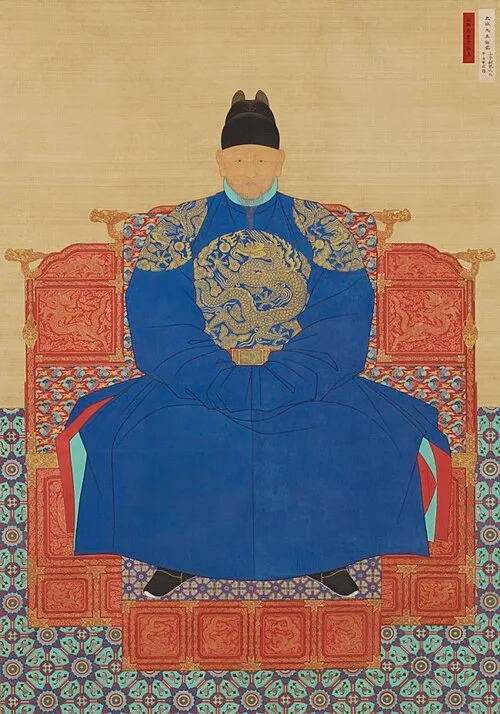

Yifamily namethe name to useSeong-gyegiven namethe name to use
Goryeo general famous for victories over Japanese pirates and Red Turban rebels. Ordered in 1388 to attack Ming China, he turned back at Wihwa Island, took power, and in 1392 founded the Joseon dynasty, ruling as King Taejo.
Memory hook
His turn at Wihwa Island changed the course of the river of history: an army sent to fight Ming became the army that made a dynasty. Picture a general on an island in the Yalu turning his horse for home.
Family
Also in this family: Taejong, Sejong, Yeonsangun, Injo, Sohyeon, Yeongjo, Sado, Jeongjo, Gojong, Daewongun, Sunjong
Family line
Joseon’s first kings, three generations
Easy to mix up with
- Yi Sun-sin (admiral of the turtle ships, Invasions)
- Yi Hwang (Neo-Confucian philosopher, Early Joseon)
- Yi I (philosopher and reformer, Early Joseon)
Already in your name cards. New
In the story
Step 4: Goryeo
- In 1388 General Yi Seong-gye, ordered to attack Ming China, turned his army back at Wihwa Island, took control of the government, and in 1392 founded the Joseon dynasty.
Step 5: Early Joseon
- Yi Seong-gye’s new dynasty moved the capital to Hanyang, today’s Seoul, and built a state on Neo-Confucian ideas.
- Yi Seong-gye ruled as King Taejo and in 1394 moved the capital to Hanyang, today’s Seoul, where the palace of Gyeongbokgung was completed in 1395.