In 1991 hikers in the Alps on the border between Italy and Austria found the body of a man who had died about 5,300 years ago, preserved in the ice. Nicknamed Ötzi (man found in the Alpine ice), he carried a copper axe, a bow and a fire-lighting kit, and an arrowhead lodged in his shoulder shows that he was killed. In the Bronze Age, the people of Sardinia built thousands of stone towers called nuraghi, many of which still stand.
From the 8th century BCE, Greek cities sent settlers to the coasts of southern Italy and Sicily, founding Cumae, Syracuse, Naples and many more; the Romans later called the region Magna Graecia, “Great Greece”. The Phoenicians and later the Carthaginians held western Sicily and parts of Sardinia. Inland lived peoples speaking Italic languages, among them the Latins, the Samnites and the Umbrians.
Between the Arno and the Tiber, the Etruscans built rich city-states such as Tarquinia, Cerveteri and Veii, and traded iron from the island of Elba across the Mediterranean. They painted their tombs with banquets, dancers and games, and wrote in an alphabet borrowed from the Greeks. Their language can be read aloud, but it is unrelated to its neighbours and is still only partly understood.
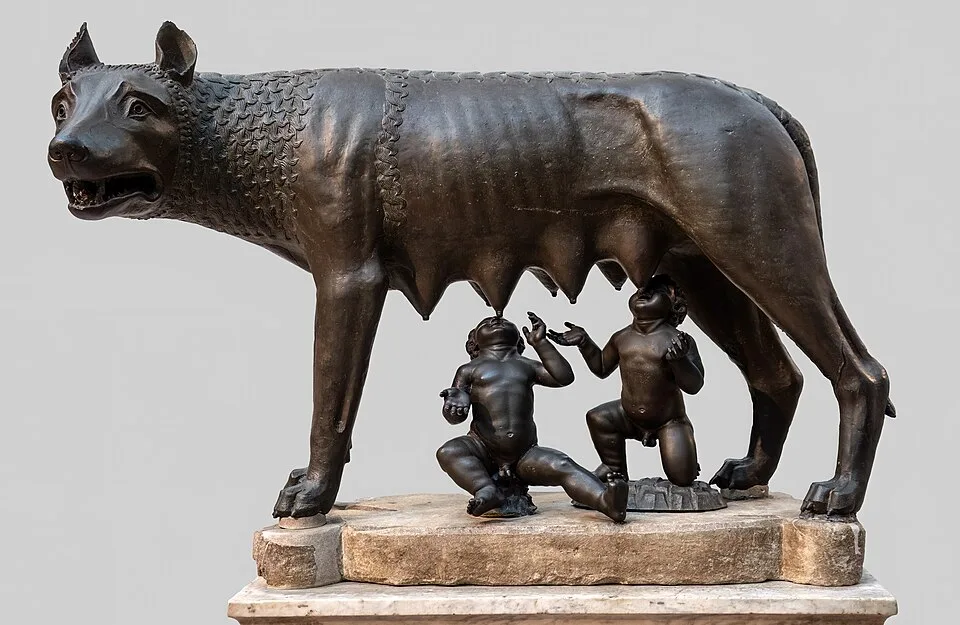
According to Roman legend, Rome was founded in 753 BCE by Romulus (legendary founder of Rome), one of twin boys abandoned on the Tiber and nursed by a she-wolf. Archaeology shows that people lived on the Palatine hill long before that. Tradition tells of seven kings, the last of them Etruscan, until the Romans drove out Tarquin the Proud (last king of Rome, by tradition), by the traditional date in 509 BCE, and founded a republic.