Italian history in steps
Step 3 of 11

The Roman Empire

27 BCE – 476 CE
Pax, “peace”, as in the Pax Romana

Augustus (Rome’s first emperor) turned the republic into a monarchy in all but name, and for some two centuries the empire enjoyed the Pax Romana, the Roman peace. Rome became a city of perhaps a million people, Christianity spread from the east, and Constantine (first Christian emperor) made it the emperor’s faith. In the west, the empire gave way to Germanic kings, and the last emperor in Italy was deposed in 476.

About 6 minutes

Who you’ll meet

2 key names in this era. Everyone else plays a smaller part: tap their name in the text whenever you need a reminder.

Also appearing (13)
Practise this era’s names

Where it happened

Tap a marker, a shaded region or a name below the map to see what happened there. Places in the text with a red pin open their own map card.

Seat of power, from 402

Ravenna

Capital of the last western emperors.

Coastlines from Natural Earth. Kingdoms, states and regions are shown by name only, without borders; shaded areas follow today’s borders as a guide.

Open the atlas to compare this map with other eras, or browse all places.

What happened

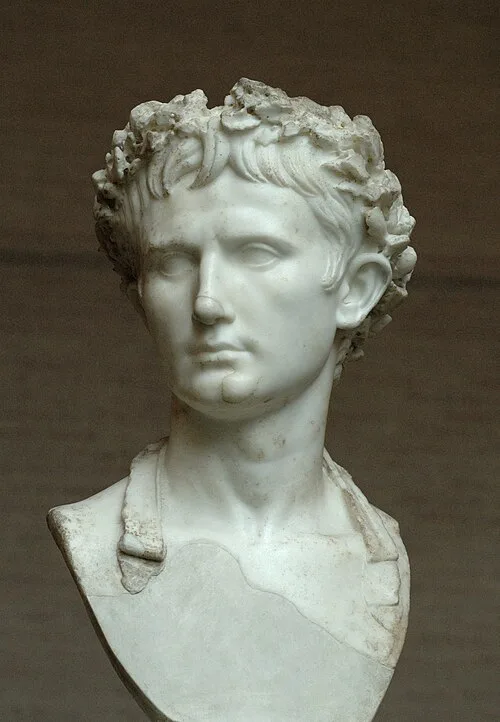
Augustus
Augustus Public domain, Wikimedia Commons

Augustus (Rome’s first emperor) kept the forms of the republic but held real power for over forty years, until his death in 14 CE. His age, and the two centuries after it, are remembered as the Pax Romana, when trade and roads crossed an empire from Britain to Syria. Poets such as Virgil (poet of the Aeneid), whose Aeneid told of Rome’s Trojan origins, and Horace (Roman poet) wrote under his patronage.
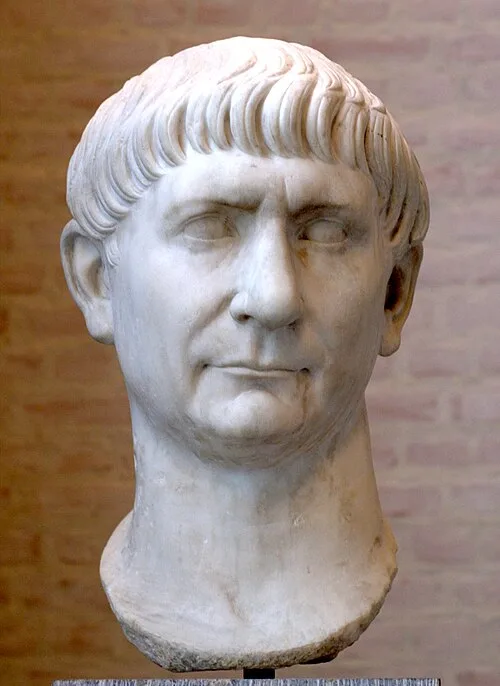
Trajan
Trajan Public domain, Wikimedia Commons

Emperors could be wise or cruel. Nero (emperor of the great fire) blamed the Christians for the great fire of Rome in 64 CE. In 79 CE Vesuvius erupted and buried Pompeii and Herculaneum under ash and mud, preserving them for archaeologists. Rome grew to perhaps a million people, with the Colosseum, opened in 80 CE, the Pantheon and great public baths, and under Trajan (emperor at the empire’s peak) the empire reached its greatest size in 117.
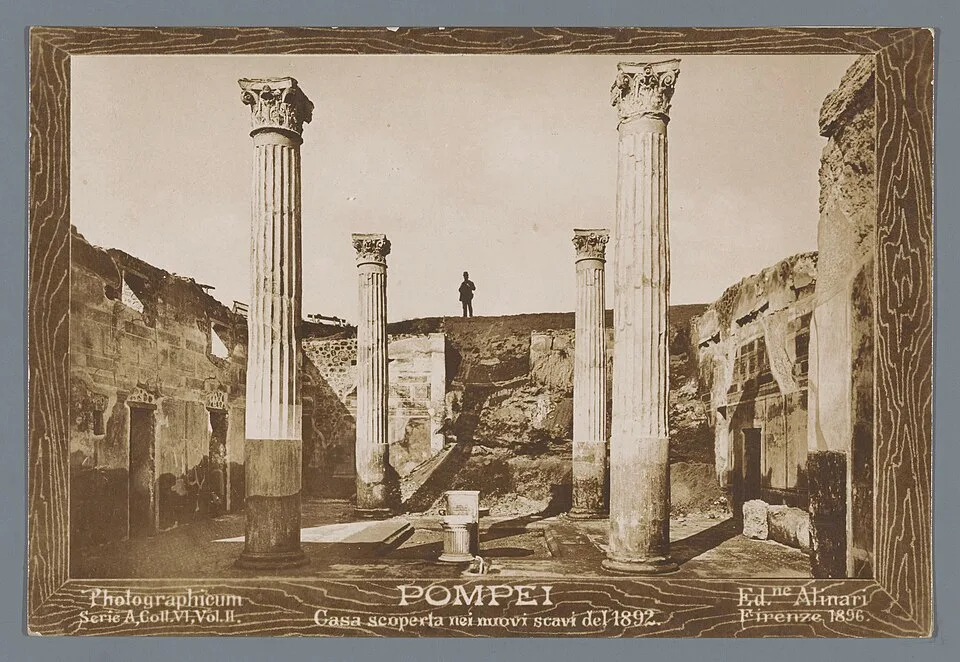
A house at Pompeii uncovered in 1892, photographed by Alinari in 1896. Rijksmuseum, Amsterdam.
A house at Pompeii uncovered in 1892, photographed by Alinari in 1896. Rijksmuseum, Amsterdam. CC0, via Wikimedia Commons
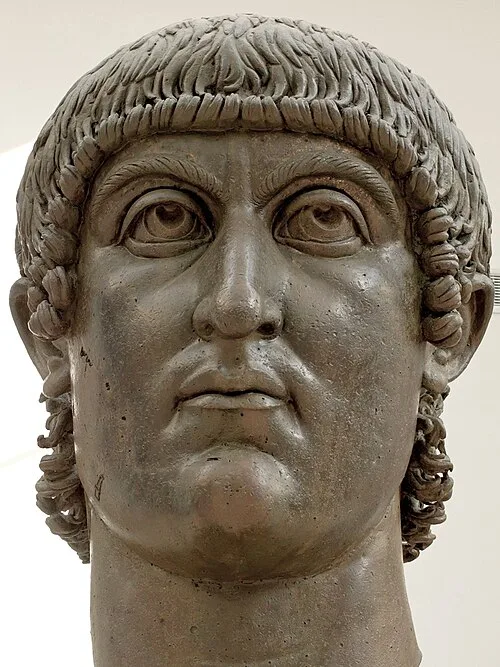
Constantine the Great
Constantine Public domain, Wikimedia Commons

In the 3rd century the empire was shaken by invasions, plague and dozens of short-lived emperors. Diocletian (emperor who shared power) restored order by sharing power among four rulers. Constantine (first Christian emperor), who won the battle of the Milvian Bridge outside Rome in 312, ended the persecution of Christians, favoured the Church and founded a new capital at Constantinople in 330. By 380 Christianity was the state religion.

After 395 the empire was divided for good into eastern and western halves. Germanic peoples settled inside the western frontiers, and the western emperors moved their court to Ravenna, behind marshes. The Visigoths under Alaric (Visigothic king who sacked Rome) sacked Rome in 410 and the Vandals in 455. In 476 a Germanic general, Odoacer (first barbarian king of Italy), deposed the boy emperor Romulus Augustulus (last western emperor) and ruled as king of Italy; the empire lived on in the east.

Words worth knowing

Pax Romana

The “Roman peace” of roughly 27 BCE to 180 CE, when the empire was largely free of major wars within.

Princeps

“First citizen”: the modest title Augustus used for his position.

Forum

The central square of a Roman town, with temples, law courts and the senate house.

Aqueduct

A channel, often carried on arches, that brought fresh water to a city.

Did you know?

Why is the Pantheon’s dome so famous?

Built under Hadrian (emperor and builder) around 125 CE, it is still the largest unreinforced concrete dome in the world, with a round opening, the oculus, at the top.

What is a vomitorium?

A passage that lets crowds pour out of an amphitheatre such as the Colosseum. The idea that Romans had rooms for vomiting during feasts is a modern misunderstanding of the word.

When exactly did Vesuvius erupt?

A letter of Pliny the Younger (witness of Vesuvius) gives 24 August 79 CE in the surviving copies, but an inscription found at Pompeii in 2018 and the autumn fruit found in the ruins suggest a date in October. Historians are still debating it.

Myth or fact?

“The Roman Empire fell in 476.”

Match the names

Tap a name, then the role that goes with it.

Check yourself

Question 1 of 3

Who was the first Roman emperor?

Question 2 of 3

Which cities did Vesuvius bury in 79 CE?

Question 3 of 3

Which emperor founded Constantinople?

Collect the seal

Answer all three questions above to stamp the Roman Empire seal. 0 of 3 answered.

Back to the seal book