Italian history in steps
Step 6 of 11

The Italian Renaissance

1400–1530
Uomo, “man”, as in uomo universale, the all-round Renaissance man

In the 15th century the rich, rival states of Italy, above all Florence, became the centre of a rebirth of art and learning inspired by ancient Greece and Rome. The Medici, Brunelleschi (architect of Florence’s dome), Leonardo (painter, engineer and inventor), Michelangelo (sculptor, painter and architect) and Raphael (painter) made it famous. But Italy’s divisions drew in the armies of France and Spain, and the age ended with the sack of Rome in 1527.

About 6 minutes

Who you’ll meet

4 key names in this era. Everyone else plays a smaller part: tap their name in the text whenever you need a reminder.

Also appearing (15)

Family in this step: The Medici

Practise this era’s names

Where it happened

Tap a marker, a shaded region or a name below the map to see what happened there. Places in the text with a red pin open their own map card.

Seat of power

Milan

Duchy of the Sforza, where Leonardo painted the Last Supper.

Coastlines from Natural Earth. Kingdoms, states and regions are shown by name only, without borders; shaded areas follow today’s borders as a guide.

Open the atlas to compare this map with other eras, or browse all places.

What happened

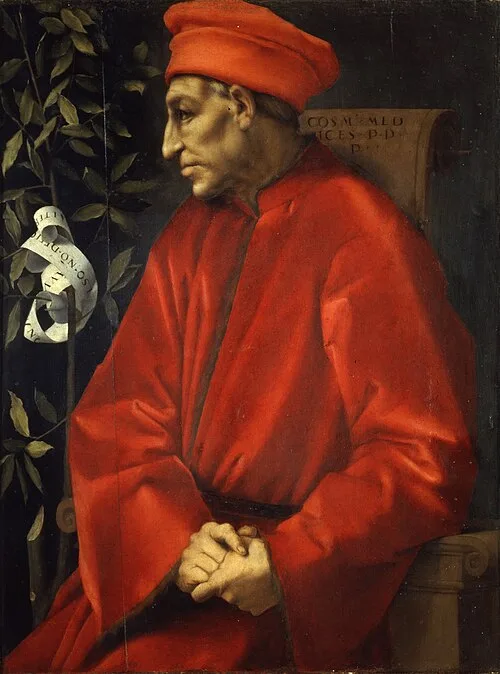
Cosimo de’ Medici
Cosimo Public domain, Wikimedia Commons

Italy in the 15th century was dominated by five states: the duchy of Milan, the republic of Venice, the republic of Florence, the Papal States and the kingdom of Naples. They fought and made peace in turn. In Florence the Medici, the richest bankers in Europe, ruled from behind the scenes, first Cosimo (banker who ruled Florence) and then his grandson Lorenzo the Magnificent (ruler of Florence and patron), who survived an attempt to murder him in the cathedral in 1478.

Scholars called humanists searched for ancient texts and studied Greek, and artists studied ancient ruins. Brunelleschi (architect of Florence’s dome) worked out the rules of perspective and finished the great dome of Florence cathedral in 1436, and painters such as Masaccio and Botticelli (painter of the Birth of Venus) and the sculptor Donatello brought new life to art. Venetian printers such as Aldus Manutius spread the classics in cheap, handy books.
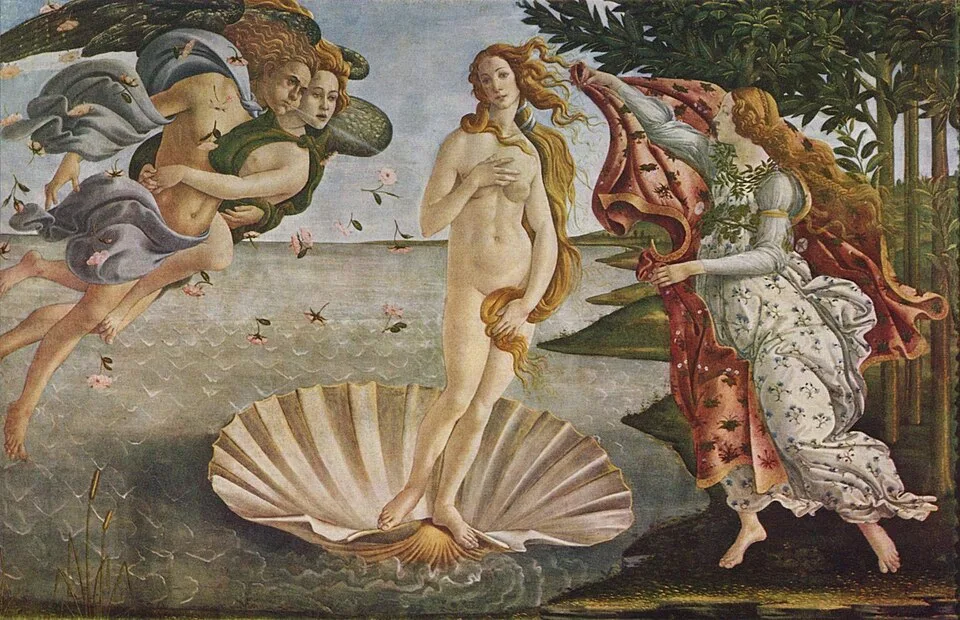
The Birth of Venus by Sandro Botticelli, around 1485.
The Birth of Venus by Sandro Botticelli, around 1485. Public domain, via Wikimedia Commons
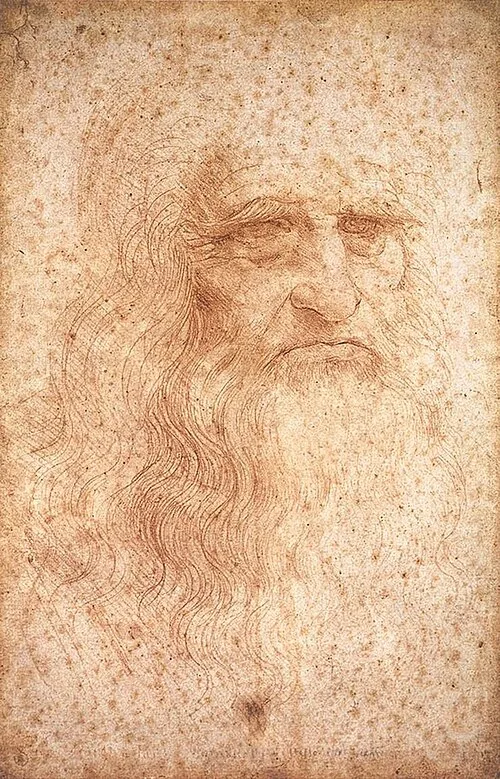
Leonardo da Vinci
Leonardo Public domain, Wikimedia Commons

Leonardo da Vinci (painter, engineer and inventor) painted the Last Supper in Milan and the Mona Lisa, and filled notebooks with studies of anatomy, water and flying machines. Michelangelo (sculptor, painter and architect) carved the David for Florence and painted the ceiling of the Sistine Chapel in Rome between 1508 and 1512, while Raphael (painter) painted the pope’s rooms nearby. In Florence the friar Savonarola (preacher burned in Florence) denounced luxury and burned vanities, until he was himself burned in 1498.
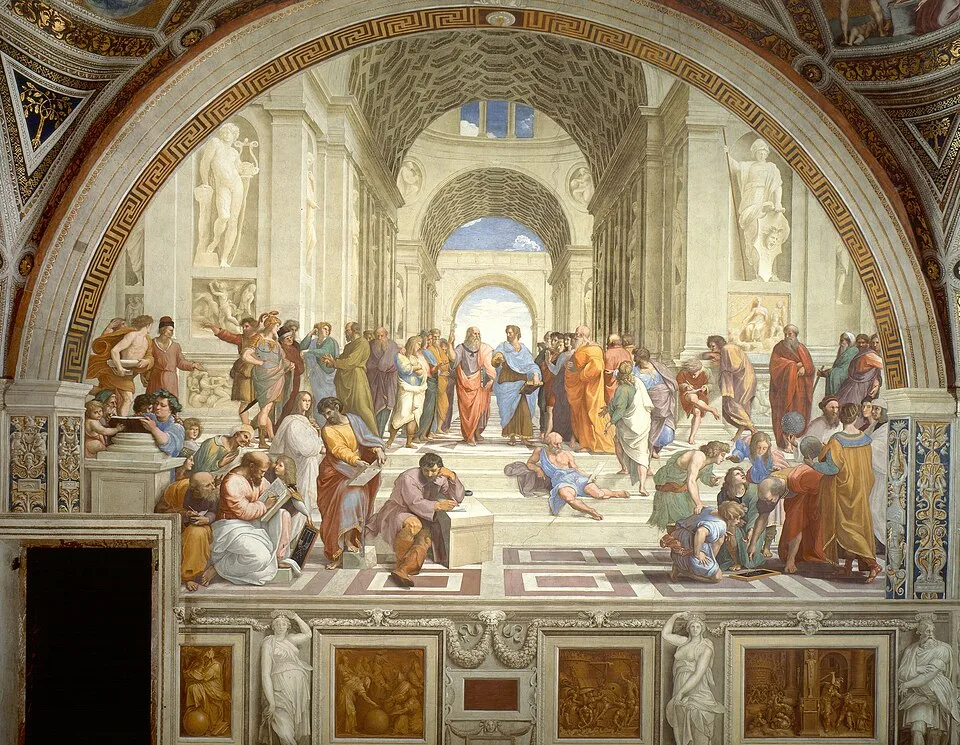
The School of Athens by Raphael, 1511.
The School of Athens by Raphael, 1511. Public domain, via Wikimedia Commons
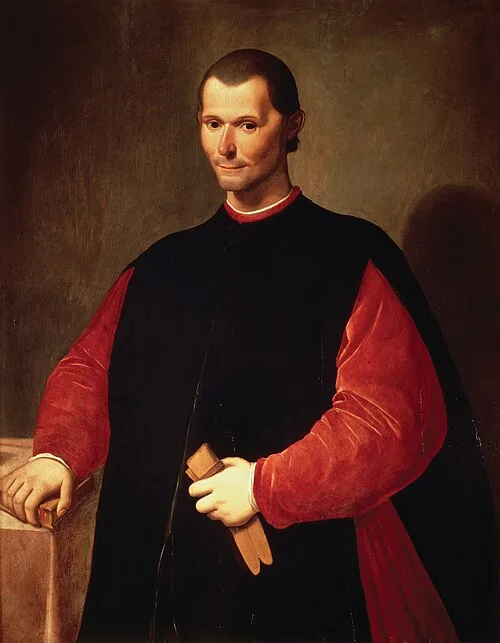
Niccolò Machiavelli
Machiavelli Public domain, Wikimedia Commons

In 1494 King Charles VIII (French king who invaded Italy) of France invaded, starting the Italian Wars between France and Spain for control of the peninsula. Pope Alexander VI (Borgia pope) and his son Cesare Borgia (pope’s son and conqueror) carved out a state in central Italy, and the Florentine official Niccolò Machiavelli (author of The Prince), watching them, wrote The Prince on how to win and keep power. Italian sailors opened the oceans for others: Columbus (Genoese navigator) of Genoa sailed for Spain in 1492. In 1527 unpaid troops of the emperor Charles V (emperor whose troops sacked Rome) sacked Rome.

Words worth knowing

Rinascimento

“Rebirth”: the Renaissance, the revival of ancient learning and art.

Humanism

The study of ancient Greek and Latin texts, history and moral philosophy.

Perspective

A method of drawing that makes a flat picture look deep, worked out by Brunelleschi.

Condottiero

A mercenary captain hired by Italian states to fight their wars.

Did you know?

Why did Leonardo write backwards?

Most of his notebooks are in mirror writing, from right to left. He was left-handed, and this may simply have been easier for him; there is no evidence he meant it as a code.

Did Michelangelo paint the Sistine ceiling lying on his back?

No. He stood on a scaffold he designed, bending backwards to paint, and wrote a comic poem about the strain on his neck and back.

How many people lived in Florence?

Perhaps 40,000 to 50,000 in the 15th century, fewer than before the Black Death. Venice and Milan were larger, with over 100,000 each.

Myth or fact?

“Machiavelli wrote that “the end justifies the means”.”

Match the names

Tap a name, then the role that goes with it.

Check yourself

Question 1 of 3

Which family ruled Florence from behind the scenes?

Question 2 of 3

Who painted the Sistine Chapel ceiling?

Question 3 of 3

Whose invasion in 1494 started the Italian Wars?

Collect the seal

Answer all three questions above to stamp the Renaissance seal. 0 of 3 answered.

Back to the seal book