Italian history in steps
Step 2 of 11

The Roman Republic

509–27 BCE
SPQR, “the Senate and People of Rome”

The Roman Republic was governed by elected magistrates, a Senate and assemblies of citizens. Over five centuries it conquered Italy, defeated Carthage and Hannibal (general who invaded Italy), and came to rule the Mediterranean. Then its politics turned violent, and civil wars ended with Julius Caesar’s dictatorship and the rise of his heir, Octavian (Rome’s first emperor).

About 6 minutes

Who you’ll meet

2 key names in this era. Everyone else plays a smaller part: tap their name in the text whenever you need a reminder.

Also appearing (7)
Practise this era’s names

Where it happened

Tap a marker, a shaded region or a name below the map to see what happened there. Places in the text with a red pin open their own map card.

Region

Alps

Crossed by Hannibal with his elephants in 218 BCE.

Coastlines from Natural Earth. Kingdoms, states and regions are shown by name only, without borders; shaded areas follow today’s borders as a guide.

Open the atlas to compare this map with other eras, or browse all places.

What happened

The Romans replaced their king with two consuls, elected each year, advised by the Senate, a council of former magistrates. Ordinary citizens, the plebeians, struggled for rights against the old noble families, the patricians, and won their own officials, the tribunes, and a written code of laws, the Twelve Tables, around 450 BCE.
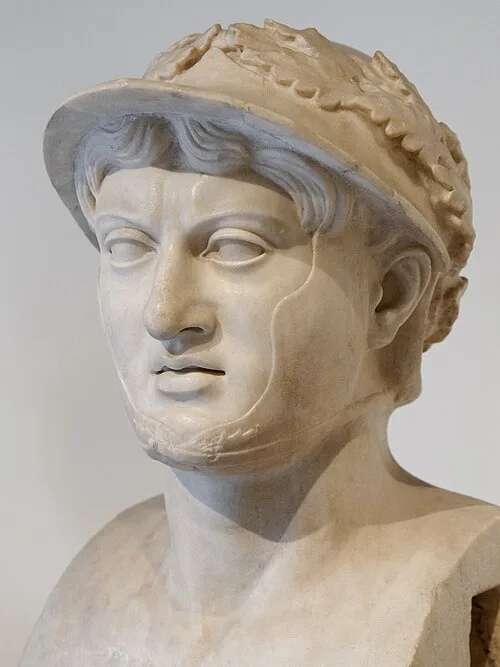
Pyrrhus
Pyrrhus Public domain, Wikimedia Commons

Rome grew by war and alliance. Gauls sacked the city around 390 BCE, but the Romans recovered, defeated the Samnites and the Greek king Pyrrhus (Greek king who fought Rome), and by 264 BCE controlled Italy south of the Po. Roads such as the Via Appia, begun in 312 BCE, tied the peninsula together.
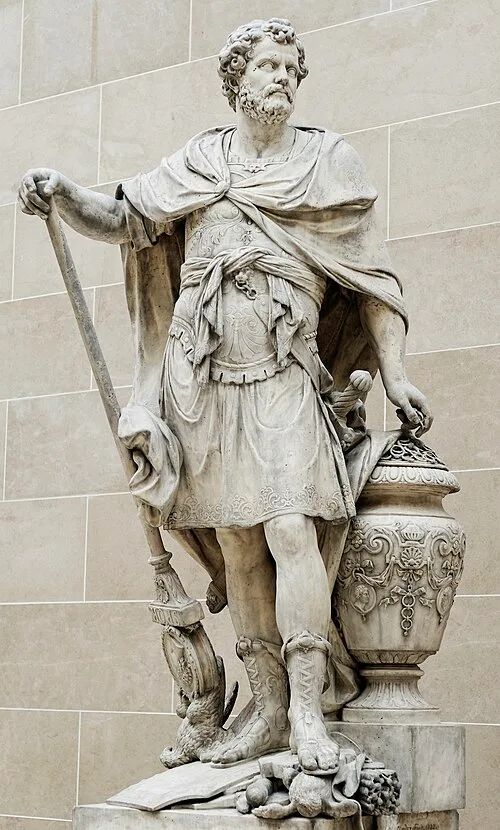
Hannibal
Hannibal Public domain, Wikimedia Commons

Three wars against Carthage, the Punic Wars, made Rome the power of the western Mediterranean. In the second, Hannibal (general who invaded Italy) crossed the Alps with an army and elephants in 218 BCE and destroyed a Roman army at Cannae in 216 BCE, but Rome held out, and Scipio (Roman general who beat Hannibal) defeated him at Zama in Africa in 202 BCE. In 146 BCE the Romans destroyed Carthage.
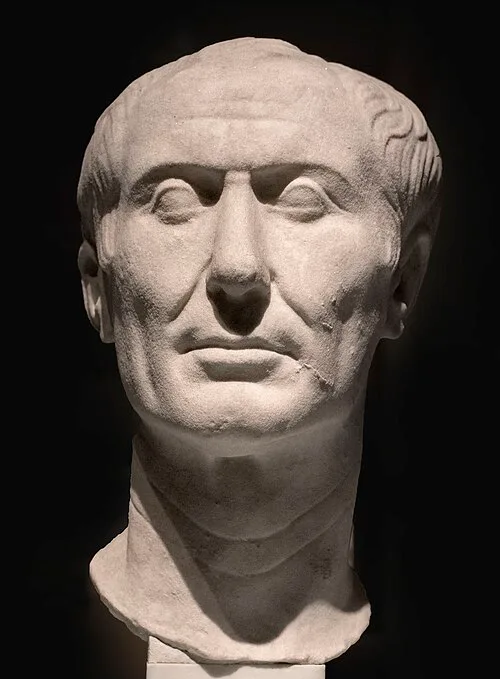
Julius Caesar
Caesar Public domain, Wikimedia Commons

Conquest brought wealth and slaves, and also bitter conflict. The reforming tribune Tiberius Gracchus and later his brother Gaius were killed, Italian allies fought Rome for citizenship, and Spartacus (leader of a slave revolt) led a great slave revolt in 73–71 BCE. Generals with loyal armies fought civil wars. Julius Caesar (general and dictator) crossed the Rubicon in 49 BCE, became dictator and was murdered in the Senate in 44 BCE. His heir Octavian (Rome’s first emperor) defeated Mark Antony (Caesar’s general) and Cleopatra (last queen of Egypt) in 31 BCE and in 27 BCE took the name Augustus.

Words worth knowing

Consul

One of the two chief magistrates of the republic, elected for a year.

Senate

The council of former magistrates that advised the consuls and guided policy.

Tribune

An official elected by the plebeians who could block other officials to protect citizens.

Dictator

An emergency magistrate with full power for up to six months; Caesar was made dictator for life.

Did you know?

Why is SPQR on Rome’s drain covers?

Senatus Populusque Romanus, “the Senate and People of Rome”, was the formal name of the Roman state. The city of Rome still uses it today, on buildings, buses and manhole covers.

How many elephants did Hannibal take over the Alps?

Ancient writers say he set out with 37. Most died in the following months, and the crossing itself cost him many men.

What does crossing the Rubicon mean?

Taking a step that cannot be undone. The Rubicon was a small river marking the edge of Caesar’s province; bringing an army across it was an act of war against the republic.

Myth or fact?

“Julius Caesar was the first Roman emperor.”

Match the names

Tap a name, then the role that goes with it.

Check yourself

Question 1 of 3

How many consuls were elected each year?

Question 2 of 3

Where did Hannibal destroy a Roman army in 216 BCE?

Question 3 of 3

Which river did Caesar cross in 49 BCE?

Collect the seal

Answer all three questions above to stamp the Roman Republic seal. 0 of 3 answered.

Back to the seal book