For almost four centuries a refined court in Kyoto produced some of the world’s great early literature. Meanwhile real power drifted first to the Fujiwara family and then to warrior clans in the provinces: the samurai.
About 6 minutes
Who you’ll meet
3 key names in this era. Everyone else plays a smaller part: tap their name in the text whenever you need a reminder.
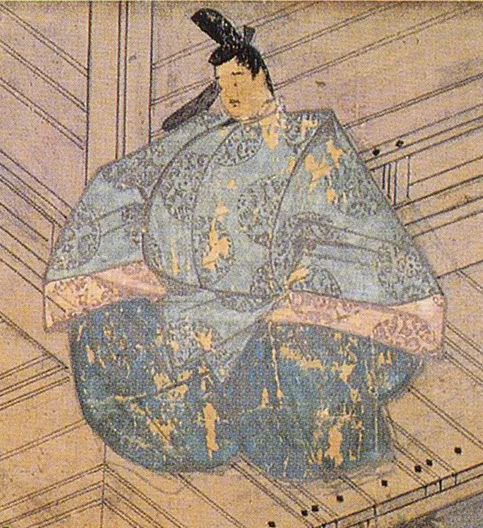
The Fujiwara clan ruled through marriage. They wed their daughters to emperors and then governed as regents for their own grandsons. At the family’s peak, three daughters of Fujiwara no Michinaga(most powerful Fujiwara regent) became empresses.
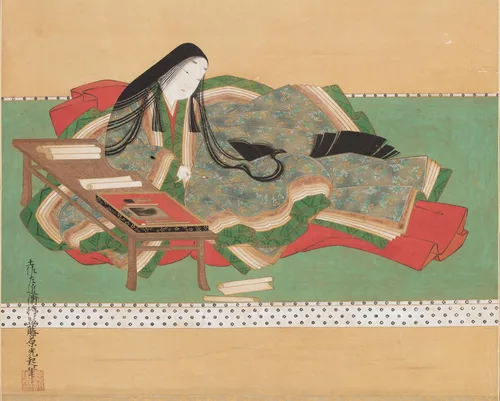
Court life prized poetry, elegant handwriting and taste in everything from paper to perfume. As official embassies to China stopped (the last planned one was cancelled in 894), native forms flourished, above all the kana syllabaries, which let people write Japanese as it was spoken. Women writing in kana produced masterpieces around the year 1000: Murasaki Shikibu’s Tale of Genji and Sei Shōnagon’s Pillow Book.
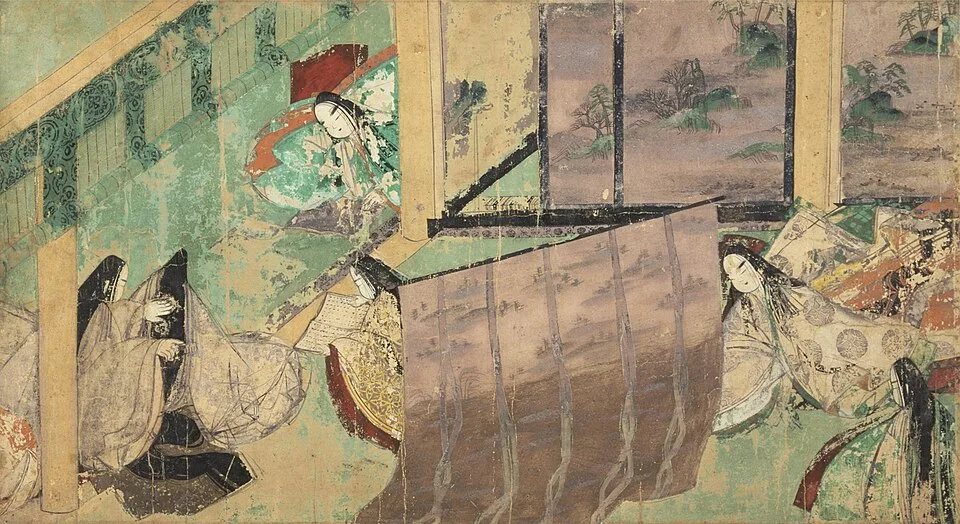
The “Azumaya” scene of the illustrated Tale of Genji scroll, around 1130. Public domain, via Wikimedia Commons
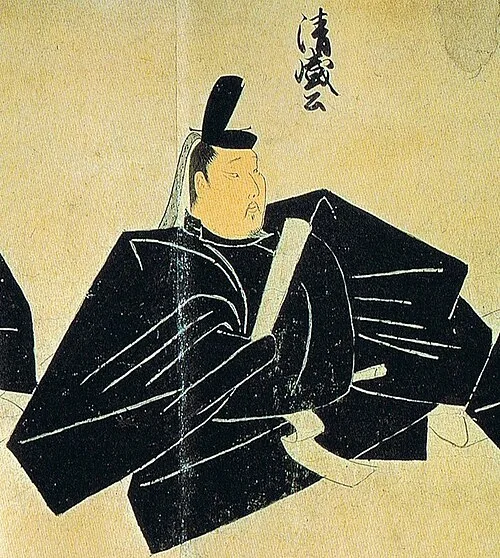
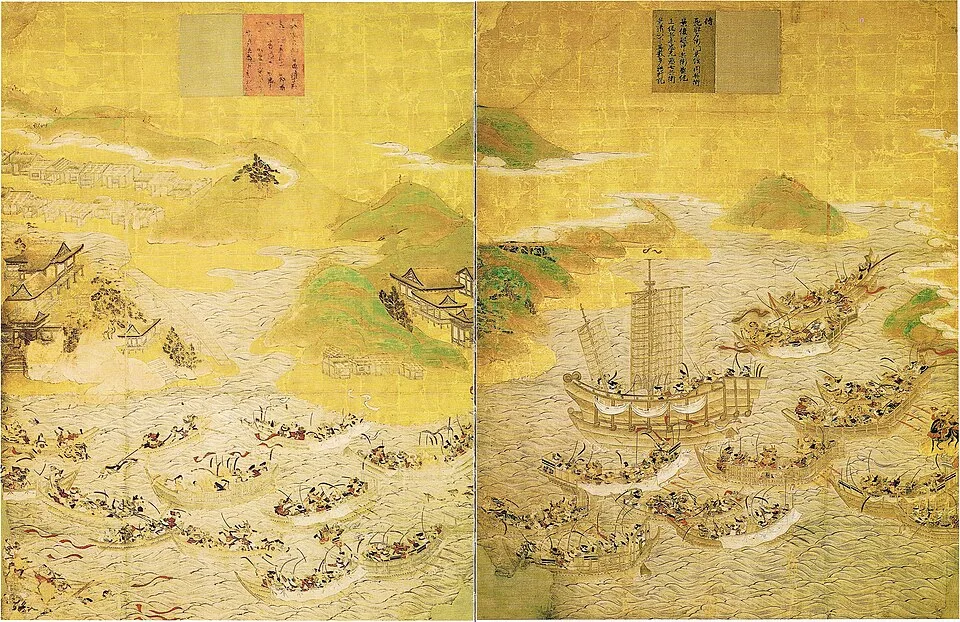
In the provinces, land and armed force gathered in the hands of warrior clans. Two of them, the Taira and the Minamoto, were drawn into court politics. From the 1160s the Taira leader, Taira no Kiyomori, dominated the court and made his infant grandson emperor, and in 1180 the two clans went to war: the Genpei War (1180–1185). The Minamoto won at the sea battle of Dan-no-ura in 1185, where the child emperor Antoku(Kiyomori’s grandson) drowned.
The battle of Dan-no-ura, from a painted set of panels on the life of Emperor Antoku by Tosa Mitsunobu, before about 1525. Public domain, via Wikimedia Commons
Words worth knowing
Kana仮名
The Japanese syllabaries: flowing hiragana and angular katakana, both simplified from Chinese characters.
Sesshō and kampaku摂政・関白
Regent titles for a child emperor and an adult emperor; the Fujiwara monopolised both.
Samurai侍
From a verb meaning “to serve”: armed retainers who grew into a warrior class.
Mappō末法
The “latter days of the Buddhist law”, an age of decline believed to begin in 1052, which drove many people to Pure Land Buddhism.
Did you know?
Is The Tale of Genji the world’s first novel?
It is often called one of the first: a long prose narrative in 54 chapters following the loves and losses of the “shining prince” Genji and then his descendants, with hundreds of characters, written about a thousand years ago.
The Pillow Book is full of them, under headings such as “Hateful things”, “Things that make the heart beat faster” and “Things that cannot be compared”.
Myth or fact?
“The face on the Heike crab’s shell is the spirit of a drowned Taira samurai.”
Match the names
Tap a name, then the role that goes with it.
Check yourself
Question 1 of 3
How did the Fujiwara family control the court?
Question 2 of 3
What did the kana scripts make possible?
Question 3 of 3
Which clan won the Genpei War?
平安
Collect the seal
Answer all three questions above to stamp the Heian seal. 0 of 3 answered.