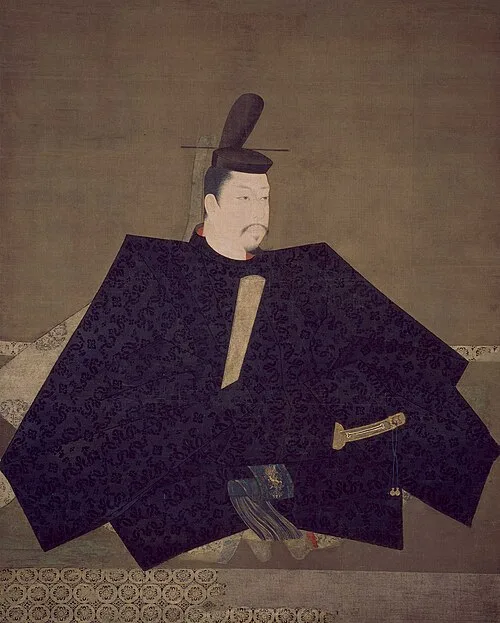

Yoritomo (first shogun) ran his government from Kamakura, south of modern Tokyo. In 1192 the emperor named him shogun, and his regime became known as the bakufu, “tent government”. The emperor stayed in Kyoto as the source of legitimacy; the shogun held the swords.
After Yoritomo (first shogun) died in 1199, his wife’s family, the Hōjō, took control as regents to the shogun. By the 13th century Japan had an emperor whose power was exercised by a shogun, whose power was exercised by a Hōjō regent.
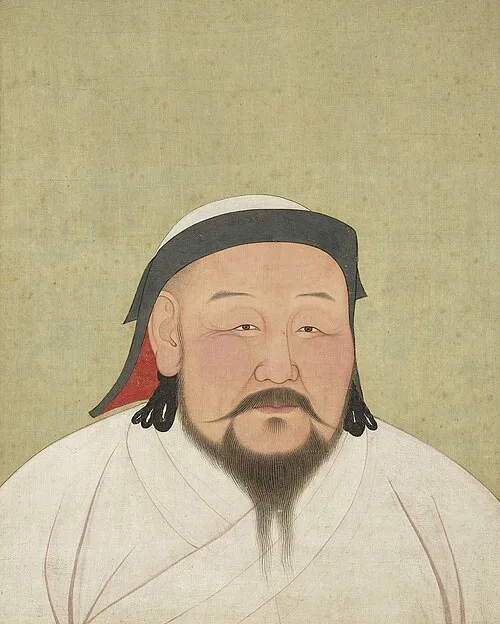

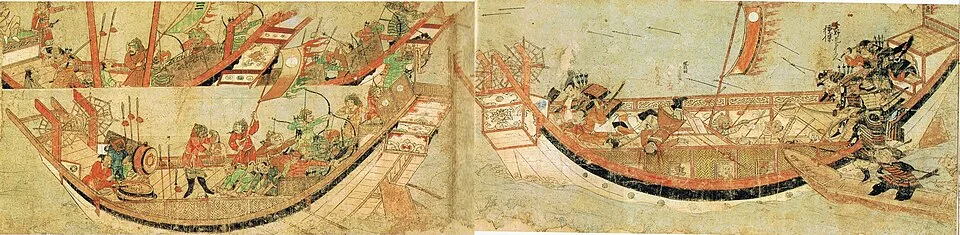
In 1274 and 1281, armies sent by the Mongol ruler of China, Kublai Khan (Mongol emperor of China), including Korean and Chinese troops, landed in northern Kyushu. Samurai resisted fiercely, and after the first attack the shogunate built a stone wall along Hakata Bay. Storms also wrecked the invasion fleets, especially in 1281; they were later remembered as kamikaze, “divine winds”.

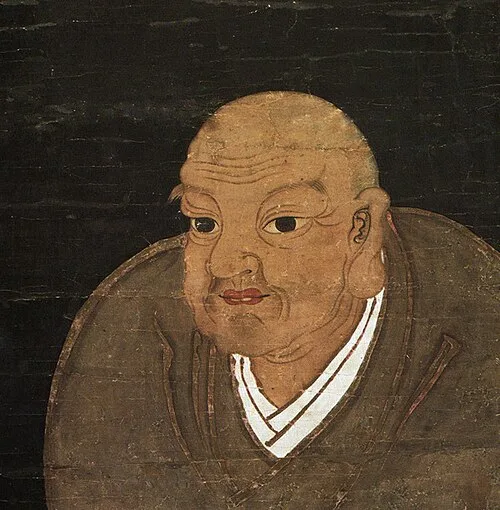

Victory brought no captured land to reward the warriors who had fought, and resentment grew. Meanwhile new, simpler forms of Buddhism (Pure Land, Nichiren (prophet of the Lotus Sutra) and Zen) spread among warriors and commoners. In 1333 Emperor Go-Daigo (emperor who fought the shoguns) rallied warriors against the Hōjō, and the Kamakura shogunate fell.