A new line of shoguns, the Ashikaga, ruled from Kyoto and sponsored an extraordinary flowering of culture: Noh, ink painting, Zen gardens and the tea gathering. But their control slipped, and after 1467 Japan broke apart into a century of war. Then Europeans arrived, bringing guns and Christianity.
About 6 minutes
Who you’ll meet
2 key names in this era. Everyone else plays a smaller part: tap their name in the text whenever you need a reminder.
Tap a marker, a shaded region or a name below the map to see what happened there. Places in the text with a red pin open their own map card.
Seat of power
Kyoto 京都
The Ashikaga shoguns ruled from the Muromachi district. The Golden and Silver Pavilions are here, and the Ōnin War of 1467–1477 left much of the city in ruins.
Coastlines from Natural Earth; prefecture shapes from Global Map Japan (GSI). Shaded regions follow today’s boundaries as a guide.
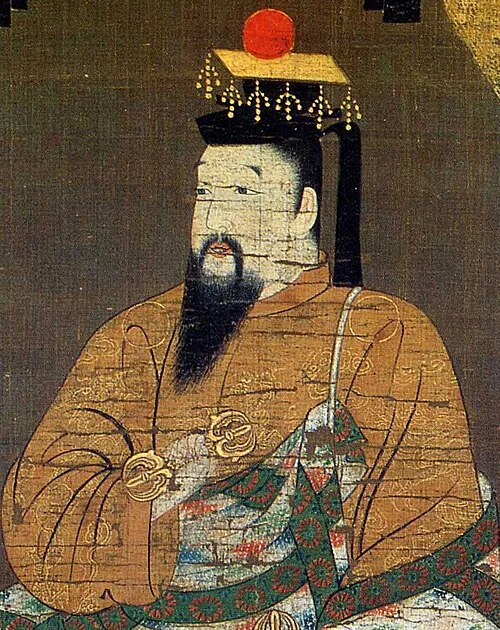
Go-Daigo’s restoration did not last. The general Ashikaga Takauji(first Ashikaga shogun) turned against him and became shogun in 1338, ruling from the Muromachi district of Kyoto. For decades two rival imperial courts, North and South, competed, until they were reunited in 1392.
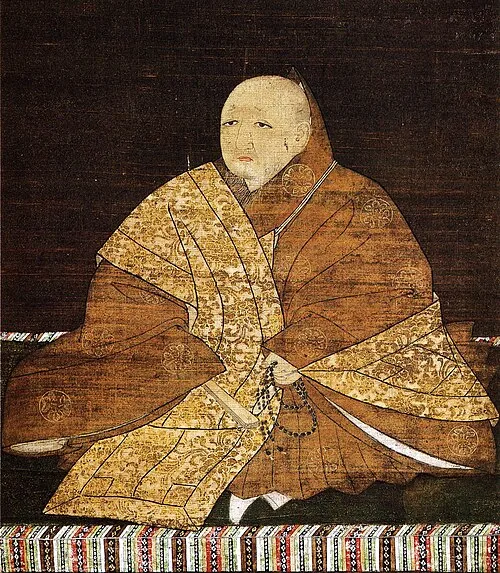
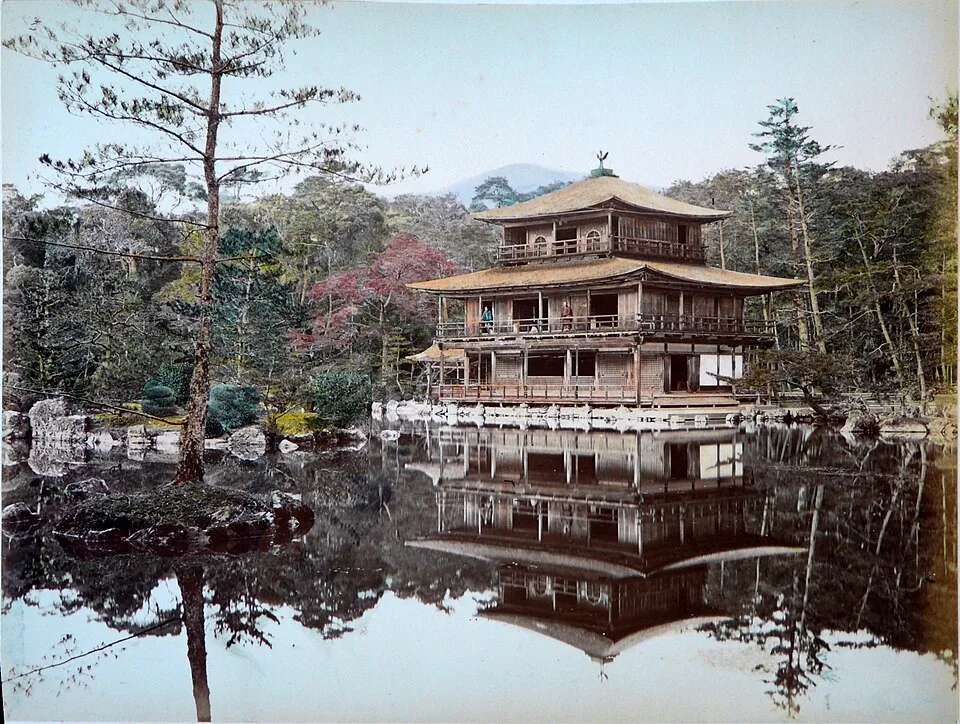
The Ashikaga shoguns were great patrons of the arts. Ashikaga Yoshimitsu(shogun of the Golden Pavilion) built the Golden Pavilion and supported Zeami(master of Noh), who shaped Noh theatre. Ink painting, dry rock gardens, flower arrangement and the tea gathering all took recognisable form in this era.
The Golden Pavilion in a hand-coloured photograph from before 1886, presumed to be by Adolfo Farsari. The building burned down in 1950 and was rebuilt. Public domain, via Wikimedia Commons
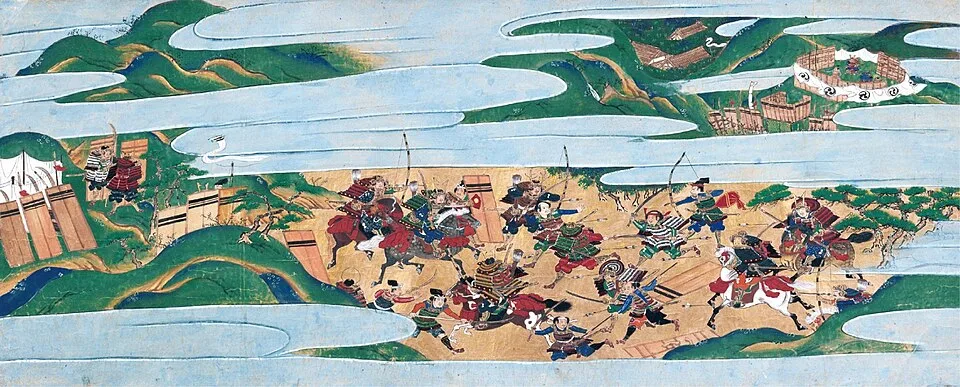
Political control was weaker. The Ōnin War (1467–1477), which began as a succession dispute, left much of Kyoto in ruins and opened the Sengoku, or “Warring States”, period. Regional lords, the daimyo, fought for territory, and many were overthrown by their own vassals.
Ashigaru foot soldiers during the Ōnin War, from the Shinnyodō engi scroll by Kamonnosuke Hisakuni, 1524. Public domain, via Wikimedia Commons
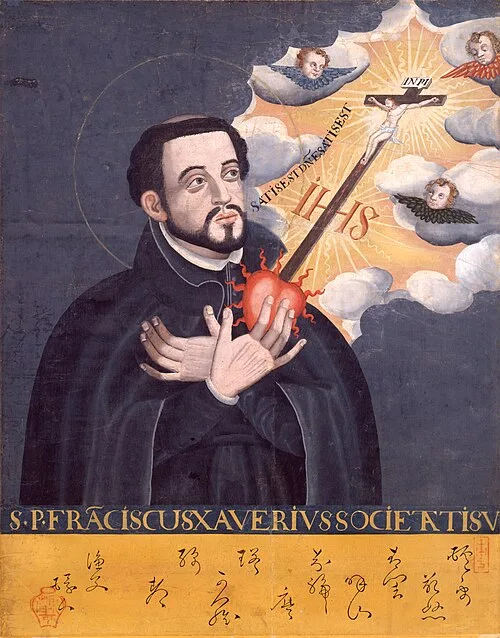
In 1543 a Chinese ship carrying Portuguese traders reached Tanegashima island, off southern Kyushu. Their guns were soon copied by Japanese smiths. In 1549 the Jesuit Francis Xavier(first missionary to Japan) landed at Kagoshima, and within decades Christianity had won over some lords and many thousands of converts.
Words worth knowing
Daimyo大名
“Great name”: a regional lord with his own lands and army.
Sengoku戦国
“Warring States”, a name borrowed from a turbulent period of ancient Chinese history.
Gekokujō下剋上
“The low overthrow the high”: vassals toppling their masters, typical of the age.
Noh能
A slow, masked dance-drama perfected by Kan’ami and his son Zeami, still performed today.
Tanegashima種子島
The island where the Portuguese landed, and soon the everyday Japanese word for a matchlock gun.
Did you know?
Is the Golden Pavilion original?
No. A young monk set it on fire in 1950, and the current building dates from 1955. The arson inspired Yukio Mishima’s novel The Temple of the Golden Pavilion.
Was the Silver Pavilion ever covered in silver?
As far as historians can tell, never. Ashikaga Yoshimasa(shogun of the Silver Pavilion) began it in the 1480s as a retreat, and investigations have found no trace of silver on it.
How fast did Japan adopt guns?
Very fast. Local smiths were copying the Portuguese matchlocks soon after 1543, and within a few decades firearms were made in large numbers and used decisively in battle.
Myth or fact?
“The Japanese word “arigatō” comes from the Portuguese “obrigado”.”
Match the names
Tap a name, then the role that goes with it.
Check yourself
Question 1 of 3
What does “Sengoku” mean?
Question 2 of 3
What set off the century of civil war?
Question 3 of 3
What did the Portuguese bring in 1543 that changed warfare?
室町
Collect the seal
Answer all three questions above to stamp the Muromachi seal. 0 of 3 answered.