People had already lived on the islands for tens of thousands of years when the Jōmon culture took shape. It lasted from around 14,000 BCE to around 300 BCE — longer than every period that came after it put together.
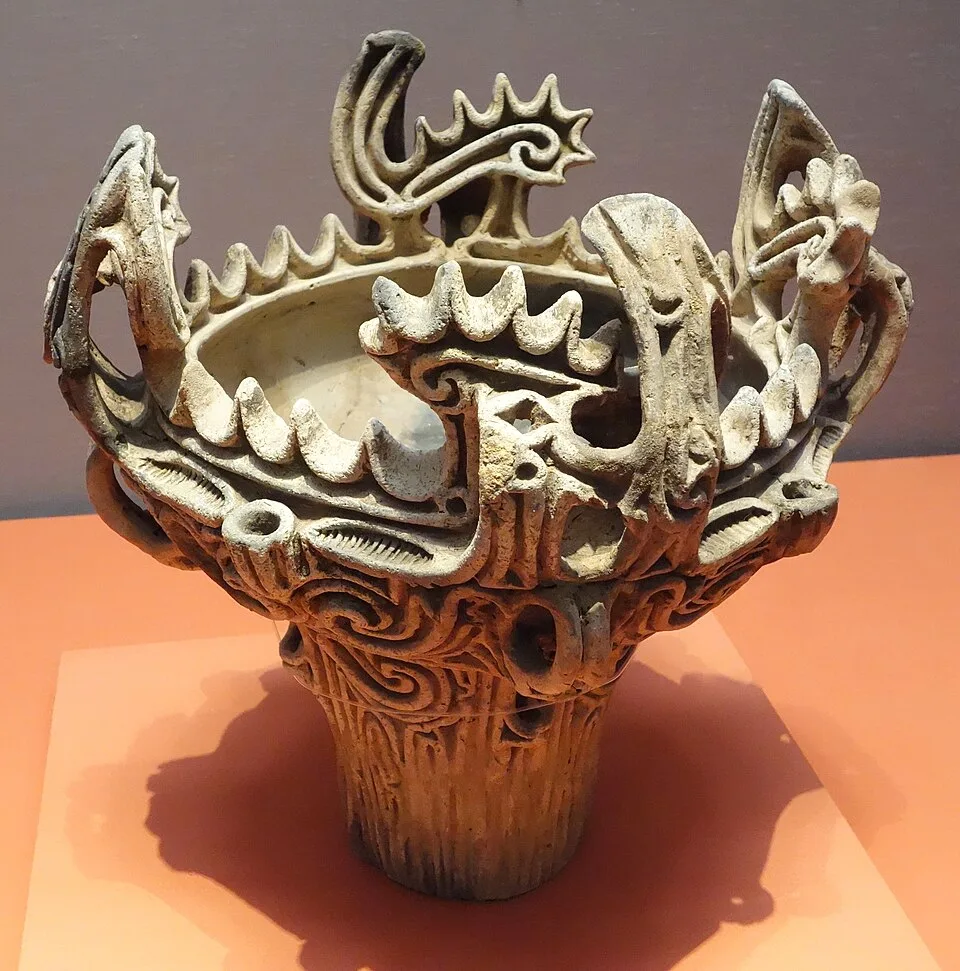

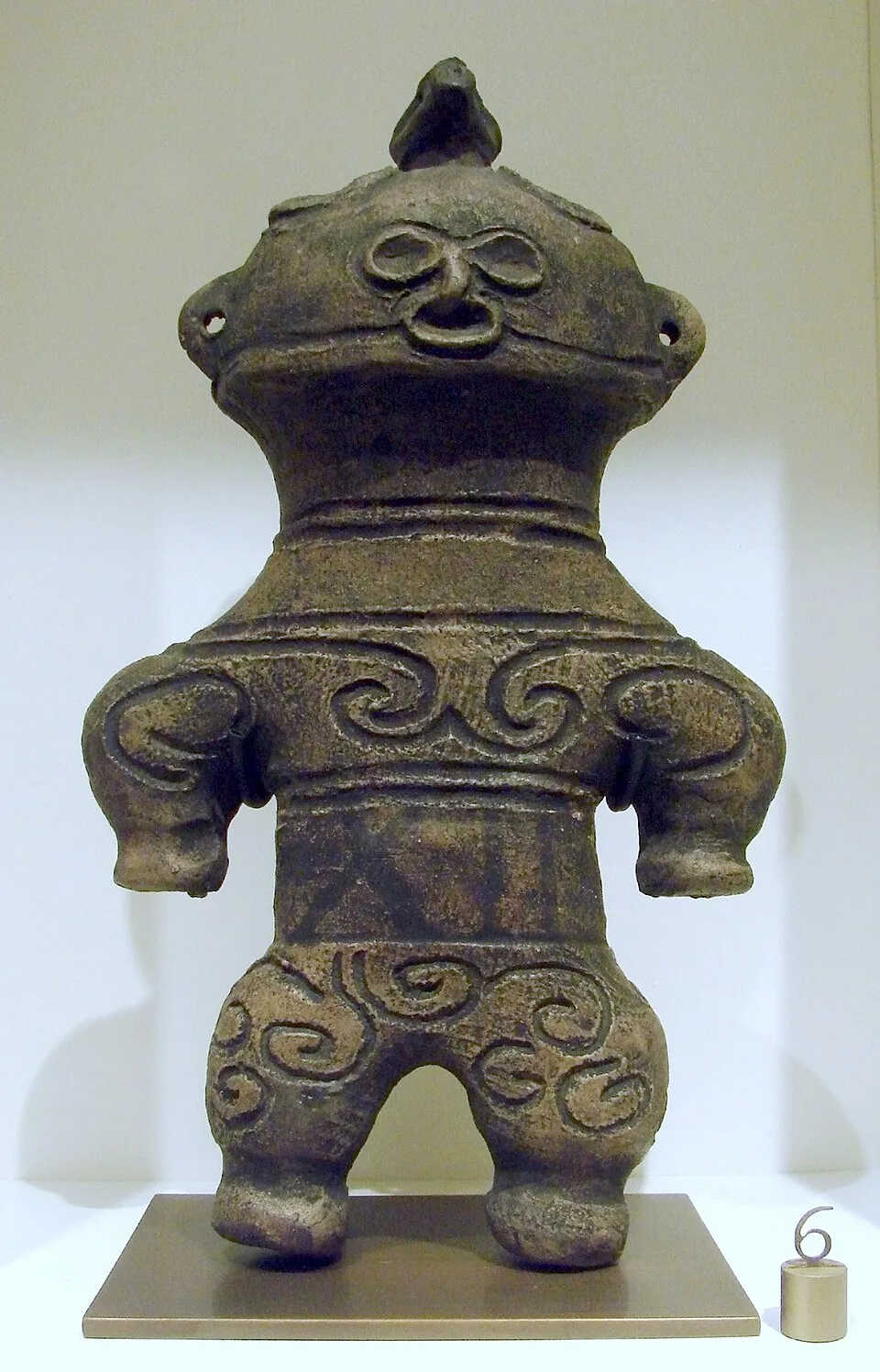
The Jōmon fished, gathered nuts and hunted deer and boar, yet many of them lived in permanent villages of pit houses, which is unusual for hunter-gatherers. Sannai-Maruyama in Aomori was occupied for well over a thousand years. They also made dogū, clay figurines (some with huge goggle-like eyes) whose purpose is still unknown.

During the first millennium BCE, migrants from the Korean peninsula brought wet-rice farming, bronze and iron. Textbooks traditionally start the Yayoi period around 300 BCE, though radiocarbon studies suggest rice farming reached northern Kyushu several centuries earlier. Rice meant surpluses, surpluses meant wealth and rank, and wealth meant conflict: villages such as Yoshinogari in Kyushu were ringed with moats and watchtowers.
Japan’s first appearance in writing comes from China. Chinese chronicles called the islands Wa and described many small states. The Records of Wei report that a queen named Himiko (shaman queen of Yamatai) ruled a land called Yamatai and sent envoys to the Chinese court in 239 CE. Where Yamatai was is still argued over: northern Kyushu and the Nara region are the main candidates.