Japan got its first long-lasting capital, a grid-planned city modelled on China’s Tang capital. The court wrote Japan’s first histories and a great poetry anthology, and an emperor devoted vast resources to a colossal bronze Buddha.
About 6 minutes
Who you’ll meet
One key name in this era. Everyone else plays a smaller part: tap their name in the text whenever you need a reminder.
In 710 the court settled at Heijō-kyō, today’s Nara. Its chessboard street plan copied Chang’an, the capital of Tang China and one of the largest cities in the world at the time.
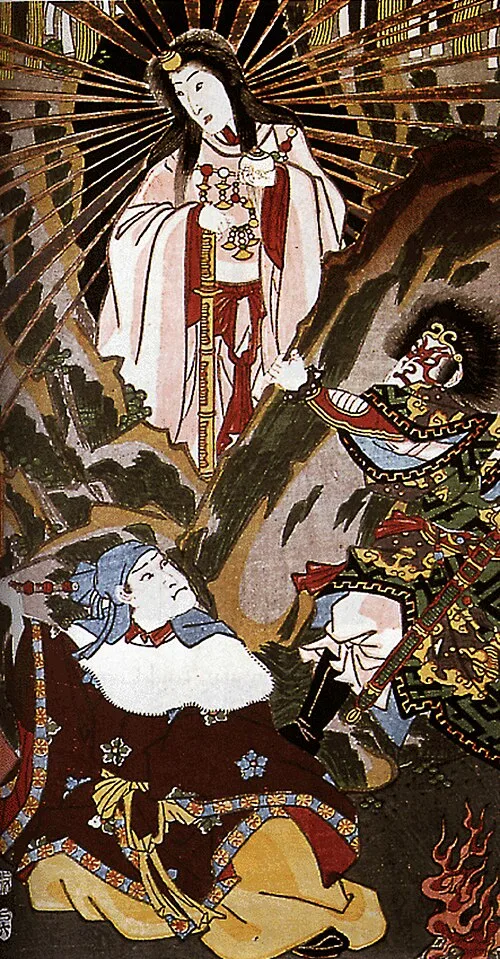
The court commissioned histories that justified imperial rule: the Kojiki (712), Japan’s oldest surviving book, and the Nihon Shoki (720). Both open with myths of the gods and trace the imperial line back to the sun goddess Amaterasu(sun goddess of myth). The Man’yōshū, an anthology of some 4,500 poems by emperors, courtiers, soldiers and commoners, was compiled later in the century.
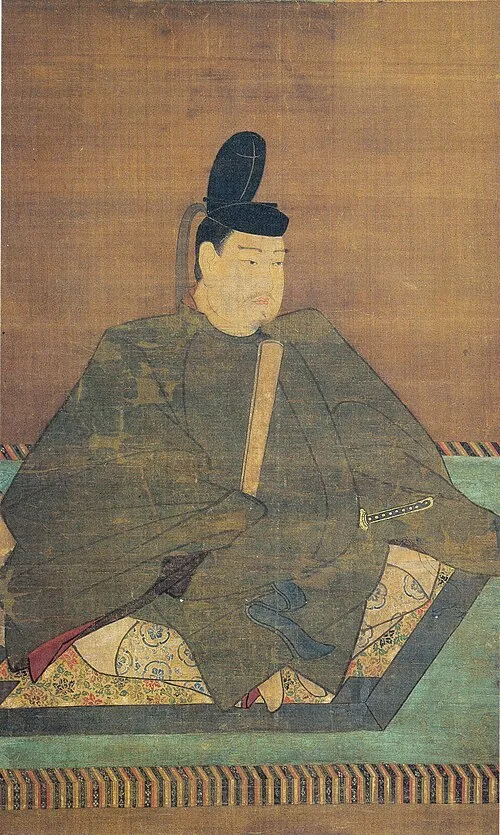
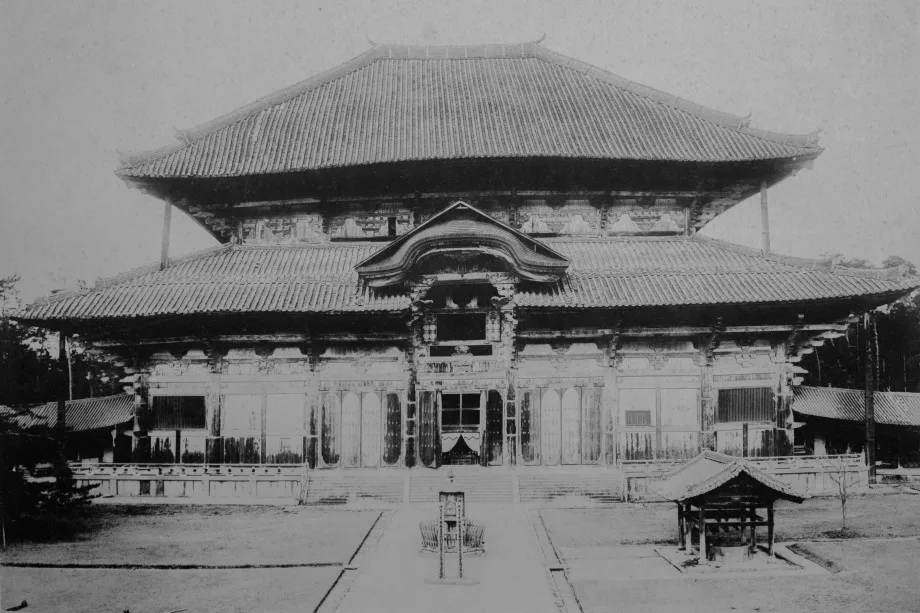
Disaster struck in 735–737, when a smallpox epidemic killed an estimated quarter to a third of the population. The devout Emperor Shōmu(emperor of the Great Buddha) answered with Buddhism: temples in every province, and a giant bronze Buddha at Tōdai-ji. At its dedication in 752, an Indian monk named Bodhisena performed the ceremony of painting in the statue’s eyes.
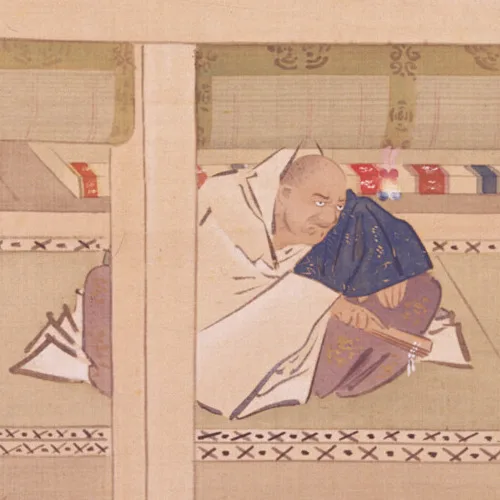
The monasteries grew rich and powerful. A monk named Dōkyō(ambitious monk) gained such influence over Empress Shōtoku(Shōmu’s daughter) that an oracle (later rejected) proposed making him emperor. Partly, it seems, to escape the temples’ grip, Emperor Kanmu(emperor who founded Kyoto) moved the capital away, first in 784 and then to Kyoto in 794.
Words worth knowing
Heijō-kyō平城京
The capital at Nara, laid out on a grid copied from Chang’an.
Daibutsu大仏
“Great Buddha”: a giant Buddha statue, most famously the one at Tōdai-ji.
Man’yōgana万葉仮名
Chinese characters used for their sound to write Japanese words; the ancestor of kana.
Shōsōin正倉院
Tōdai-ji’s 8th-century storehouse, which still holds treasures from Emperor Shōmu’s time.
Did you know?
Where does the name of the current era come from?
“Reiwa”, the era name chosen in 2019, was taken from a passage in the Man’yōshū. It was the first era name drawn from a Japanese classic rather than a Chinese one.
How big is Nara’s Great Buddha?
The seated bronze figure is about 15 metres tall. The hall around it, rebuilt in 1709, is roughly a third smaller than the original, yet it is still one of the largest wooden buildings in the world.
Did Silk Road treasures really reach Japan?
Yes. The Shōsōin storehouse holds 8th-century objects from as far away as Persia, such as a cut-glass bowl, alongside Emperor Shōmu’s own belongings.
Myth or fact?
“The Kojiki is a reliable record of Japan’s first emperors.”
Match the names
Tap a name, then the role that goes with it.
Check yourself
Question 1 of 3
Which city was the model for Nara’s street plan?
Question 2 of 3
What is the Kojiki?
Question 3 of 3
Why did Emperor Shōmu build the Great Buddha?
奈良
Collect the seal
Answer all three questions above to stamp the Nara seal. 0 of 3 answered.