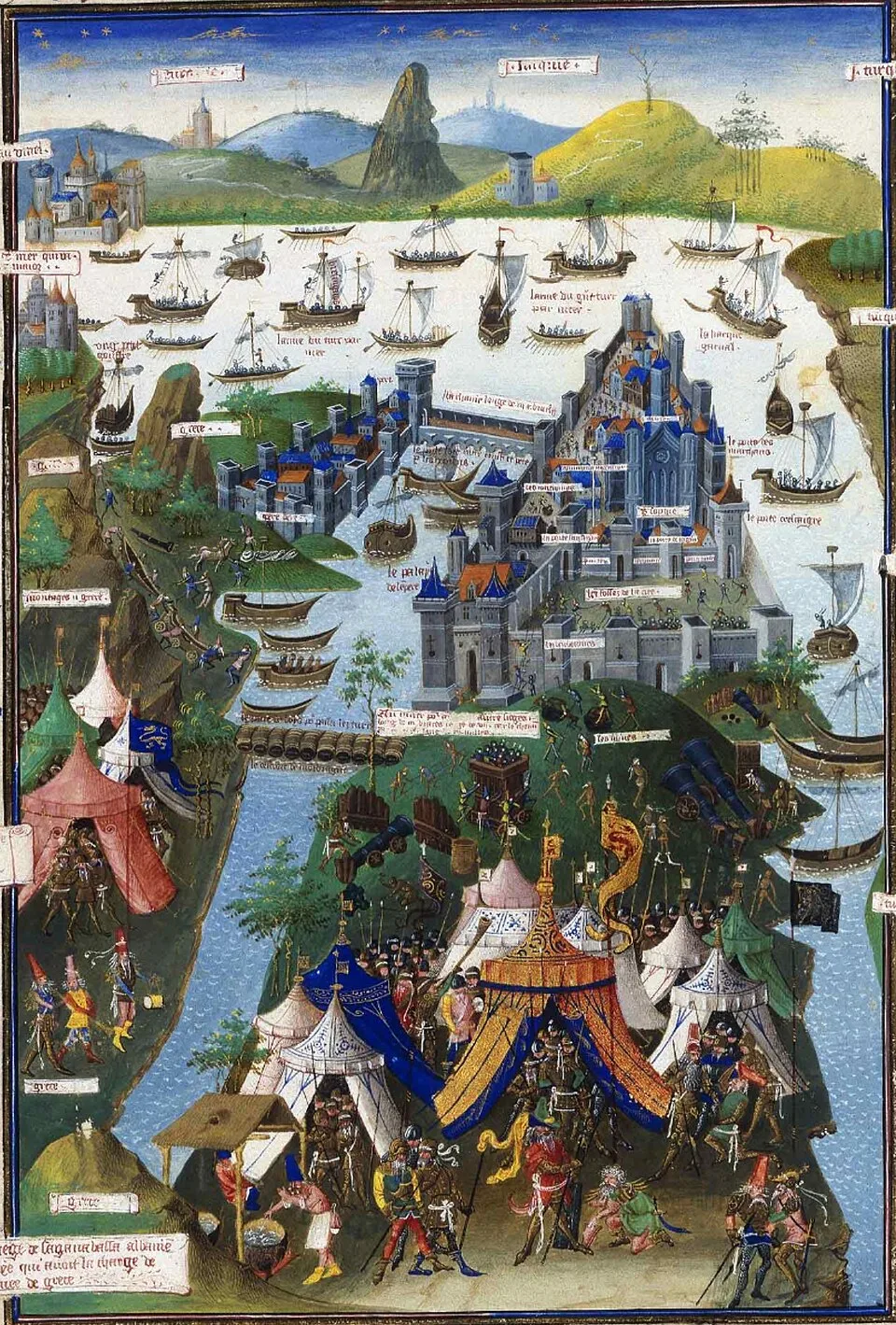
The crusaders crowned a Latin emperor in Constantinople and divided the empire. Frankish lords ruled Athens and the Peloponnese, which they called the Morea, while Venice took Crete and many ports and islands to protect its trade. Greek rulers set up rival states at Nicaea in Anatolia, in Epirus, and at Trebizond on the Black Sea.
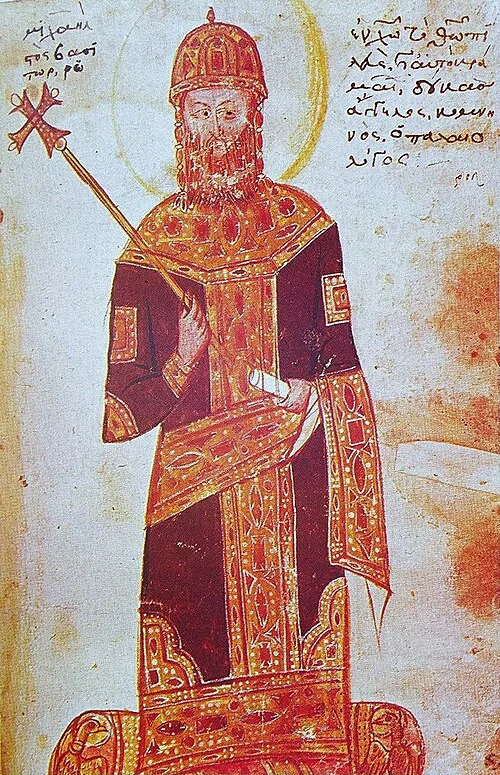

In 1261 the forces of Nicaea retook Constantinople, and Michael VIII Palaiologos (restorer of Byzantium) was crowned emperor there. His family, the Palaiologoi, ruled until the end, but the empire was small and poor and torn by civil wars. In the Peloponnese the Byzantines won back much land, and Mystras became a centre of art and learning.
Meanwhile the Ottomans, a Turkish dynasty from north-west Anatolia, grew fast. They crossed into Europe in the 1350s, took Adrianople, today’s Edirne, and won great victories in the Balkans, at Kosovo in 1389 and Nicopolis in 1396. By the early 15th century the empire was little more than Constantinople, a few islands and parts of the Peloponnese, and Thessaloniki fell for good in 1430. Emperors travelled west to ask for help, and in 1439 they agreed to unite their Church with Rome, which most of their people rejected.
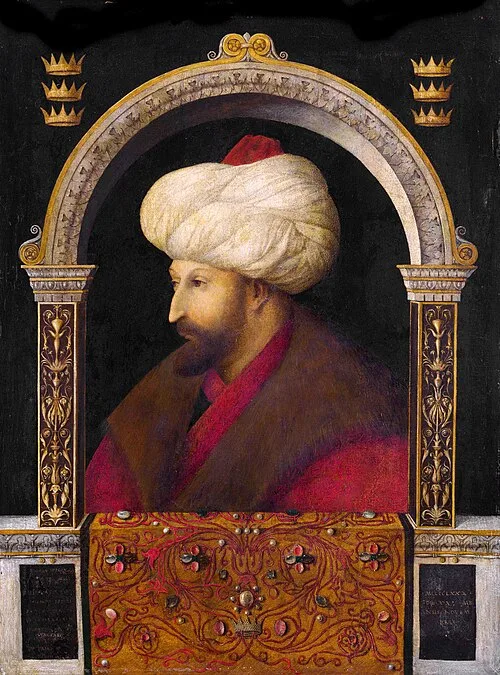

In 1453 Sultan Mehmed II (Ottoman sultan who took Constantinople) besieged Constantinople with an army of perhaps 80,000 men and huge cannon. Emperor Constantine XI (last Byzantine emperor) had perhaps 7,000 defenders. After seven weeks the Ottomans broke in on 29 May; the emperor died in the fighting, and Hagia Sophia became a mosque. Mystras fell in 1460 and Trebizond in 1461.