In the 1950s and 1960s Greece rebuilt under conservative governments, and its economy grew fast, though about a million Greeks emigrated, to West Germany, Australia, the United States and beyond. Tourism grew too. Cyprus, with a Greek majority and a Turkish minority, became independent from Britain in 1960, while many Greek Cypriots had wanted union with Greece.
On 21 April 1967 a group of colonels led by Georgios Papadopoulos (leader of the junta) seized power. The junta banned parties, censored the press, and jailed and tortured opponents. In November 1973 students occupied the Athens Polytechnic, and the army crushed the protest with a tank. In July 1974 the junta backed a coup in Cyprus, Turkey invaded the island, and the junta collapsed.
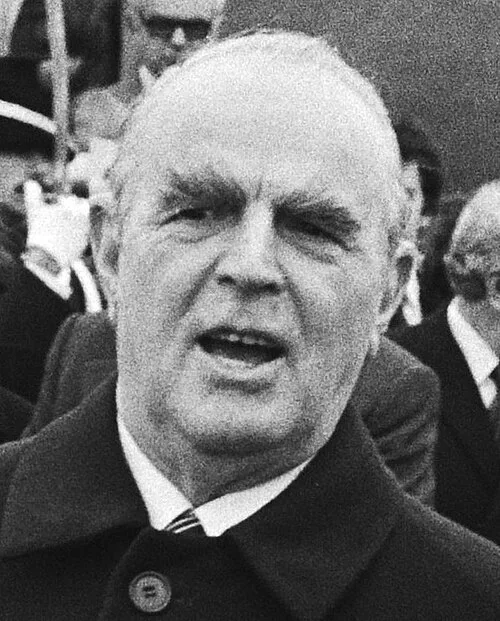

Konstantinos Karamanlis (statesman who restored democracy) came back from exile to lead the country. A referendum in December 1974 abolished the monarchy, and a new constitution followed in 1975. Greece joined the European Community in 1981, the year Andreas Papandreou’s socialist party, PASOK, came to power, and for decades PASOK and New Democracy took turns in government. Greece adopted the euro in 2001 and hosted the Olympic Games in Athens in 2004.
In 2009 it emerged that Greece’s deficit and debt were far larger than reported. Three bailouts from the eurozone and the International Monetary Fund, between 2010 and 2018, came with deep cuts; the economy shrank by about a quarter and unemployment passed 27 per cent. Alexis Tsipras (left-wing prime minister in the crisis) of SYRIZA won power in 2015 promising to end austerity, but signed a third bailout. Greece left its last bailout programme in 2018, and Kyriakos Mitsotakis (prime minister since 2019) of New Democracy won the elections of 2019 and 2023.