Greek history in steps
Step 10 of 11

Catastrophe, occupation and civil war

1914–1949
Ochi, “no”: Greece’s answer to Italy’s ultimatum in 1940

Greece entered the First World War divided between its king and its prime minister, then lost a war in Anatolia in 1922 that ended some three thousand years of Greek life there. In 1940 it refused Italy’s ultimatum and fought back, but Germany occupied it in 1941, and famine followed. After liberation a civil war between the government and the Communists lasted until 1949.

About 6 minutes

Who you’ll meet

One key name in this era. Everyone else plays a smaller part: tap their name in the text whenever you need a reminder.

Also appearing (6)
Practise this era’s names

Where it happened

Tap a marker, a shaded region or a name below the map to see what happened there. Places in the text with a red pin open their own map card.

Place, 1919–1922

Smyrna

Where Greek troops landed in 1919, and which burned in 1922.

Coastlines from Natural Earth. Ancient states and regions are shown by name only, without borders; shaded areas follow today’s borders as a guide.

Open the atlas to compare this map with other eras, or browse all places.

What happened

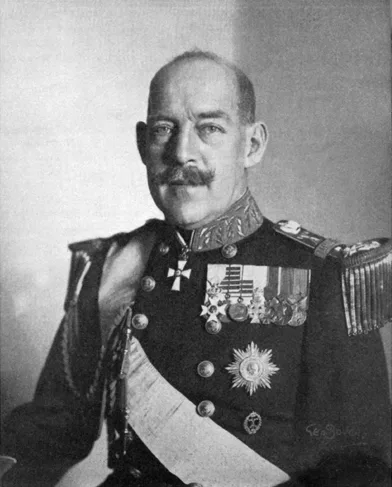
King Constantine I
Constantine I Public domain, Wikimedia Commons

King Constantine I (king during the National Schism) wanted to stay neutral in the First World War, while Venizelos (statesman of the Balkan Wars) wanted to join Britain and France. Their quarrel, the National Schism, split the country; in 1917 the king was forced out and Greece joined the Allies. After the war Greek troops landed at Smyrna, today’s Izmir, in 1919 and pushed deep into Anatolia.
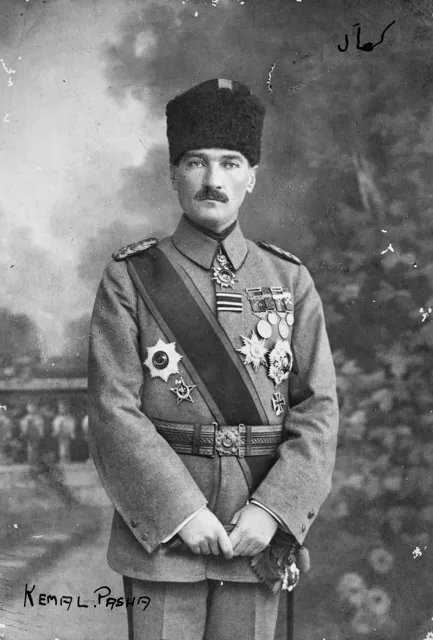
Mustafa Kemal
Kemal Public domain, Wikimedia Commons

In 1922 Turkish forces under Mustafa Kemal (Turkish leader, later Atatürk) routed the Greek army. Smyrna burned, and estimates of the dead in the city range from about ten thousand to a hundred thousand Greeks and Armenians. In 1923 Greece and Turkey agreed a compulsory exchange of populations: about 1.2 million Orthodox Christians left Turkey for Greece, and about 400,000 Muslims left Greece for Turkey. Greeks remember it as the Asia Minor Catastrophe.
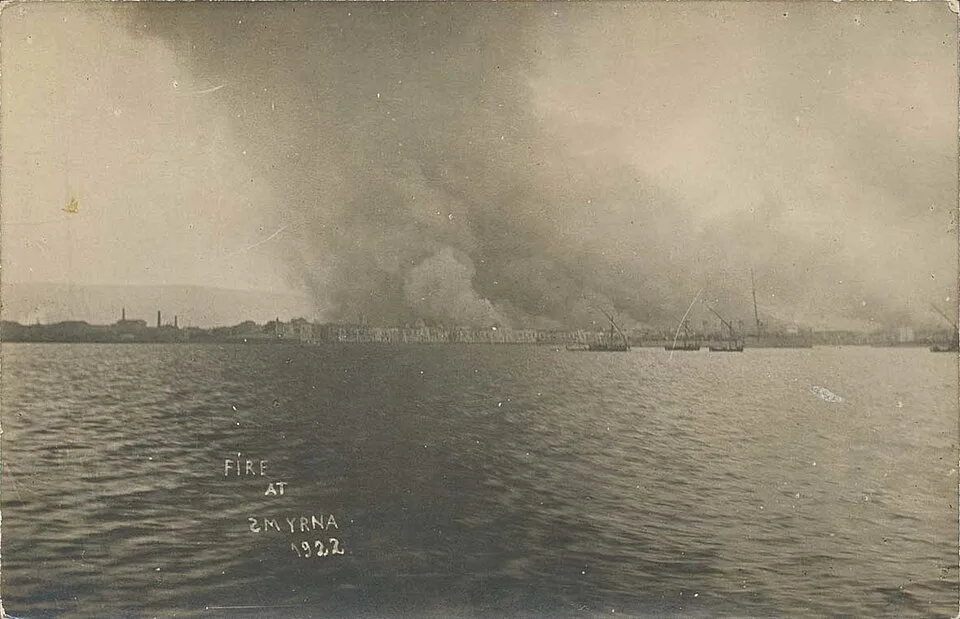
The fire of Smyrna, September 1922, photographed from HMS Ajax.
The fire of Smyrna, September 1922, photographed from HMS Ajax. Public domain, via Wikimedia Commons
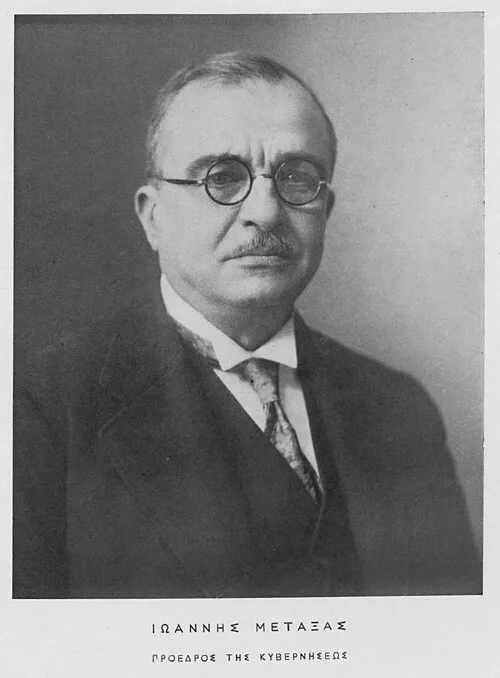
Ioannis Metaxas
Metaxas Public domain, Wikimedia Commons

The refugees, about a fifth of the population, settled in new districts around Athens and Thessaloniki and across Macedonia. Politics stayed unstable, and in 1936 General Ioannis Metaxas (dictator who refused Italy) set up a dictatorship. On 28 October 1940 Italy demanded the right to occupy parts of Greece. Metaxas refused, and the Greek army drove the Italians back into Albania. Greeks celebrate the day as Ochi Day.

Germany invaded in April 1941 and, with Italy and Bulgaria, occupied Greece. In the famine of the first winter tens of thousands died in Athens and Piraeus alone. Resistance groups formed in the mountains, the largest led by the Communist-dominated EAM and its army, ELAS. Most of Greece’s Jews were deported and murdered. After liberation in 1944 fighting broke out between left and right, and the civil war of 1946–49 ended in victory for the government, backed by Britain and then the United States.

Words worth knowing

National Schism

The bitter split of 1915–17 between supporters of King Constantine I and of Venizelos over the First World War.

Asia Minor Catastrophe

The defeat of the Greek army in Anatolia in 1922, the burning of Smyrna and the end of the Greek communities there.

Population exchange

The compulsory exchange of 1923 between Greece and Turkey, decided by religion: Orthodox Christians to Greece, Muslims to Turkey.

EAM

The National Liberation Front, the largest resistance movement in occupied Greece, led by the Communist Party. Its army was ELAS.

Did you know?

How did the Greek army fare against Italy?

Better than almost anyone expected. Within weeks it had pushed the Italian army out of Greece and deep into southern Albania, one of the first Allied victories on land in the Second World War.

What was the “percentages agreement”?

In October 1944, in Moscow, Winston Churchill (British wartime prime minister) wrote on a sheet of paper that Britain would have 90 per cent influence in Greece and Russia 10 per cent, and Joseph Stalin (Soviet leader) ticked it. Stalin largely kept out of Greece afterwards.

Who was Mustafa Kemal?

The Ottoman general who led the Turkish national movement, defeated the Greek army in 1922 and founded the Republic of Turkey in 1923. He later took the surname Atatürk, “father of the Turks”.

Myth or fact?

“Metaxas answered Italy’s ultimatum with the single word “Ochi”.”

Match the names

Tap a name, then the role that goes with it.

Check yourself

Question 1 of 3

Which city burned in 1922 at the end of the war in Anatolia?

Question 2 of 3

Whose ultimatum did Greece refuse on 28 October 1940?

Question 3 of 3

When did the Greek Civil War end?

Collect the seal

Answer all three questions above to stamp the Wars and division seal. 0 of 3 answered.

Back to the seal book