Rhōmē, Rome in Greek; the word also means “strength”
Alexander’s generals divided his empire into kingdoms ruled by Greek-speaking dynasties, and Greek became the common language of the eastern Mediterranean. Rome conquered them one by one, from Macedon in 168 BCE to Cleopatra’s Egypt in 30 BCE. Under Roman rule Greek culture flourished, and Christianity spread in Greek.
About 6 minutes
Who you’ll meet
One key name in this era. Everyone else plays a smaller part: tap their name in the text whenever you need a reminder.
After Alexander’s death his generals, the Successors, fought over his empire for some forty years. Three great dynasties came out on top: the Ptolemies in Egypt, the Seleucids in Syria and Mesopotamia, and the Antigonids in Macedon. Smaller states included the kingdom of Pergamon in Anatolia, the island of Rhodes, and the leagues of cities in mainland Greece.
This was the Hellenistic age, when Greek culture spread from Egypt to Afghanistan. A common form of Greek, the koine, was spoken across the east. In Alexandria the Ptolemies founded the Museum and the great Library, where Euclid(mathematician of Alexandria) wrote on geometry and Eratosthenes(scholar who measured the Earth) measured the size of the Earth. In Syracuse, Archimedes(mathematician of Syracuse) worked out the laws of levers and of floating bodies.
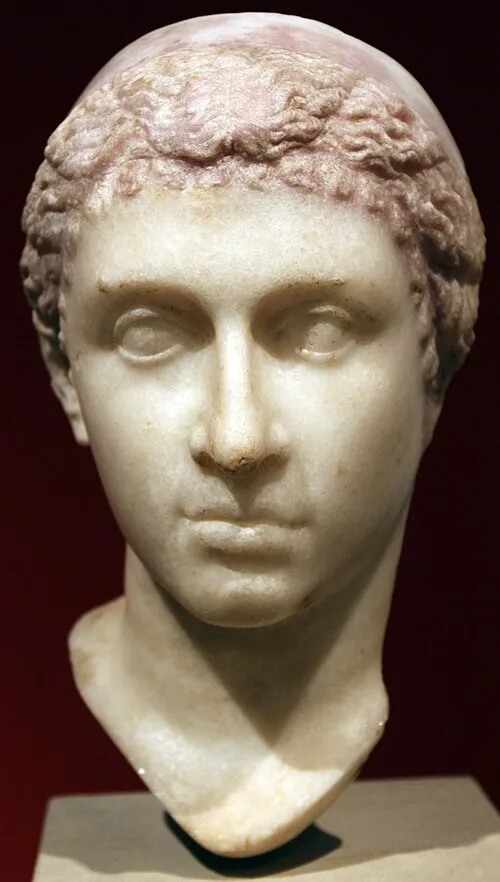
Rome was drawn in from around 200 BCE. It defeated Philip V(Macedonian king defeated by Rome) of Macedon, and in 168 BCE beat his son Perseus(last king of Macedon) at Pydna and ended the kingdom. In 146 BCE a Roman army destroyed Corinth, and Greece came under Roman control. The last of the Hellenistic kingdoms ended in 30 BCE, when Cleopatra VII(last queen of Ptolemaic Egypt) of Egypt killed herself after her defeat by Octavian(first Roman emperor, Augustus).
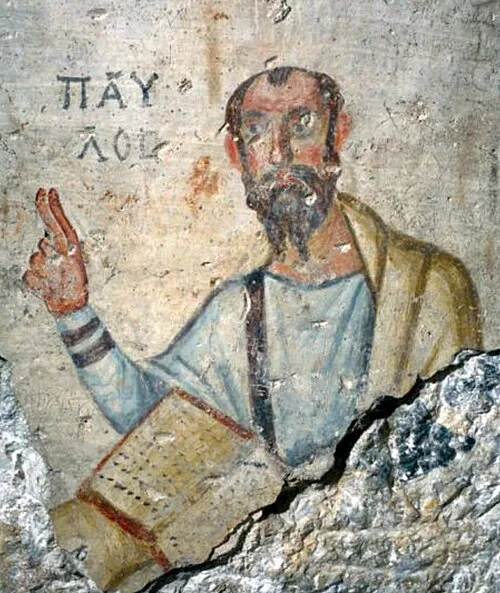
The Roman poet Horace wrote that conquered Greece took its fierce conqueror captive. Romans learned Greek, copied Greek statues and sent their sons to study in Athens. The apostle Paul(apostle who preached in Greece) preached in Greek cities in the 1st century CE, and the New Testament was written in Greek. Emperor Hadrian(Roman emperor who loved Greece), a great admirer of Greece, finished the Temple of Olympian Zeus in Athens. In 330 CE Emperor Constantine(first Christian Roman emperor) dedicated a new capital at Byzantium: Constantinople.
Words worth knowing
Koineκοινή
“Common” Greek: the shared form of the language that grew up after Alexander. The New Testament is written in it.
Hellenisticελληνιστικός
From Hellēn, “a Greek”: the name historians give to the age from Alexander’s death in 323 BCE to 30 BCE.
Library of AlexandriaΒιβλιοθήκη
The great library founded by the early Ptolemies, which tried to collect every Greek book. How and when it was lost is unclear; it seems to have declined over centuries.
AchaeaΑχαΐα
The Roman province of southern and central Greece, set up in 27 BCE and named after a region of the Peloponnese.
Did you know?
How did Eratosthenes measure the Earth?
He knew that at noon on midsummer day the Sun shone straight down a well at Syene, today’s Aswan, while at Alexandria it cast a shadow of about a fiftieth of a circle. From the distance between the two cities he worked out a circumference close to the real one; how close depends on which length of stadion he used.
Was Cleopatra Egyptian?
She was the last ruler of the Ptolemies, a Macedonian Greek dynasty that had ruled Egypt for nearly three centuries. Plutarch(Greek biographer under Rome) says she was the first of her family to learn Egyptian.
When did the ancient Olympics end?
They went on under Roman rule for centuries; Emperor Nero(Roman emperor who toured Greece) competed in 67 CE and was declared the winner of a chariot race in which he fell. They are thought to have ended in the late 4th or the 5th century, under Christian emperors.
Myth or fact?
“The Library of Alexandria was destroyed in a single great fire.”
Match the names
Tap a name, then the role that goes with it.
Check yourself
Question 1 of 3
Which dynasty ruled Egypt after Alexander?
Question 2 of 3
Which Greek city did Rome destroy in 146 BCE?
Question 3 of 3
Who measured the size of the Earth in Alexandria?
ΡΩΜΗ
Collect the seal
Answer all three questions above to stamp the Hellenistic and Roman seal. 0 of 3 answered.