Step 5: Hellenistic and Roman, 323 BCE – 330 CE
Cleopatra VII
Last queen of Ptolemaic Egypt
69–30 BCEOne of the 22 key names
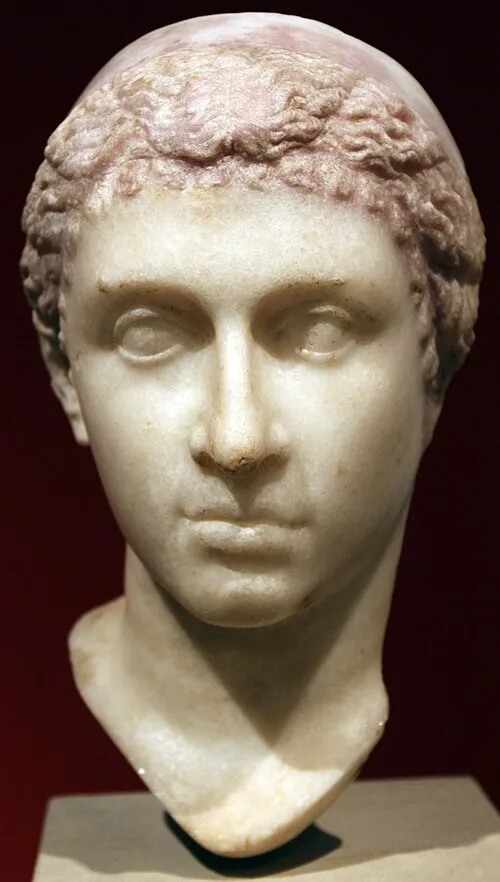

Cleopatra VIIher name, with her number as queenthe name to use
The last ruler of the Ptolemies, queen of Egypt from 51 BCE. She allied with Julius Caesar and then Mark Antony to keep her kingdom independent, and killed herself after Octavian defeated them, in 30 BCE. Egypt became a Roman province.
Memory hook
Kleopatra means “glory of her father”, from kleos, “glory”, and patēr, “father”. Several queens of her family had the name before her, which is why she is the seventh. Picture the father’s glory passing to his daughter, and ending with her.
Already in your name cards. New