Step 2: Archaic Greece, c. 1100–490 BCE
Homer
Poet of the Iliad and the Odyssey
8th or 7th century BCEOne of the 22 key names
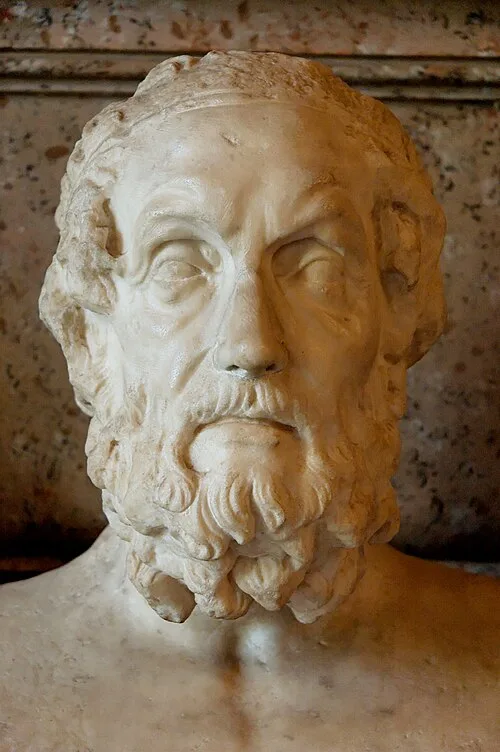

Homerhis namethe name to use
The poet to whom the Greeks credited the Iliad and the Odyssey, the epics of the Trojan War and of Odysseus’s journey home. Nothing certain is known about him, and scholars debate whether one poet, several or a long tradition of singers shaped the poems.
Memory hook
Later Greeks pictured Homer as a blind singer, and one ancient life of him claims that homēros meant “blind” in the dialect of Cyme. Picture a blind bard with a lyre, singing of the war at Troy.
Already in your name cards. New
In the story
Step 2: The Dark Age and Archaic Greece
- From the 8th century BCE it revived: the Greeks took up the alphabet, Homer’s epics were composed, the Olympic Games began, and hundreds of independent city-states sent settlers across the Mediterranean and the Black Sea.
- The Iliad and the Odyssey, said to be the work of a poet named Homer, took shape around this time or a little later.
Also mentioned in 1. Bronze Age.