Step 3: Roman Empire, 27 BCE – 476 CE
Augustus
Rome’s first emperor
63 BCE – 14 CEOne of the 20 key names
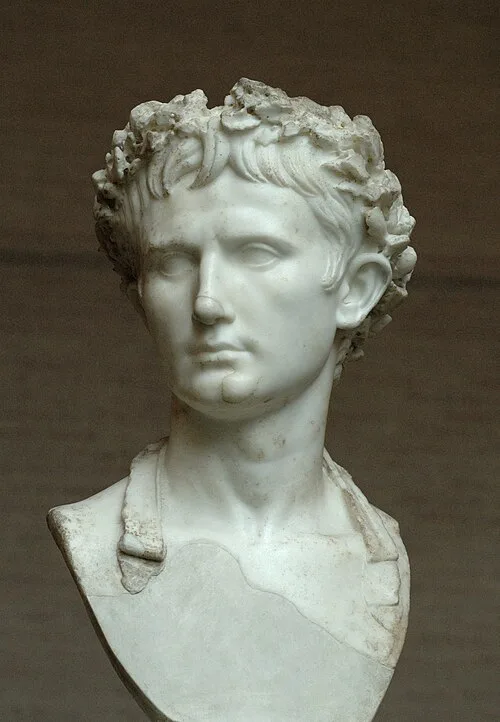

Augustusthe title he took as emperor; he was born Gaius Octaviusthe name to use
Julius Caesar’s great-nephew and adopted heir, called Octavian, who defeated Mark Antony and Cleopatra, then ruled as the first emperor from 27 BCE until his death in 14 CE. He claimed to have found Rome a city of brick and left it a city of marble.
Memory hook
Augustus means “majestic” or “venerable”, and the month of August is named after him. Picture a hot August in Rome, with the first emperor gleaming in marble.
Already in your name cards. New
In the story
Step 2: The Roman Republic
- Then its politics turned violent, and civil wars ended with Julius Caesar’s dictatorship and the rise of his heir, Octavian.
- His heir Octavian defeated Mark Antony and Cleopatra in 31 BCE and in 27 BCE took the name Augustus.
Step 3: The Roman Empire
- Augustus turned the republic into a monarchy in all but name, and for some two centuries the empire enjoyed the Pax Romana, the Roman peace.
- Augustus kept the forms of the republic but held real power for over forty years, until his death in 14 CE.