Step 2: Kofun–Asuka, c. 250 – 710
Prince Shōtoku
Buddhist prince-regent
574–622One of the 20 key names
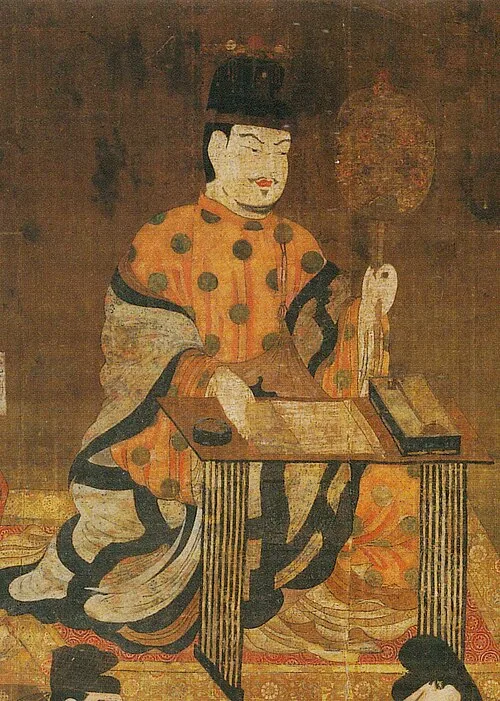

PrincetitleShōtokuhonorary name given after deaththe name to use
Regent for his aunt, Empress Suiko, revered as a founder of Japanese Buddhism and statecraft. Historians debate how much was his own work, since the accounts were written about a century after his death.
His personal name was Umayado.
Memory hook
Shōtoku (聖徳) means “holy virtue”. Picture him on the old 10,000-yen note, where he appeared from 1958 until 1984.
Family
Easy to mix up with
- Emperor Shōmu (emperor of the Great Buddha, Nara)
- Empress Shōtoku (Shōmu’s daughter, Nara)
- Emperor Shōwa (Hirohito) (emperor of the war years, Taishō–Shōwa)
Already in your name cards. New
In the story
Step 2: Kofun and Asuka
- Prince Shōtoku, regent for Empress Suiko, is credited with promoting Buddhism, issuing a “Seventeen-Article Constitution” of moral rules for officials (traditionally dated 604), and sending embassies to China.
- At Hōryū-ji, a temple near Nara associated with Prince Shōtoku.