Step 3: Classical Greece, 490–404 BCE
Herodotus
First historian of the Greeks
c. 484–425 BCE
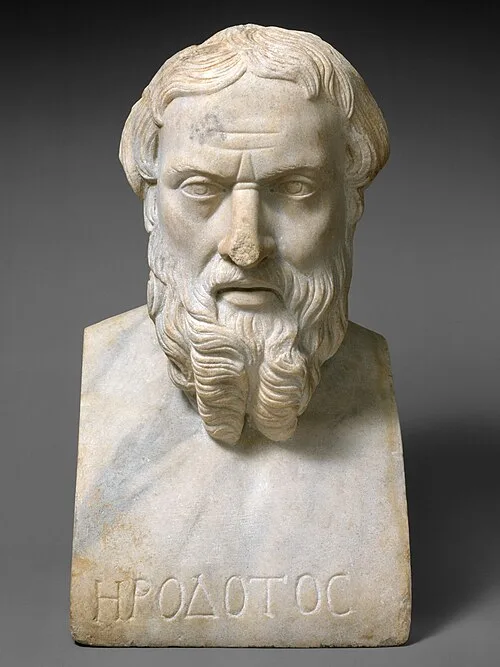

Herodotushis namethe name to use
Writer from Halicarnassus, in south-west Anatolia, whose Histories tell the story of the Persian Wars and of the peoples around them. Cicero called him the father of history.
Easy to mix up with
- Thucydides (historian of the Peloponnesian War, Classical Greece)
- Xenophon (soldier and writer, pupil of Socrates, Classical Greece)
- Polybius (Greek historian of Rome’s rise, Hellenistic and Roman)
- Plutarch (Greek biographer under Rome, Hellenistic and Roman)
In the story
Step 3: The Persian Wars and the golden age
- Athens was also home to the tragedies of Aeschylus, Sophocles and Euripides, the comedies of Aristophanes, the histories of Herodotus and Thucydides, and the questioning of Socrates.