Step 3: Classical Greece, 490–404 BCE
Socrates
Athenian philosopher
c. 470–399 BCEOne of the 22 key names
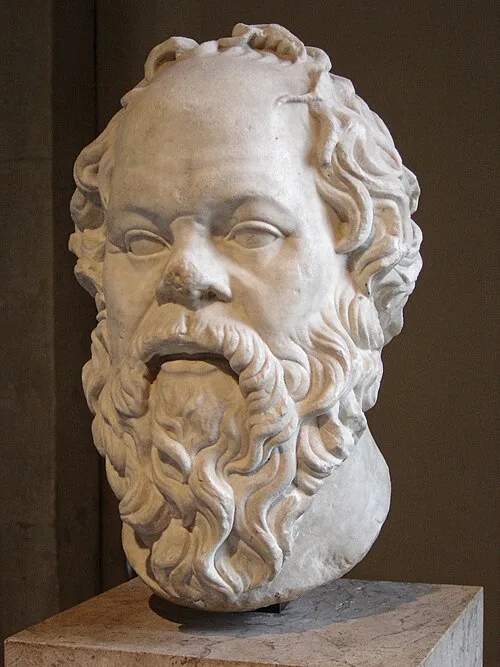

Socrateshis namethe name to use
Athenian philosopher who wrote nothing but questioned everyone, claiming only to know how little he knew. In 399 BCE he was condemned to death for impiety and corrupting the young, and drank hemlock.
Memory hook
Plato and Xenophon describe him as snub-nosed and bulging-eyed, barefoot in all weathers. Picture a snub-nosed man in the market place asking one more question, with the cup of hemlock waiting at the end.
Already in your name cards. New
In the story
Step 3: The Persian Wars and the golden age
- Athens was also home to the tragedies of Aeschylus, Sophocles and Euripides, the comedies of Aristophanes, the histories of Herodotus and Thucydides, and the questioning of Socrates.