Step 6: Mughals, 1526–1707
Akbar
Mughal emperor
1542–1605One of the 20 key names
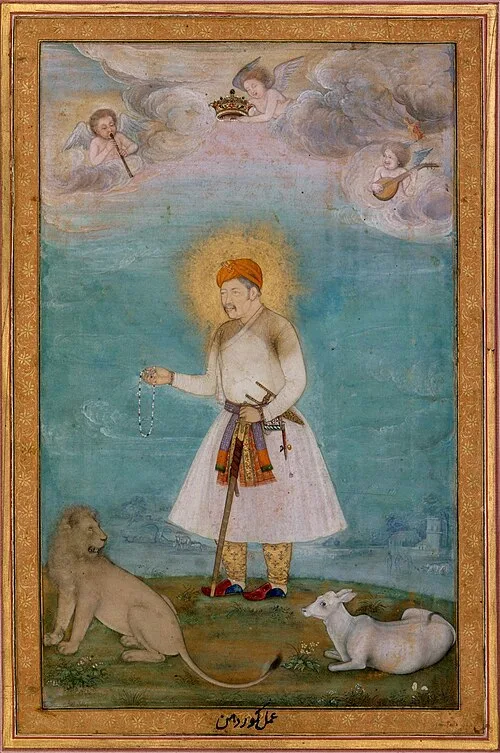

Akbarhis namethe name to use
Mughal emperor from 1556, who conquered most of northern India, married Rajput princesses, abolished the tax on non-Muslims and held debates between faiths. He built Fatehpur Sikri.
Memory hook
Akbar means “great” in Arabic. Picture the great emperor seated in his hall of worship at Fatehpur Sikri, listening to scholars of every faith argue.
Already in your name cards. New
In the story
Step 6: The Mughal Empire
- His grandson Akbar built a strong and tolerant state, and his successors ruled one of the richest empires in the world, building the Taj Mahal and the Red Fort.
- Akbar, who came to the throne in 1556 aged 13, conquered most of northern India and won over the Rajput kings through alliances and marriages.