Step 6: Mughals, 1526–1707
Babur
Founder of the Mughal Empire
1483–1530One of the 20 key names
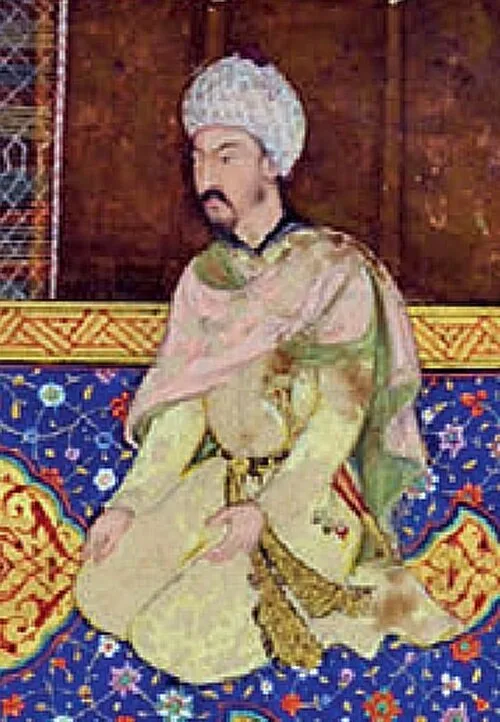

Baburhis namethe name to use
Prince from Central Asia, descended from Timur and through his mother from Genghis Khan. He lost his homeland, took Kabul, and in 1526 defeated Ibrahim Lodi at Panipat. His memoirs, the Baburnama, are among the first autobiographies in Islamic literature.
Memory hook
Babur can be read as “tiger”, from the Persian babr. Picture a tiger from the mountains of Kabul coming down to the plains at Panipat.
Already in your name cards. New
In the story
Step 6: The Mughal Empire
- In 1526 Babur, a descendant of Timur and of Genghis Khan, defeated the sultan of Delhi at Panipat and founded the Mughal Empire.
- Babur, a prince from Central Asia who had lost his homeland, took Kabul and in 1526 defeated Sultan Ibrahim Lodi at Panipat with the help of cannon and matchlocks.
- Mughal is a Persian and Indian form of “Mongol”, from Babur’s descent from Genghis Khan through his mother.