Step 4: Alexander, 404–323 BCE
Plato
Philosopher, founder of the Academy
c. 427–347 BCEOne of the 22 key names
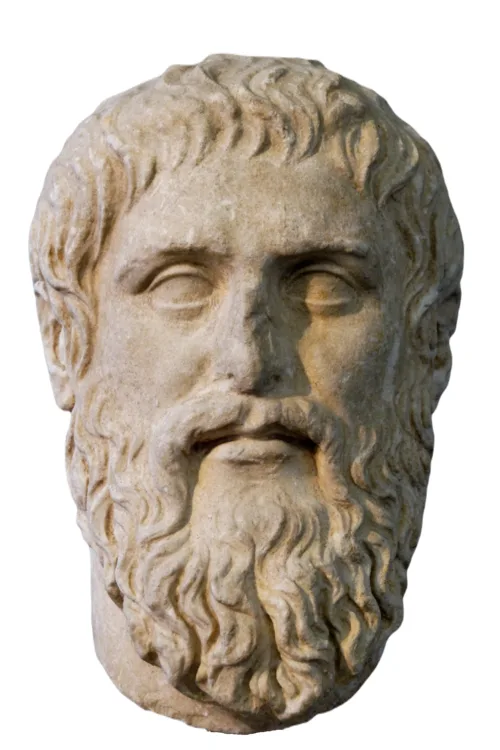

Platohis name, in its Latin formthe name to use
Athenian philosopher, pupil of Socrates, who founded the Academy around 387 BCE. His dialogues, among them the Republic and the Symposium, are among the founding works of Western philosophy.
Memory hook
Platōn may come from platys, “broad”: a later story says it was a nickname for his broad shoulders, earned as a wrestler, and that his real name was Aristocles. Picture a broad-shouldered wrestler teaching in a grove.
Already in your name cards. New
In the story
Step 2: The Dark Age and Archaic Greece
- Plato later wrote that the Greeks lived around the sea like frogs around a pond.
Step 3: The Persian Wars and the golden age
- He wrote nothing himself; we know him mainly through his pupils Plato and Xenophon.
Also mentioned in 1. Bronze Age, 7. Fall of Constantinople.